

When it comes to preventing hitting in babies, understanding their emotional needs is essential. Babies often express frustration through physical actions, and recognizing these cues can help you respond effectively. By creating a supportive environment and enhancing their communication skills, you can guide them toward healthier ways of expressing their feelings. However, it’s not always straightforward, and there are various strategies to contemplate. Let’s explore how you can foster emotional growth in your little one.
Understanding the Roots of Frustration in Babies
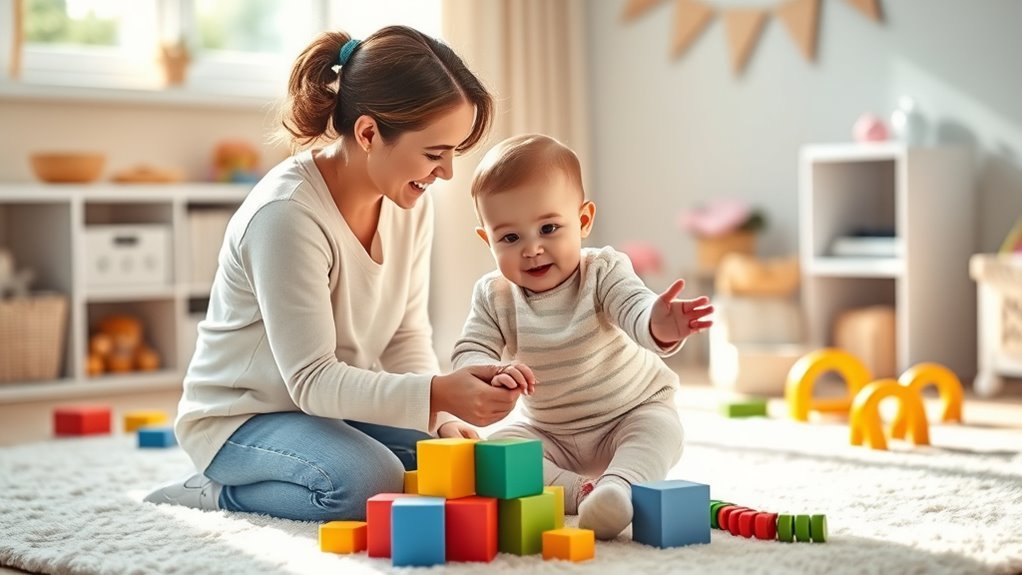
When you watch your baby struggle to express themselves, it’s easy to see why frustration can set in. Babies often lack the words and skills to communicate their needs, which can lead to intense emotions. Understanding this frustration expression is essential for supporting their emotional development. Instead of viewing their hitting or outbursts as misbehavior, recognize them as signals of unmet needs. By providing a safe space for your baby to explore and express feelings, you can help them navigate these challenges. Encourage them to use gestures or simple signs, fostering communication. Remember, addressing their emotional needs early on promotes healthier interactions and a sense of freedom as they grow. Your awareness and support can transform frustration into understanding.
Recognizing Emotional Cues and Triggers
As you observe your baby, you’ll notice a variety of emotional cues that signal their feelings and needs. Developing emotional recognition is essential for understanding what your little one is experiencing. Pay attention to their facial expressions, body language, and vocalizations; these are all indicators of their emotional state.
Identify triggers that may lead to frustration or distress, such as hunger, tiredness, or overstimulation. By recognizing these signs early on, you can better respond to their needs and prevent situations that could lead to hitting. Creating a calm environment and being attuned to your baby’s emotions fosters a sense of security, allowing them to express themselves more positively. This awareness not only helps your baby but also strengthens your bond.
Enhancing Communication Skills Through Play
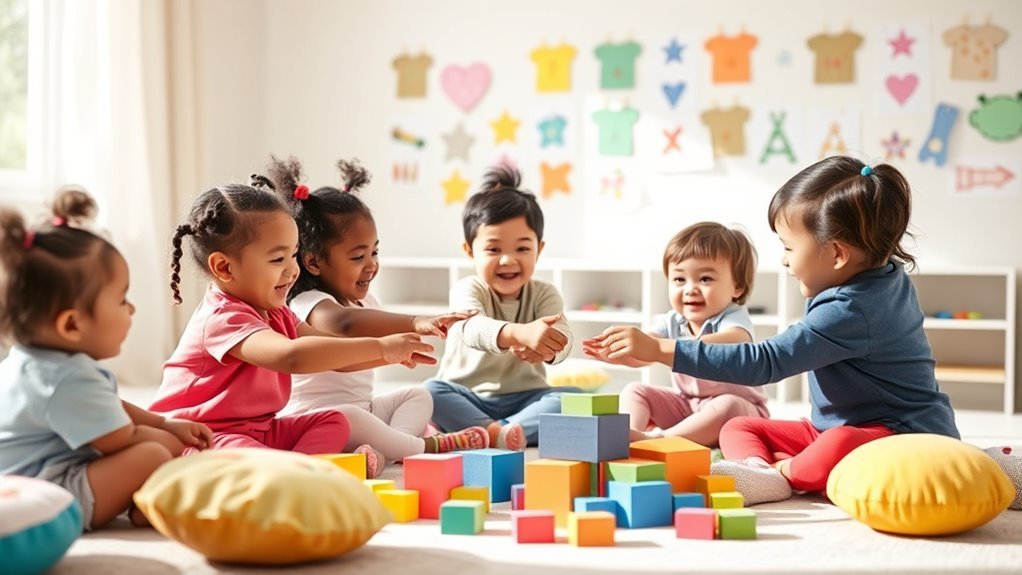
Playing imaginatively not only sparks your baby’s creativity but also plays a vital role in developing their communication skills. By engaging in pretend play, your little one learns to express emotions and ideas more effectively. Encouraging this type of play can help them use language in new ways, ultimately reducing frustration and the urge to hit when they can’t express themselves.
Role of Imaginative Play
Imaginative play offers a unique avenue for enhancing communication skills in babies, as it encourages them to express thoughts and emotions in creative ways. Through imaginative role play and creative storytelling, you can help your little one develop essential communication abilities. Engaging in pretend scenarios allows them to experiment with language, understand emotions, and build connections with others.
| Activity | Benefits | Tips |
|---|---|---|
| Puppet Shows | Boosts vocabulary | Use different voices |
| Dress-Up Games | Promotes empathy | Share stories about costumes |
| Role-Playing Scenarios | Enhances problem-solving | Encourage dialogue |
| Story Creation | Fosters imagination | Ask open-ended questions |
Encouraging Expressive Language Skills
While engaging with your baby in playful activities, you can greatly boost their expressive language skills. Try incorporating language games during playtime, like rhyming songs or simple word repetition. These activities not only make learning fun but also encourage your little one to experiment with sounds and words. Additionally, storytelling techniques can enhance their imagination; use puppets or picture books to bring tales to life. Encourage them to express their thoughts by asking open-ended questions about the stories. Remember, the goal is to create a safe space for your baby to explore language without pressure. By fostering their communication skills through play, you’re empowering them to express themselves freely and confidently.
Modeling Appropriate Behavior and Responses
As you navigate the challenges of parenting, remember that your behavior serves as a powerful model for your baby. By modeling kindness and demonstrating patience, you’re teaching them how to interact with others in a caring way. Babies are keen observers; they’ll pick up on your responses to frustration or conflict.
Here’s a quick reference table to help you:
| Behavior to Model | Impact on Baby |
|---|---|
| Respond gently to frustration | Teaches emotional regulation |
| Use kind words during play | Encourages positive interactions |
| Show patience in waiting | Instills understanding of patience |
| Demonstrate empathy when others are upset | Promotes compassion |
| Model sharing and cooperation | Fosters teamwork and sharing |
Your actions can lay the foundation for a non-aggressive approach to social interactions.
Creating a Safe and Supportive Environment
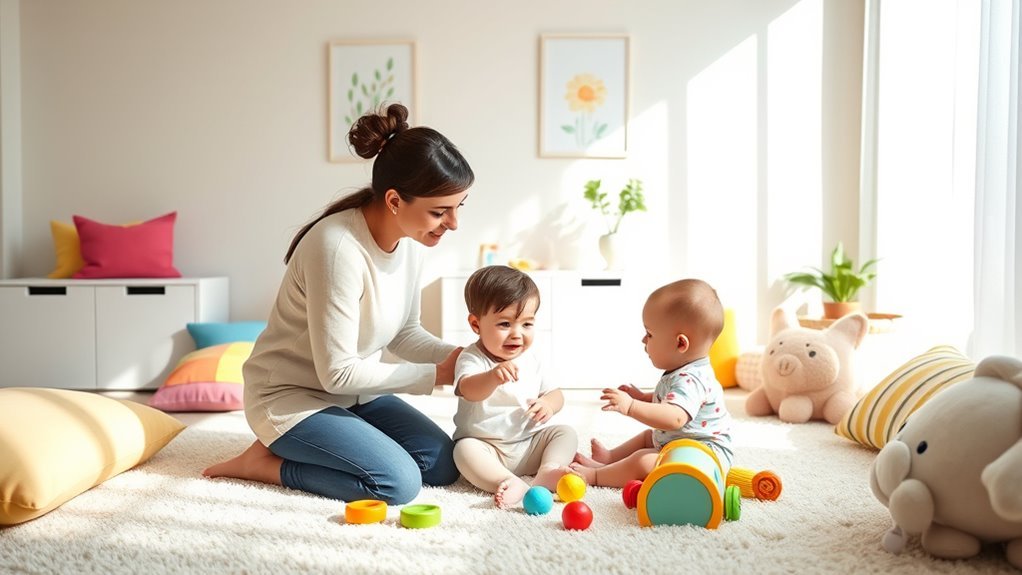
Creating a safe and supportive environment for your baby is essential in preventing hitting behaviors. By establishing safe play areas, encouraging positive social interactions, and maintaining consistent routines, you can help your little one feel secure and understood. This foundation not only minimizes frustration but also fosters healthy emotional development.
Safe Play Areas
When you set up a play area for your baby, it’s essential to prioritize safety and support to foster healthy development. Start by choosing safe toys that are age-appropriate and free from small parts. These will not only keep your baby entertained but also help them explore their environment without hazards. Create a designated space where your little one can move freely, ensuring it’s free from sharp edges or hard surfaces. Supervised interactions are vital; they allow you to guide your baby’s play and encourage positive behaviors. Remember, a safe play area fosters independence while providing the comfort of knowing your baby is protected. With these steps, you’re laying the groundwork for a nurturing and secure environment!
Positive Social Interactions
A safe play area sets the stage for your baby’s first social interactions, helping them learn about sharing, cooperation, and empathy. Engaging in positive social interactions early on lays a solid foundation for your child’s emotional development. Here are some ways to encourage these interactions:
- Play social games that involve turn-taking to teach patience and sharing.
- Introduce cooperative activities where your baby and their peers work together, fostering teamwork.
- Model positive behavior by showing how you interact kindly with others, reinforcing these values.
Creating a safe and supportive environment allows your little one to explore friendships naturally. By promoting these joyful experiences, you help nurture their ability to connect with others, reducing the likelihood of hitting as a response to frustration.
Consistent Routines and Structure
Establishing consistent routines and structure in your baby’s daily life can greatly contribute to a sense of security and predictability. When you create consistent schedules and predictable activities, your baby learns what to expect, which can reduce anxiety and frustration.
Here’s a simple table to help you visualize daily routines:
| Time | Activity |
|---|---|
| 7:00 AM | Wake Up & Breakfast |
| 9:00 AM | Playtime |
| 12:00 PM | Nap Time |
| 2:00 PM | Snack & Story Time |
| 5:00 PM | Dinner & Wind Down |
Establishing Routines to Reduce Anxiety
Creating a consistent routine can greatly help reduce anxiety in babies, as it provides them with a sense of security and predictability. Establishing regular bedtime routines and incorporating calming techniques can foster a peaceful environment. Here are some tips to ponder:
- Set a specific bedtime: A consistent sleep schedule helps your baby know when it’s time to wind down.
- Incorporate calming techniques: Activities like gentle rocking or soft music can soothe your little one as they prepare for sleep.
- Create a calming environment: Dim lights and a quiet space can make bedtime feel safe and inviting.
Teaching Empathy and Compassion Early On
Once your baby feels secure and settled into a routine, it’s a great time to introduce the concepts of empathy and compassion. Start with simple empathy building activities, like acknowledging their feelings. When your little one shows emotions, validate them with comforting words. This helps them understand others’ emotions too.
Engage in compassion exercises, such as sharing toys or helping others during playdates. Model compassionate behavior by demonstrating kindness in your daily interactions. Encourage your child to express concern for others, fostering a sense of connection.
These early lessons will create a foundation for a caring mindset. By nurturing empathy and compassion, you’re empowering your child to communicate their feelings positively, reducing the likelihood of hitting as a response to frustration.
Seeking Professional Guidance When Necessary
While most hitting behavior in babies can be managed with patience and understanding, there are times when seeking professional guidance can be beneficial. It’s okay to reach out for help if you feel overwhelmed or unsure about your approach. Consider these options:
- Professional therapy: A child psychologist can offer tailored strategies to address your baby’s behavior.
- Parental workshops: These resources can provide insights and support from experts and fellow parents.
- Support groups: Connecting with others facing similar challenges can foster community and shared learning.