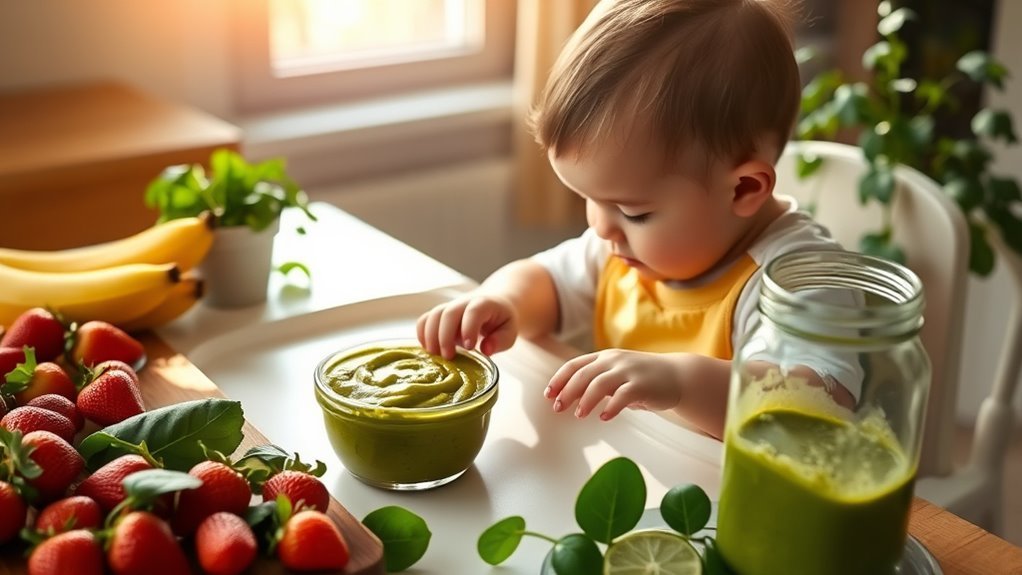

When introducing organic foods to your baby, it’s important to understand how dietary changes can impact their health. Starting with single-ingredient organic options helps you monitor for any potential reactions. As you navigate this change, consider how organic ingredients can address digestive issues and allergies. There are effective strategies to make this shift smoother, especially if your little one is a picky eater. But what should you prioritize to guarantee their well-being?
Understanding the Benefits of Organic Foods for Babies
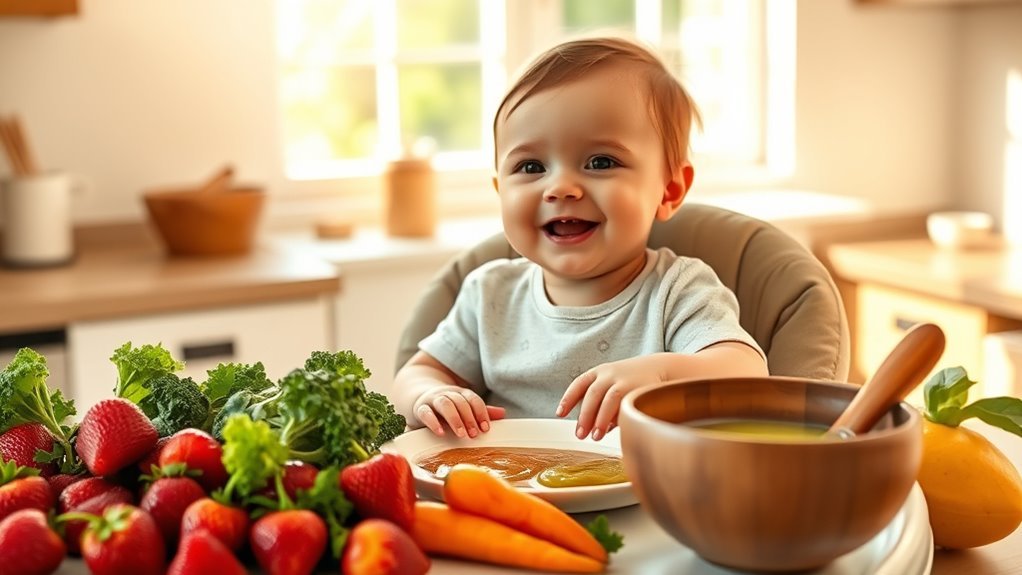
When you consider what to feed your baby, understanding the benefits of organic foods can help you make informed choices. Organic foods often boast higher nutrient density compared to conventional options, meaning they provide more vitamins and minerals per bite. This is essential for your baby’s growth and development. Additionally, choosing organic can positively influence the environment; organic farming practices reduce chemical runoff and promote biodiversity, which can lead to a healthier planet for future generations. You want to nurture your baby while also considering the world they’ll grow up in. By opting for organic, you’re not just feeding your child; you’re making a statement about health, sustainability, and the quality of the food they consume.
Introducing Organic Foods: Guidelines for New Parents
As you commence on the journey of introducing organic foods to your baby, it is essential to approach this change thoughtfully. Start by selecting single-ingredient organic foods, like pureed fruits and vegetables. This helps you monitor for any allergies or reactions. Keep in mind that some organic food myths suggest that all organic products are automatically safe; baby food safety should always be your priority. Wash fruits and veggies thoroughly and opt for trusted brands or homemade options. Gradually introduce new foods every few days, allowing your baby to adapt and enjoy a variety of flavors. Embrace this exciting time, knowing you’re nurturing a healthy relationship with food while providing the best start for your little one’s development.
Addressing Digestive Issues With Organic Ingredients
While introducing organic foods can be an exciting milestone for your baby, it’s important to recognize that some infants may experience digestive issues as their systems adjust to new ingredients. To support their digestive health, consider incorporating organic probiotics into their diet. These beneficial bacteria can help ease tummy troubles, promoting a balanced gut environment. Start with small amounts of organic yogurt or other probiotic-rich foods, and observe your baby’s response. If they show signs of discomfort, don’t hesitate to consult your pediatrician for guidance. Remember, every baby is unique, and finding the right organic options may take time. Embracing this journey with patience can foster a positive relationship with food and support your baby’s overall well-being.
Recognizing and Managing Food Allergies
Introducing organic foods can sometimes lead to unexpected reactions, including food allergies. It’s essential to stay vigilant for allergy symptoms like hives, swelling, or gastrointestinal distress in your baby. If you notice any of these signs after introducing a new organic food, it’s important to consult your pediatrician promptly. Remember, cross contamination risks can also pose problems; even trace amounts of allergens can trigger a reaction. To manage these risks, always read labels carefully and consider preparing foods in a controlled environment. Keeping a detailed food diary can help identify potential allergens and track your baby’s reactions. By staying informed and proactive, you’re empowering your baby to enjoy organic foods safely while minimizing allergy concerns.
Transitioning to Organic: Tips for Picky Eaters
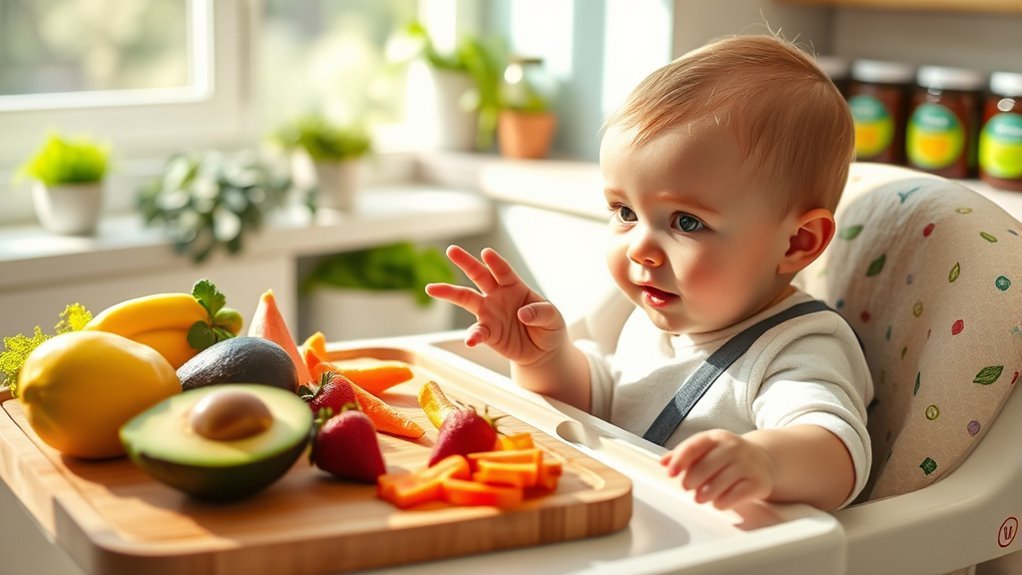
Shifting your little one to organic foods can feel challenging, especially if they’re a picky eater. Start by making gradual ingredient swaps, introducing one organic option at a time, and engage them in fun cooking activities to spark their interest in healthy eating. You can also explore flavorful organic snacks that cater to their tastes, making the process enjoyable for both of you.
Gradual Ingredient Swaps
How can you encourage your picky eater to embrace organic foods? One effective way is through gradual ingredient swaps. Start by using ingredient substitution strategies that replace conventional items with organic alternatives, such as organic applesauce for regular applesauce in recipes or organic pasta instead of conventional. This gradual shift method helps your child adjust without feeling overwhelmed. It’s important to introduce these changes slowly, allowing your little one to explore the new flavors without resistance. Keep an eye on their reactions and preferences; this helps you tailor the swaps to what they enjoy. Remember, the goal is to foster a positive relationship with food, making organic choices feel less like a chore and more like an exciting adventure.
Fun Cooking Activities
Many parents find that engaging their picky eaters in fun cooking activities can make the shift to organic foods much smoother. By incorporating playful recipes, you encourage your little ones to explore new ingredients in a relaxed environment. Let them touch, smell, and taste as they participate in sensory exploration; this hands-on experience not only piques their interest but also helps them develop a positive relationship with food. Try making colorful veggie pizzas or fruit smoothies together, letting them choose their favorite organic toppings. This approach allows children to feel a sense of control over their food choices, fostering independence and encouraging them to try healthier options. Ultimately, these fun activities can transform mealtime struggles into enjoyable experiences.
Flavorful Organic Snacks
While it can be challenging to introduce organic snacks to picky eaters, there are plenty of flavorful options that both kids and parents can enjoy. Start by exploring healthy snack options like organic fruit bars or veggie chips, which can be surprisingly tasty. Pairing fruits like apples or bananas with organic nut butter can create delicious organic flavor pairings that make snacks both enjoyable and nutritious. You might also consider yogurt made from organic milk, topped with fresh berries for added sweetness. Remember, it’s all about making these choices fun! By presenting organic snacks in creative ways, you can encourage your little ones to embrace healthier eating habits without feeling deprived. Enjoy the journey to discovering new flavors together!
Balancing Organic and Non-Organic Foods
As you navigate the world of feeding your baby, it’s important to understand that balancing organic and non-organic foods can be both beneficial and practical. While organic foods often boast fewer pesticides and higher nutrient levels, the nutritional comparisons between organic versus conventional foods can reveal that many non-organic options are still rich in essential vitamins and minerals. Incorporating both types can enhance your baby’s diet without overwhelming your budget. For instance, you might choose organic fruits and veggies for your little one while opting for non-organic grains and proteins. This approach allows you to provide diverse nutrients while making informed decisions that work for your family’s lifestyle. Ultimately, it’s about finding the right balance that aligns with your values and your baby’s needs.
Budget-Friendly Strategies for Organic Feeding
Finding ways to incorporate organic foods into your baby’s diet doesn’t have to break the bank. Start by exploring budget-friendly recipes that use seasonal produce. Seasonal fruits and vegetables are often cheaper and fresher, making them ideal for your little one. Consider buying in bulk, especially when it comes to staples like oats or grains. You can also join a local co-op or farmers’ market, which often offer organic options at lower prices. Don’t forget to plan your meals around sales and discounts, allowing you to stock up on organic items. With a little creativity and planning, you can provide your baby with nutritious organic meals without overspending. Embrace the journey of feeding your child healthily and affordably.
Resources for Learning More About Organic Foods
If you’re looking to understand the benefits of organic foods for your baby, there are plenty of reliable resources available. Exploring trusted organic certifications can help you make informed choices, while recommended reading materials can deepen your knowledge. By educating yourself, you’ll feel more confident in your decisions and guarantee the best for your little one.
Benefits of Organic Foods
While many parents seek the best nutrition for their babies, understanding the benefits of organic foods can be an essential step in that journey. Choosing organic not only provides nutritional advantages but also promotes a healthier planet. Here are three key benefits you should consider:
- Fewer Chemicals: Organic foods are grown without synthetic pesticides and fertilizers, reducing your baby’s exposure to harmful substances.
- Higher Nutritional Value: Studies show organic produce can have higher levels of certain vitamins and antioxidants, supporting your baby’s growth and development.
- Sustainability Impact: By choosing organic, you support farming practices that are better for the environment, helping to guarantee a healthier world for future generations.
These factors can empower you to make informed food choices for your little one.
Trusted Organic Certifications
As you navigate the world of organic foods for your baby, understanding trusted organic certifications can help guarantee you’re making safe and informed choices. Certification labels signify that the food meets specific organic standards, ensuring it’s free from harmful pesticides and additives. Here’s a quick overview of some trusted brands and their certifications:
| Certification Label | Description | Trusted Brands |
|---|---|---|
| USDA Organic | Meets federal organic standards | Earth’s Best, Annie’s |
| Non-GMO Project | Verified non-GMO ingredients | Horizon Organic |
| Certified Organic | Produced without synthetic fertilizers | Plum Organics |
| Fair Trade | Ethical sourcing practices | Alter Eco |
| Certified Gluten-Free | Safe for gluten-sensitive babies | Happy Baby |
Recommended Reading Materials
When you’re looking to deepen your understanding of organic foods for your baby, exploring recommended reading materials can be incredibly beneficial. These resources can help you navigate organic food myths and adhere to baby nutrition guidelines, empowering you to make informed choices. Here are three essential reads:
- “Organic Baby: The Essential Guide to Feeding Your Little One” – This book debunks common organic food myths while providing evidence-based nutrition advice.
- The Nourished Baby” – Focuses on holistic approaches to baby nutrition, emphasizing organic options.
- Eating Organic: A Parent’s Guide” – Offers practical tips for incorporating organic foods into your baby’s diet, making it easier for you to embrace this lifestyle.
These materials can truly guide you on a fulfilling journey toward nurturing your baby’s health.