

It’s funny how many parents find themselves in the same boat, struggling to understand their baby’s needs. You may feel overwhelmed, but using baby sign language can offer quick relief for both you and your little one. By incorporating simple signs into your daily routine, you can ease communication and reduce frustration. Want to learn the best strategies to get started? Let’s explore some effective tips that can make a real difference.
Understanding the Basics of Baby Sign Language

When you introduce baby sign language to your little one, it can feel like a whole new world of communication opens up. Understanding the sign language basics is essential for fostering effective baby communication. You’ll discover that babies can express their needs and feelings long before they can speak. It’s all about using simple gestures that represent everyday items or actions—like “milk” or “more.” This method not only empowers your child but also strengthens your bond as you learn to respond to their signals. By embracing this form of communication, you’ll feel a sense of freedom, knowing you can understand your baby’s wants and needs. Remember, consistency and patience are key as you commence on this rewarding journey together.
Start With Simple Signs
Starting with just a few simple signs can make a big difference in your baby’s communication journey. Focus on essential baby signs like “more,” “all done,” or “milk.” These simple gestures can help your little one express their needs and feelings, reducing frustration for both of you. Remember, consistency is key; use these signs regularly during mealtimes or playtime to reinforce their meaning. You don’t need to overwhelm your baby with too many signs at once. Instead, choose a couple that resonate with your daily life. As your baby begins to grasp these simple gestures, you’ll both enjoy a newfound freedom in communication, fostering a deeper bond as they express themselves more clearly.
Incorporate Signs Into Daily Routines
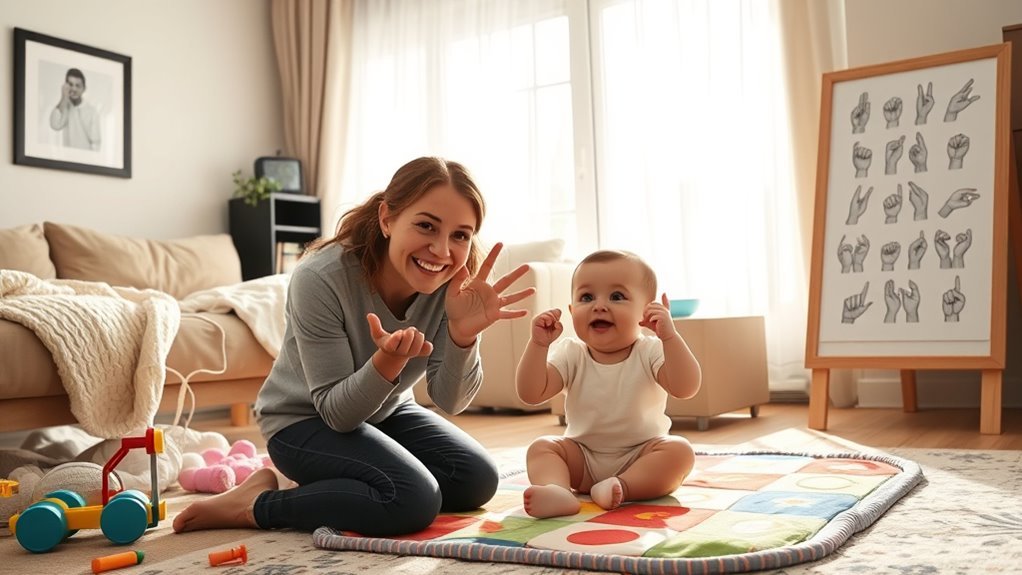
Incorporating signs into your baby’s daily routines can make communication smoother and more engaging. Whether it’s using signs during morning wake-ups, mealtime, or bedtime, these moments provide great opportunities for connection. By consistently using signs in these familiar contexts, you’ll help your baby understand and express their needs more effectively.
Morning Wake-Up Signs
Using sign language during morning routines can make a big difference in how your baby communicates their needs. Incorporating simple morning signs helps your little one express themselves as they wake up. Start with basic wake-up signals like the sign for “morning” or “play” to let them know it’s time to start the day. You can also use signs for “diaper” or “drink” to address their immediate needs quickly. Engaging in this practice not only fosters communication but also strengthens your bond. Be consistent, using these signs every morning, and soon your baby will catch on. Embracing this freedom in communication can create smoother mornings for both of you, setting a positive tone for the day ahead.
Mealtime Communication Tips
Mealtimes can be a wonderful opportunity to enhance your baby’s communication skills through sign language. By incorporating food signs and mealtime gestures into your daily routine, you’ll help your little one express their needs and preferences.
Here’s a simple table of common food signs to use during meals:
| Sign | Meaning |
|---|---|
| Open hand | More food |
| Both hands | All done |
| One finger | Milk |
| Clapping hands | Yummy |
| Pointing | Want this food |
Using these signs consistently will not only make mealtimes smoother but also foster a deeper connection between you and your baby. Remember, patience is key as they learn and grow in their ability to communicate!
Bedtime Routine Signs
Creating a calming bedtime routine can be even more effective when you introduce sign language. Using nighttime signs helps your baby feel secure and understand what’s coming next. Here are three practical signs to incorporate:
- Sleep: Gently place your hands together, palms touching, and then lower them to your chest. This calming gesture signifies that it’s time to wind down.
- Story: Use an open book gesture by mimicking the action of holding a book. This signals that it’s time for a bedtime story.
- Blanket: Mimic wrapping your baby with an imaginary blanket. This gesture creates a sense of warmth and comfort.
Use Visual Aids and Resources

Visual aids and resources can greatly enhance your baby’s learning experience with sign language. By incorporating colorful flashcards, illustrated books, or engaging videos, you’ll help your little one grasp signs more easily. These visual aids capture their attention and make learning fun! Consider creating your own creative resources, like a sign language chart to hang on the wall or a personalized storybook that includes signs relevant to your daily life. You can even use everyday objects to reinforce signs; for example, show a toy while signing its name. The more you integrate these resources into your routines, the more natural sign language will become for your baby. Embrace this journey together, and watch their communication flourish!
Consistency Is Key
When it comes to teaching sign language to your baby, consistency really makes a difference. Try to establish a daily practice routine, as this helps reinforce what they learn through repetition. By being consistent, you’re not only making it easier for your baby to grasp the signs, but you’re also creating a fun, engaging environment for communication.
Daily Practice Routine
Establishing a daily practice routine for sign language can turn learning into a fun and engaging part of your baby’s day. Consistency is vital, so try to incorporate a few simple activities into your daily routine:
- Morning Sign Time: Start each day with a few signs related to morning activities, like “eat” or “play.”
- Playtime Signs: Use sign language while playing with toys. For example, sign “car” or “ball” as you interact with them.
- Bedtime Wind Down: Wind down your day by signing calming words, such as “sleep” or “night-night,” to create a soothing atmosphere.
These engaging activities can help reinforce your baby’s learning while building a strong connection through communication. Enjoy the process, and let the signs flow naturally!
Reinforce With Repetition
Repetition is essential for reinforcing sign language with your baby, as it helps solidify their understanding and recall of signs. When you engage in sign language repetition, use the same signs consistently during daily routines. For instance, sign “milk” every time you feed your baby. This repetitive reinforcement builds familiarity and makes it easier for your little one to recognize and use signs. Incorporate signs into playtime, bedtime, and mealtime—whatever feels natural. Don’t hesitate to repeat signs frequently; it’s all part of the learning process. With patience and consistency, you’ll empower your baby to express their needs and feelings, fostering a deeper connection with them. Keep it light and fun, and you’ll both enjoy the journey!
Celebrate Your Baby’s Progress
Celebrating your baby’s progress in sign language can be a joyful experience that strengthens your bond and boosts their confidence. Recognizing achievements, no matter how small, is essential for progress tracking. Here are some ways to celebrate milestones:
- Create a Progress Chart: Visualize your baby’s journey with a simple chart, marking each sign they learn.
- Host Mini Celebrations: Organize small, fun events to acknowledge their progress—like a special snack or playtime.
- Share with Family: Show off your baby’s new signs to family members, turning their accomplishments into shared joy.