

As temperatures drop, it’s crucial to contemplate how cold weather affects your child’s development and health. Doctors recommend taking proactive steps to protect them from the elements, ensuring they stay warm and engaged. By understanding how to dress them appropriately and recognizing the signs of cold-related health issues, you can support their well-being. Let’s explore practical strategies that can make a significant difference in keeping your child safe and healthy during the winter months.
Understanding the Impact of Cold Weather on Children

As winter’s chill sets in, understanding how cold weather affects children becomes vital for parents and caregivers. Cold exposure can markedly impact a child’s developing immune response. When children are exposed to low temperatures for extended periods, their bodies may struggle to fend off infections, as colder conditions can suppress immune function. This suppression increases vulnerability to illnesses like colds and flu. Furthermore, the physical stress of cold can lead to discomfort and irritability, affecting mood and overall well-being. It’s important to monitor their time outdoors and guarantee they’re adequately sheltered from harsh elements. By recognizing these risks, you can better support your child’s health during the winter months, fostering resilience and freedom to enjoy the season safely.
Dressing Your Child for Cold Weather
When dressing your child for cold weather, layering is essential to maintain warmth and comfort. Start with a moisture-wicking base layer, then add insulating fabrics, and finish with a waterproof outer layer. Choosing the right materials not only keeps them warm but also allows for breathability and movement.
Layering for Warmth
Dressing your child for cold weather is essential to guarantee their comfort and safety, especially since children are more susceptible to the effects of low temperatures. Utilizing effective layering techniques can help keep them warm and allow for easy adjustments. Consider these four key layers:
- Base Layer: A snug-fitting thermal layer to wick moisture away from the skin.
- Insulating Layer: A thicker layer, such as fleece, to trap body heat.
- Outer Layer: A windproof and waterproof jacket to shield against the elements.
- Accessories: Hats, gloves, and scarves to protect extremities and retain warmth.
Choosing Appropriate Fabrics
Layering is only part of the equation when it comes to keeping your child warm in cold weather; the choice of fabrics is equally important. Different fabric types can greatly affect temperature regulation, ensuring your child remains comfortable and protected from harsh elements.
| Fabric Type | Benefits |
|---|---|
| Wool | Excellent insulation; moisture-wicking |
| Fleece | Lightweight; quick-drying; breathable |
| Cotton | Soft; good for layering but less effective in wet conditions |
When dressing your child, opt for materials that trap warmth while being breathable. Wool and fleece are ideal for outer layers, while cotton can serve as a comfortable base layer. Making informed choices about fabrics will enhance your child’s winter experience.
Importance of Indoor Activities During Winter

As winter sets in and outdoor play becomes limited, it’s important to recognize the significance of indoor activities for children’s development. Engaging in indoor games and creative crafts not only fosters physical coordination but also stimulates cognitive growth and emotional well-being. Here are some recommended activities:
- Indoor Games: Board games or puzzles enhance problem-solving skills.
- Creative Crafts: Art projects encourage creativity and fine motor skills.
- Reading Sessions: Storytime fosters language development and imagination.
- Movement Activities: Dance or yoga can improve physical health and reduce stress.
These activities provide a safe environment for children to explore and learn, ensuring their development continues even when confined indoors. Prioritizing indoor engagement can create lasting memories while nurturing essential skills.
Healthy Nutrition to Boost Immunity in Winter
While winter brings a host of challenges, including increased susceptibility to colds and flu, maintaining a healthy diet can greatly bolster your child’s immune system. Incorporating immune-boosting foods into their meals can make a significant difference. Here are some winter nutrition tips to take into account:Immune Boosting FoodsBenefits
Encourage your child to enjoy these foods regularly. A balanced diet rich in vitamins and minerals not only supports immunity but also promotes overall health during the colder months. Make winter a time for nourishing and strengthening their body!
Recognizing Signs of Cold-Related Health Issues
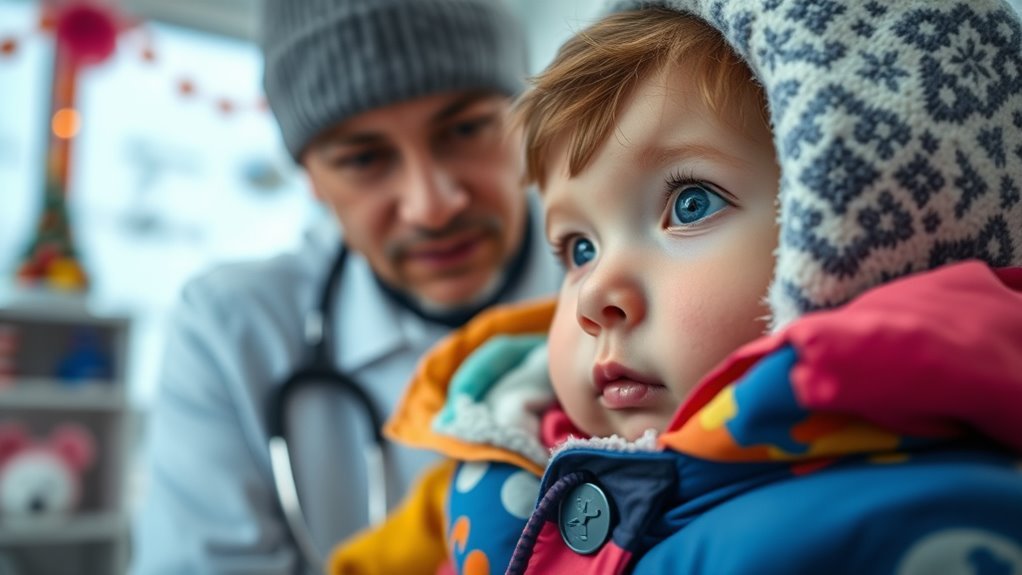
Even with a strong immune system supported by nutritious foods, children can still experience cold-related health issues during winter. It’s essential to engage in regular health monitoring to catch any early signs. Here are some common cold symptoms you should watch for:
- Persistent cough: A cough that lingers can indicate more than just a simple cold.
- Nasal congestion: Difficulty breathing through the nose may signal an infection or sinus issue.
- Fever: Elevated body temperature can be a sign of the body fighting off an illness.
- Unusual fatigue: If your child seems unusually tired or lethargic, it might be time to consult a healthcare professional.
Recognizing these signs early can help guarantee your child receives the care they need.
Maintaining Emotional Well-Being in Winter Months
As winter approaches, it’s essential to be aware of how it can impact your child’s emotional well-being, particularly with conditions like Seasonal Affective Disorder. Engaging in outdoor activities, even in colder weather, can play a vital role in boosting mood and maintaining mental health. By prioritizing these activities, you can help support your child’s emotional resilience throughout the winter months.
Seasonal Affective Disorder
When winter arrives and daylight hours diminish, many individuals, including children, may experience Seasonal Affective Disorder (SAD), a type of depression linked to seasonal changes. This condition can contribute to feelings of sadness, fatigue, and irritability, often referred to as the winter blues. It’s essential to recognize symptoms early and take steps to maintain emotional well-being during these colder months. Here are some recommendations:
- Increase exposure to natural light: Open curtains and consider light therapy.
- Maintain a routine: Regular schedules can provide structure and stability.
- Stay connected: Reach out to family and friends for support.
- Engage in physical activity: Regular exercise can boost mood and energy levels.
Being proactive can help combat seasonal depression and foster resilience.
Outdoor Activities Importance
The impact of winter on emotional well-being extends beyond just the risk of Seasonal Affective Disorder; it also highlights the importance of outdoor activities for maintaining mental health. Engaging in outdoor play is essential for children during these colder months. It not only fosters physical health but also boosts mood and emotional resilience. Activities like winter sports—whether skiing, snowboarding, or ice skating—provide an exhilarating way to combat the winter blues. These experiences encourage social interaction and help children build confidence. So, embrace the chilly weather! Prioritize outdoor time, even if it’s just a short walk or a playful snowball fight. By doing so, you’re fostering not just emotional well-being, but also a sense of freedom and adventure during winter’s grasp.
Tips for Safe Outdoor Play in Cold Conditions
Cold weather can present unique challenges for outdoor play, but with the right precautions, kids can enjoy the winter wonderland safely. Engaging in snow play or winter sports can be exhilarating, but it’s essential to prioritize safety.
- Dress in Layers: Make sure your child wears multiple layers to trap heat and stay dry.
- Limit Playtime: Keep outdoor sessions to around 30 minutes to prevent frostbite.
- Stay Hydrated: Encourage your child to drink water, as hydration is important even in cold conditions.
- Check for Signs of Cold Stress: Monitor your child for shivering, numbness, or fatigue, and head indoors if these occur.