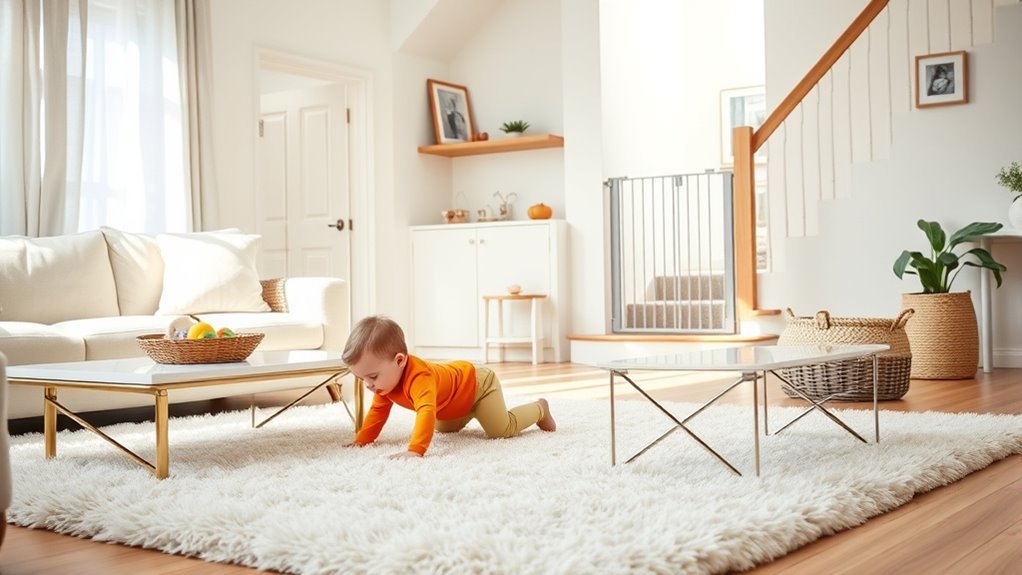

As a parent, ensuring your home is safe for your little ones can feel overwhelming. You want to create an environment where they can explore without constant worry. Luckily, there are practical hacks that make safety proofing manageable and effective. From using common household items to simple solutions, you can enhance your home’s safety. Let’s explore some clever strategies that can make a significant difference in your child’s development and well-being.
Understanding Child Development Stages and Safety Needs
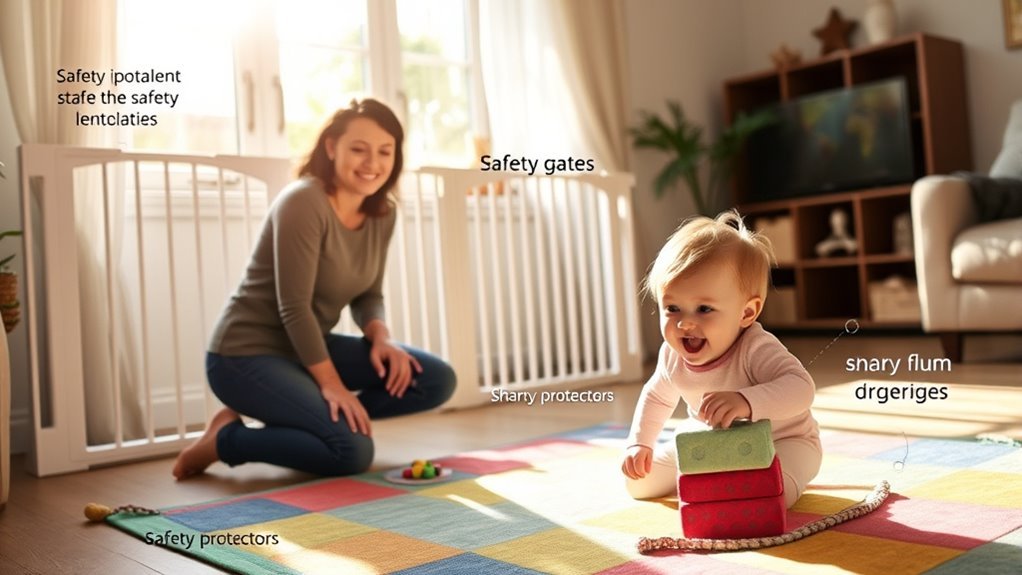
Understanding child development stages is essential for ensuring your home is a safe haven for your little ones. Each stage comes with its own developmental milestones, and recognizing these helps you set appropriate safety expectations. For instance, as your child starts crawling, they’re naturally curious, exploring every corner of your home. At this stage, securing sharp objects and covering electrical outlets becomes critical. When they begin walking, their balance improves, but so does their inclination to climb. It’s important to identify potential hazards and adapt your space accordingly. By staying informed about these stages, you can create an environment that nurtures their growth while keeping them safe, allowing both you and your child the freedom to explore and thrive together.
Essential Safety Gear for the Home
Creating a safe home for your little ones requires the right safety gear to prevent accidents and injuries. Start with corner protectors to soften sharp furniture edges, and grab outlet covers to keep curious fingers safe from electrical hazards. Safety gates are essential for keeping kids away from stairs or restricted areas. Consider investing in non-slip mats for bathrooms and kitchens to avoid slips. Don’t forget about cabinet locks for securing cleaning supplies and other harmful items. These home essentials offer peace of mind, allowing your children the freedom to explore while you know they’re safe. By equipping your home with the right safety gear, you’re taking a significant step toward creating a nurturing environment for your family.
Creative Baby Proofing Ideas Using Household Items

While you might think baby proofing requires a trip to the store, many effective solutions can be crafted from everyday household items. These DIY safety solutions not only save money but also empower you to create a safe environment for your little one.
| Household Item | Baby Proofing Hack |
|---|---|
| Pool Noodles | Cut and place on sharp edges |
| Tights or Socks | Use for cabinet handles |
| Rubber Bands | Secure furniture drawers |
Securing Furniture and Heavy Objects
As you navigate the exciting yet challenging journey of parenthood, ensuring your home is safe for your child is essential, especially when it comes to securing furniture and heavy objects. To prevent accidents, consider installing furniture anchors, which can keep bookshelves, dressers, and other tall pieces firmly attached to the wall. It’s a simple yet effective way to reduce the risk of tipping when your little one starts to explore. Additionally, be mindful of heavy objects like TVs or large decor; securing these with appropriate brackets can enhance heavy object safety. Remember, creating a safe environment gives you peace of mind, allowing your child the freedom to explore their world without unnecessary risk.
Child-Proofing Electrical Outlets and Cords
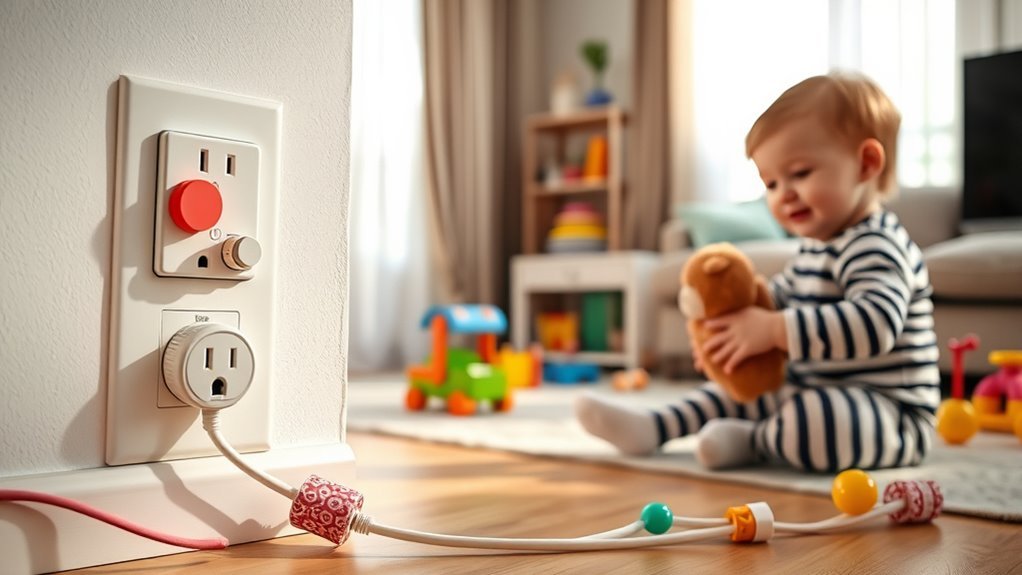
When it comes to keeping your little ones safe, child-proofing electrical outlets and cords is essential. Using outlet covers and shields can help prevent curious hands from accessing dangerous areas, while cord management solutions keep things tidy and out of reach. Let’s explore some key safety checklist essentials to guarantee your home is a secure environment for their growth and development.
Outlet Covers and Shields
To keep your little ones safe, it’s essential to child-proof electrical outlets and cords in your home. Start by prioritizing outlet safety with covers that fit snugly over the sockets, preventing curious fingers from reaching inside. Choose models that require a bit of effort to remove, ensuring your child can’t easily access them. Shield installation is a breeze; simply snap them into place without special tools. Consider using sliding outlet covers, which automatically close when not in use. Remember, while these measures greatly reduce risks, it’s still important to supervise your kids around electrical outlets. By taking these steps, you can create a home environment that balances safety with freedom for your little explorers.
Cord Management Solutions
While child-proofing outlets is a crucial step, managing cords is equally important in creating a safe environment for your little ones. Keeping cords organized and concealed not only reduces hazards but also offers a tidier space. Here are some practical solutions:
- Use cord organizers or clips to keep cables in check.
- Invest in cable concealment sleeves to hide unsightly wiring.
- Utilize furniture to tuck away cords and prevent access.
- Implement adhesive cord covers along walls to minimize tripping risks.
Safety Checklist Essentials
Child-proofing your home is essential for guaranteeing your child’s safety, especially around electrical outlets and cords. Start by installing safety covers on all outlets to prevent curious fingers from exploring. Use cord management solutions to keep cords out of reach, reducing the risk of trips and falls. Consider safety technology, like smart plugs that can be controlled remotely, adding another layer of security. When you’re outdoors, guarantee extension cords are secured and not a tripping hazard. Regularly check for frayed cords and replace them immediately. By taking these simple steps, you can create a safer environment, allowing your child the freedom to explore while keeping potential dangers at bay.
Keeping Hazardous Materials Out of Reach
Keeping hazardous materials out of reach is essential for your child’s safety and development. From cleaning supplies to medications, understanding common household hazards can help you create a safer environment. Let’s explore effective storage solutions and a childproofing essentials checklist to guarantee your home is a secure space for your little one.
Common Household Hazards
As you navigate the joys of parenting, it is vital to recognize that common household items can pose significant hazards to your little ones. Everyday objects may contain choking hazards or toxic substances that can endanger their health. Keeping these items out of reach is essential for creating a safe environment.
Here are a few common household hazards to be aware of:
- Cleaning supplies (bleach, detergents)
- Medications (prescription and over-the-counter)
- Small objects (coins, buttons)
- Electrical cords (exposed outlets)
Effective Storage Solutions
One effective way to guarantee your child’s safety is by implementing smart storage solutions for hazardous materials around the home. Start by utilizing cabinets with childproof locks to store cleaning supplies, medications, and other dangerous items. Effective organization is key—keeping these materials in a designated area makes certain you know where they are and that they’re out of reach. Use clear bins for easy visibility and label them to remind everyone of their contents. Consider vertical storage options, like shelves, to keep items higher up, away from curious hands. With a little planning and creativity, you can create a safe environment that allows you the freedom to navigate your home with peace of mind, knowing your child is protected.
Childproofing Essentials Checklist
To guarantee your child’s safety, having a childproofing checklist can be a game changer in keeping hazardous materials out of reach. Regular safety inspections of your home help identify potential risks, ensuring peace of mind. Here are some childproofing products you should consider:
- Cabinet locks: Keep cleaning supplies and medications securely stored.
- Outlet covers: Prevent little fingers from exploring electrical outlets.
- Corner protectors: Cushion sharp furniture edges to avoid accidents.
- Safety latches: Secure heavy furniture to walls to prevent tipping.
Creating Safe Play Areas Indoors and Outdoors
Creating safe play areas indoors and outdoors is essential for fostering your child’s development while guaranteeing their well-being. Start by designing indoor playspaces that encourage creativity and exploration. Use soft rugs, age-appropriate toys, and remove sharp objects. Think about incorporating a designated area where they can freely express themselves without risks.
For outdoor playzones, choose a flat, secure area with soft ground cover like grass or rubber mats. Install safety gates and guarantee play equipment is age-appropriate and well-maintained. Keep an eye out for potential hazards like sharp branches or holes. By creating these safe havens, you allow your child the freedom to explore, learn, and grow in an environment that prioritizes their safety and joy.
Establishing Safety Routines and Guidelines
While establishing safety routines and guidelines may feel overwhelming at first, it’s essential for nurturing a secure environment for your child. You can create a sense of safety by incorporating consistent practices into your daily life. Here are some practical safety reminders to help with routine reinforcement:
- Designate safe zones where your child can play freely.
- Create a checklist for daily safety tasks, like checking locks and removing hazards.
- Incorporate safety discussions into your routine, making it a natural part of your interactions.
- Model safe behavior by demonstrating how to handle potential dangers.
Engaging Kids in Safety Awareness and Education
Engaging kids in safety awareness and education is essential for developing their understanding of potential dangers and how to navigate them. By incorporating fun safety games and awareness activities, you’ll spark their interest and empower them to make safe choices.
Here’s a simple table to help you plan effective activities:
| Activity | Purpose |
|---|---|
| Safety Scavenger Hunt | Identify hazards at home |
| Role-Playing | Practice emergency responses |
| Safety Bingo | Recognize safe vs. unsafe items |
| Fire Drill Simulation | Understand fire safety protocols |
| First Aid Basics | Learn basic first aid skills |
These activities not only teach important skills but also foster independence and confidence, giving your kids the freedom to explore safely.