

It’s often said that bottle refusal in babies is simply a phase they go through, but is that really the whole story? Understanding the underlying causes and effective strategies can make a significant difference in your feeding journey. By exploring practical tips and natural remedies, you can help ease this shift. What if the key to success lies in creating a comforting environment and knowing when to introduce a bottle?
Understanding Bottle Refusal: Common Causes

When it comes to bottle refusal, understanding the common causes can help you navigate this challenging phase with your baby. Babies often develop strong bottle preferences, which can stem from a variety of factors. They might prefer breastfeeding due to the comfort and closeness it provides, leading to feeding anxiety when faced with a bottle. Additionally, if the bottle’s flow isn’t to their liking, or if they’re experiencing teething discomfort, they may resist it further. Stressful feeding environments can also heighten their anxiety, making them less willing to try a bottle. Recognizing these reasons can empower you to approach the situation with compassion and patience, ultimately paving the way for successful bottle introduction and easing your worries about feeding.
Timing Is Key: Choosing the Right Moment
Choosing the right moment to introduce a bottle can greatly impact your baby’s willingness to accept it. Aim for a time when your baby is calm and alert, ideally between feedings. This way, you can guarantee they’re not overly hungry or frustrated, fostering a positive experience. Look for signs of baby readiness, like showing interest in your movements or mimicking sucking motions. It’s also beneficial to align bottle introduction with a period of less stress, such as after a good nap. Remember, best feeding is about meeting your baby’s needs while encouraging their exploration of different feeding methods. By choosing the right moment, you’re giving your baby the freedom to adapt at their own pace, creating a smoother change.
Experimenting With Different Bottle Types
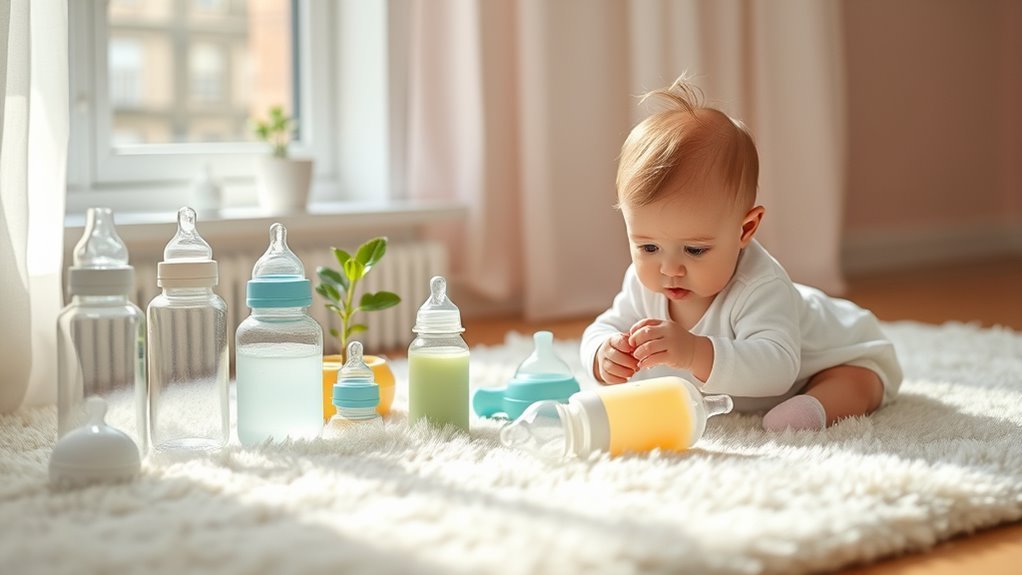
After finding the right moment to introduce a bottle, the next step is to explore different bottle types. Not all bottles are created equal, so experimenting can make a significant difference. Start by trying various nipple shapes—some babies prefer wide, flat nipples that mimic the breast, while others may like the standard round shapes. Additionally, consider the bottle materials; silicone and glass are popular choices, each offering unique benefits. Silicone bottles are lightweight and flexible, whereas glass bottles are durable and easy to clean. By testing these options, you can find a combination that suits your baby’s preferences and needs, ultimately promoting a smoother change away from exclusive breastfeeding. Your patience and willingness to experiment can lead to newfound freedom for both you and your little one.
Gradual Introduction: Blending Breastfeeding and Bottles
When it comes to blending breastfeeding and bottles, timing really matters. Introducing a bottle during a calm moment, rather than in a rush or when your baby is hungry, can make a big difference. Additionally, choosing the right nipple flow can help your baby shift more comfortably between the two feeding methods.
Timing Matters
To successfully introduce a bottle while continuing to breastfeed, it’s essential to reflect on the timing of this change. Consider the following tips to ease the transition:
- Start when your baby’s calm and relaxed.
- Choose a moment when you’re both free from stress.
- Introduce various bottle types to see what your baby prefers.
- Align the bottle introduction with their feeding schedules for familiarity.
- Make certain someone else offers the bottle to reduce confusion.
Choose Right Nipple
Choosing the right nipple can make a significant difference in how smoothly your baby adapts to bottle feeding while still breastfeeding. The ideal nipple should mimic your breast’s shape and flow rate, ensuring a comfortable adjustment.
| Nipple Shape | Flow Rate |
|---|---|
| Wide, breast-like | Slow |
| Standard, rounded | Medium |
| Flat, orthodontic | Fast |
Experiment with different shapes and flow rates to see what your baby prefers. A slow flow is often best for newborns, while older babies may handle a faster flow. Remember, it’s about finding a balance that works for you both, allowing your baby to feel secure and satisfied. Embrace this journey with patience and love.
Creating a Comfortable Feeding Environment

Creating a comfortable feeding environment is essential for your baby’s acceptance of a bottle, especially if they’re used to breastfeeding. A positive feeding atmosphere can make all the difference. Here are some tips to foster that comfort:
- Choose a quiet space, free from loud noises.
- Dim the lights to create a soothing ambiance.
- Use a favorite blanket or soft surface to enhance familiarity.
- Incorporate calming distractions, like soft music or gentle white noise.
- Hold your baby close, mimicking the closeness of breastfeeding.
Involving a Partner: The Power of Change
While it might seem intimidating to introduce a bottle to your breastfed baby, involving your partner in the process can greatly enhance the experience. Partner involvement not only eases the shift but also shares the responsibilities of feeding, allowing both of you to bond with your baby. By having your partner offer the bottle, you can step back and reduce any pressure your baby may feel. This change in dynamic creates a supportive environment where your baby may be more open to trying the bottle. Additionally, your partner can learn your baby’s cues, making them an active participant in the feeding journey. Embracing this shared responsibility fosters teamwork and can lead to a smoother adjustment for everyone involved.
Exploring Natural Remedies to Ease Transition
After involving your partner in the bottle introduction, you might want to explore natural remedies that can help ease your baby into this new feeding method. These options can provide comfort and support during the change:
- Natural teething remedies like chamomile or clove oil may soothe sore gums.
- Soothing herbal teas, such as fennel or peppermint, can aid digestion and calm fussiness.
- Warm baths with lavender oil can create a relaxing environment.
- Gentle massages on your baby’s back and tummy can be calming and reassuring.
- Cool, damp washcloths can be fun for your baby to chew on, offering relief while introducing new textures.
These remedies can help make the bottle-feeding experience more enjoyable for both you and your little one.
Consistency and Patience: The Key to Success
When it comes to helping your baby refuse the bottle, consistency and patience are essential. Establishing a routine and using a gradual change approach can make a significant difference, as can implementing positive reinforcement techniques. Remember, every baby is unique, so staying calm and encouraging will pave the way for success.
Establish a Routine
Establishing a consistent routine can be essential in helping your baby refuse the bottle effectively. A daily schedule not only brings comfort but also sets expectations for your little one. Here are some strategies to incorporate:
- Set fixed feeding times to create predictability.
- Introduce solid foods gradually to ease the shift away from bottle feeding.
- Use a special cup for water or other beverages, making it exciting.
- Establish a calming bedtime ritual to signal the end of bottle feeding.
- Be patient and consistent, as changes take time and understanding.
Gradual Transition Approach
While moving away from the bottle can feel intimidating, a gradual approach often yields the best results for both you and your baby. Start by introducing a sippy cup or alternative feeding method during non-stressful moments. This gradual exposure helps your little one build bottle familiarity without overwhelming them. Choose times when your baby is calm and receptive, slowly shifting from bottle to cup over several days or weeks. Consistency is key—try to maintain a routine that fosters comfort and security. If your baby resists, don’t panic; patience plays an essential role. Remember, every baby is different, and what works for one may not work for another. Embrace this journey, knowing that each small step brings your baby closer to independence.
Positive Reinforcement Techniques
Using positive reinforcement can greatly ease the shift away from the bottle, as it encourages your baby to embrace new feeding methods. Consistency and patience are key to making this change successful. Implementing reward systems can motivate your little one, making the process enjoyable for both of you. Consider these techniques:
- Praise and encouragement every time your baby tries a new feeding method.
- Small rewards, like a favorite toy or extra playtime, when they successfully use a cup.
- Celebrate milestones with family gatherings or special treats.
- Create a visual chart to track progress, adding stickers for each success.
- Maintain a calm environment, reinforcing positive vibes during feeding times.
Monitoring Baby’s Cues and Preferences
Understanding your baby’s cues and preferences is essential for successful bottle feeding, especially when they’re initially resistant. Pay attention to baby signals, like their facial expressions and body language, which can indicate comfort or discomfort with the bottle. Observe preference patterns to determine if your baby prefers a specific bottle type or nipple flow. Experiment with different temperatures for the milk or breast milk alternatives, as these can influence acceptance. Creating a calm environment during feeding helps reduce anxiety and encourages your baby to explore the bottle. Remember, patience is key; your baby may need time to adapt. By tuning in to their unique cues, you can foster a more positive feeding experience, ultimately granting you the freedom to manage their feeding needs effectively.