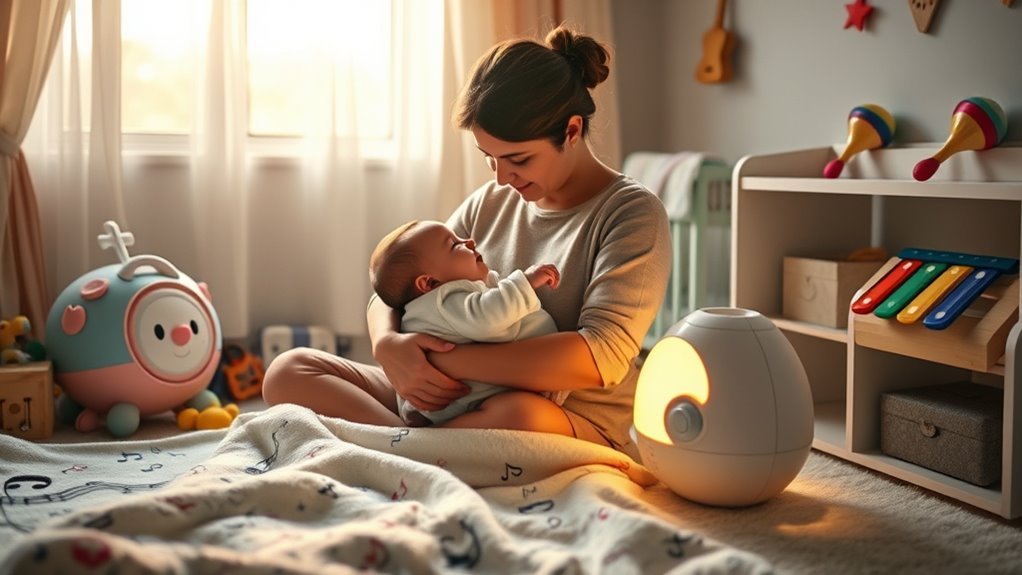

When your baby seems restless or uncomfortable, finding quick and effective remedies can feel overwhelming. Music therapy offers a gentle approach that can soothe your little one while creating a nurturing atmosphere. By understanding how to craft the right sound environment and engaging your baby with interactive elements, you can make a meaningful difference. Let’s explore practical tips to enhance your baby’s emotional well-being through music, starting with the ideal soundscape.
Creating the Ideal Sound Environment
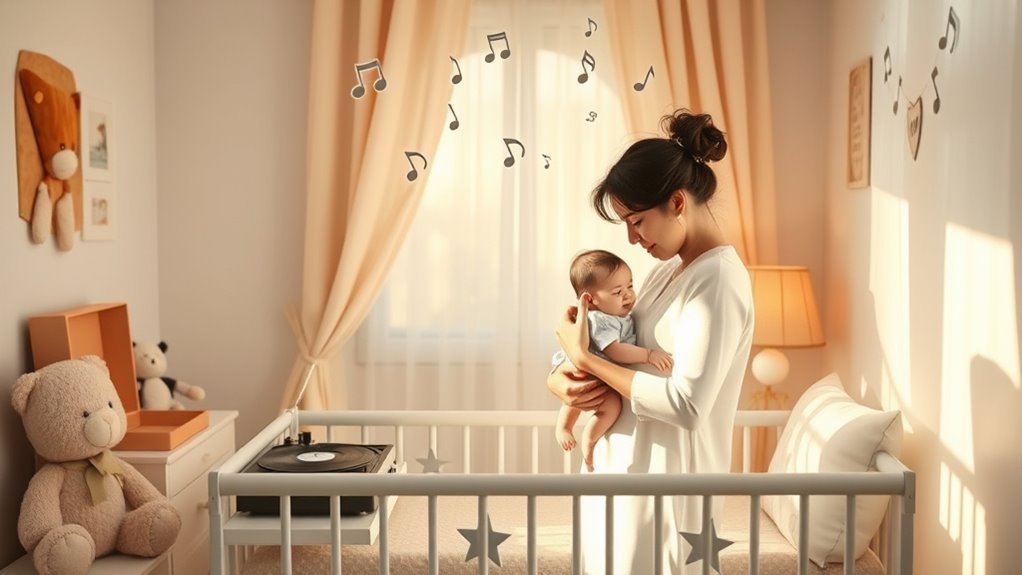
How can you create the perfect sound environment for your baby’s music therapy? Start by considering the sound frequency of the music you choose. Gentle, soothing tones are more effective for relaxation. Aim for a range that’s soft yet engaging, allowing your baby to absorb the melodies without being overwhelmed. You’ll also want to minimize ambient noise; turn off loud appliances and reduce chatter during sessions. Creating a calm space can help your baby focus on the sounds, fostering a more impactful therapy experience. You might even try using soft blankets or soft lighting to enhance the atmosphere. Remember, the ideal sound environment encourages freedom and exploration, so trust your instincts and follow your baby’s cues for the best results.
Choosing the Right Playlist for Soothing
After setting the ideal sound environment, the next step is selecting the right playlist for soothing your baby during music therapy. You’ll want to focus on gentle rhythms and calming melodies that can create a peaceful atmosphere. Look for soft instrumental tracks or lullabies that have a slow tempo, as these can help relax both you and your little one. Consider nature sounds mixed in with music, like flowing water or soft wind, to enhance the soothing effect. Pay attention to your baby’s reactions; they’ll guide you in discovering what works best. Trust your instincts, and don’t hesitate to experiment with different playlists until you find the perfect combination that brings your baby comfort and tranquility.
Incorporating Live Music Into Your Routine

Incorporating live music into your baby’s routine can offer unique benefits, from enhancing their mood to fostering engagement. Using simple instruments like shakers or a ukulele can make the experience interactive and fun. By creating a musical environment at home, you’ll not only soothe your little one but also spark their curiosity and creativity.
Benefits of Live Music
While many parents recognize the soothing effects of music, incorporating live music into your routine can amplify these benefits for your baby. Live performances provide a unique atmosphere that recorded music simply can’t match. The dynamic sounds and energy of a live show can captivate your little one, creating a memorable experience. Plus, these moments often foster social interaction, not just for your baby but for you as well. Engaging with other parents and caregivers while enjoying music together can form a supportive community. Whether it’s a local band in the park or a small concert, sharing these experiences can nurture your baby’s emotional and social development, making music a delightful part of your everyday life.
Instruments for Baby Engagement
To enhance your baby’s engagement with live music, consider introducing a variety of instruments into your routine. Musical toys like maracas, tambourines, or xylophones can spark their curiosity and promote sound exploration. You don’t need to be a musician; simply pick up an instrument and play along as you sing. Let your baby experiment with different sounds, encouraging them to shake, tap, or strike. This hands-on approach fosters creativity and connection. You can also incorporate everyday items—pots and wooden spoons make great percussion instruments! Remember, the goal is to create joyful, interactive moments. By infusing your day with music-making, you’ll nurture your baby’s love for sound and rhythm while enjoying your time together.
Creating a Musical Environment
Creating a musical environment at home can greatly enrich your baby’s developmental experience. By incorporating live music into your routine, you open up a world of sound patterns that stimulate their senses. Explore different music genres, from soothing classical to upbeat jazz, letting your baby absorb the various rhythms and melodies. You don’t need a professional setup; simple instruments like a ukulele or even clapping hands can create an engaging atmosphere. Play music during daily activities—like feeding or bath time—to make these moments more enjoyable. Encourage spontaneous dance parties, allowing your baby to feel the joy of movement. This approach not only nurtures their musicality but also fosters a strong bond between you and your little one.
Using Instruments for Interactive Play

Engaging your baby with musical instruments can be a delightful way to enhance their development and strengthen your bond. Through musical exploration, you foster their sensory engagement while creating joyful moments together.
| InstrumentSensory ExperienceInteractive Play Idea | ||
|---|---|---|
| Maracas | Sound and texture | Shake along to a fun song |
| Xylophone | Color and rhythm | Create a simple melody together |
| Drums | Vibration and volume | Tap a rhythm for clapping along |
These instruments invite your little one to experiment with sounds and movements. Remember, the goal is to have fun, so let your creativity flow. Your participation encourages their curiosity and helps cultivate a love for music. Enjoy this beautiful journey together!
Timing and Duration: Finding the Perfect Balance
When it comes to music therapy for your baby, timing and duration are key factors in maximizing its benefits. You’ll want to find the ideal session length that keeps your little one engaged without overwhelming them. Additionally, consider the best times for therapy when your baby is most receptive, ensuring a positive experience for both of you.
Ideal Music Session Length
Finding the right length for a music therapy session can greatly impact your baby’s experience and development. To maximize the music session benefits, consider these guidelines for session length:
- 10-15 minutes: Ideal for younger babies who may have shorter attention spans.
- 20-30 minutes: Suitable for older infants, allowing for more engagement and exploration.
- Frequency: Aim for 2-3 sessions per week to maintain consistency and support development without overwhelming your baby.
- Flexibility: Be ready to adjust the duration based on your baby’s mood and energy levels.
Best Times for Therapy
Although every baby is unique, identifying the best times for music therapy can greatly enhance its effectiveness and your baby’s enjoyment. Morning routines are often ideal for setting a positive tone for the day. Incorporating soothing melodies during breakfast or playtime can energize your little one and create a joyful atmosphere. On the flip side, evening wind downs provide an excellent opportunity to help your baby relax after a busy day. Gentle lullabies or calming sounds can ease the shift to bedtime, fostering a peaceful environment. Pay attention to your baby’s cues and adjust the timing as needed. Finding this balance will not only benefit your baby but also create special bonding moments for both of you.
Observing Your Baby’s Reactions to Tailor the Experience
As you engage in music therapy with your baby, it is crucial to pay attention to their reactions, since these responses can guide you in tailoring the experience to their unique preferences. Observing baby cues and emotional responses will help you create a more meaningful session. Here are some tips to enhance the experience:
- Watch for Smiles: A grin often signals joy; keep playing what they love.
- Note Their Movements: If they wiggle or kick, it means they’re engaged—try different tempos.
- Listen to Sounds: Coos or babbles indicate interest; let them respond to the music.
- Change Up the Vibe: If they seem fussy, switch to softer melodies or nature sounds.
Your awareness will foster a harmonious environment for your little one.