

Just as a painter uses a variety of colors to create a masterpiece, you can enhance your baby’s development through sensory play. Doctors emphasize the importance of engaging your little one with different textures, sounds, and visuals. These activities not only stimulate their senses but also support cognitive and motor skills. Curious about how to implement these ideas effectively? Let’s explore some practical tips and creative activities that can make sensory play both enjoyable and beneficial for your baby.
The Importance of Sensory Play in Early Development

While you may not realize it, sensory play is crucial for your baby’s early development. Engaging your little one in various sensory activities fosters cognitive development and enhances sensory awareness. As babies explore textures, sounds, and sights, they create significant neural connections that support their learning processes. Research shows that this type of play encourages curiosity and problem-solving skills, fundamental for their growth.
Additionally, sensory play helps babies become more aware of their surroundings, promoting confidence and independence as they navigate the world around them. By allowing your baby to experience different stimuli, you’re not just entertaining them; you’re laying the foundation for a bright and inquisitive mind. Embracing sensory play is a powerful way to nurture your child’s development naturally.
Simple Sensory Activities for Newborns
When it comes to sensory activities for newborns, simple and engaging experiences can make a big difference in their development. You can introduce tactile exploration with various textures, stimulate their vision with bright colors, and engage their hearing with soothing sounds. These activities not only entertain but also support essential developmental milestones during those early months.
Tactile Exploration With Textures
Tactile exploration is essential for newborns as it helps them make sense of the world around them. Engaging your baby with a texture variety can greatly enhance their sensory feedback. You can start by introducing different materials like soft fabrics, rough sponge, or smooth plastic. Lay these items on a safe surface for your little one to touch and explore. As they feel these textures, they’ll develop their fine motor skills and cognitive abilities. Encourage your baby to grasp, rub, and move these items to stimulate their senses. Remember, the more diverse the textures, the richer their sensory experience will be. Tactile play nurtures curiosity, making it a rewarding way for your baby to learn and grow.
Visual Stimulation With Colors
Visual stimulation is essential for newborns, as their developing brains are highly responsive to colors and patterns. Engaging your baby with colorful toys can spark their curiosity and promote cognitive development. Use toys with vibrant visuals—like bright blocks or patterned mobiles—to capture their attention. Position these toys within their line of sight during playtime, encouraging them to focus and track movement. You can also create a colorful environment by hanging artwork or using colorful blankets. As babies explore these visuals, they begin to recognize shapes and colors, paving the way for future learning. Remember, the more stimulating the visuals, the more your baby’s brain can grow, helping them thrive in those early months.
Auditory Engagement With Sounds
While engaging your baby’s eyes with vibrant colors is important, auditory experiences play an equally significant role in their development. Sound recognition is vital for cognitive growth, and introducing your newborn to various sounds can enhance their understanding of the world.
Here are some simple activities to promote auditory engagement:
| Activity | Description |
|---|---|
| Gentle Music | Play soft lullabies to soothe your baby. |
| Nature Sounds | Use recordings of rain or birds to stimulate curiosity. |
| Rhythmic Clapping | Create simple rhythmic patterns with your hands. |
| Rattles and Shakers | Introduce toys that make sounds when shaken. |
| Voice Variation | Sing or talk in different pitches to capture their attention. |
Engaging Sensory Experiences for Infants
As your infant grows, engaging their senses becomes essential for their development. Tactile exploration activities, like using different textured materials, can spark curiosity and enhance fine motor skills. Additionally, incorporating visual stimulation techniques, such as colorful toys or high-contrast images, helps sharpen their visual perception.
Tactile Exploration Activities
Tactile exploration activities are essential for infants, as they help stimulate their developing senses and enhance fine motor skills. Engaging your little one in texture discovery is a fun way to introduce various tactile materials. You might try filling a bin with soft fabrics, sponges, or even textured balls. Let your baby touch and manipulate these items, encouraging curiosity and exploration.
You can also create a sensory board by attaching different textures like sandpaper, bubble wrap, and smooth plastic to a sturdy board. This hands-on experience allows infants to learn about different surfaces while developing their grip. Remember, the more varied the textures, the richer the experience, fostering creativity and sensory awareness. So, immerse yourself in tactile play and watch your baby thrive!
Visual Stimulation Techniques
How can you captivate your baby’s attention and enhance their visual perception? One effective approach is to use visual contrast, as infants are naturally drawn to bold colors and patterns. Create engaging experiences by introducing toys or materials with high contrast, like black and white graphics, which can help sharpen their focus and stimulate brain development. Additionally, using light patterns can be mesmerizing for your baby; try gently moving a light source or using a soft projector to create shifting shapes on the wall. These dynamic visuals not only entertain but also encourage tracking and visual exploration. Remember, the aim is to provide a rich sensory environment that fosters curiosity and promotes visual growth in those early stages of life.
DIY Sensory Play Ideas With Everyday Items

While many parents might think sensory play requires fancy toys, you can create engaging experiences for your baby using everyday items found around the house. For water play, fill a shallow bin with water and let your baby explore with kitchen utensils like cups and spoons. Create sensory bins filled with bubble wrap or fabric swatches for tactile experiences. You can also turn a light box into a visual wonderland using colored translucent materials. For an edible sensory experience, mash fruits or veggies for squishing and tasting. If you’re feeling adventurous, set up a nature scavenger hunt in your backyard, encouraging your baby to discover textures and colors. These simple ideas can ignite your baby’s curiosity and creativity!
Outdoor Sensory Play: Connecting With Nature
Exploring the outdoors offers a wealth of sensory experiences that can enrich your baby’s development in exciting ways. Nature walks are a fantastic way to introduce your little one to outdoor textures, like the roughness of tree bark or the softness of grass. These encounters stimulate their senses and foster curiosity. Don’t forget to visit sensory gardens, where your baby can explore vibrant flowers and fragrant herbs, enhancing their tactile and olfactory senses. As you stroll, listen to the natural sounds around you—birds chirping, leaves rustling, and water flowing. These experiences not only promote sensory development but also strengthen your bond with nature. So, get outside and let your baby connect with the world in a playful and enriching way!
Safe Sensory Play Materials to Use
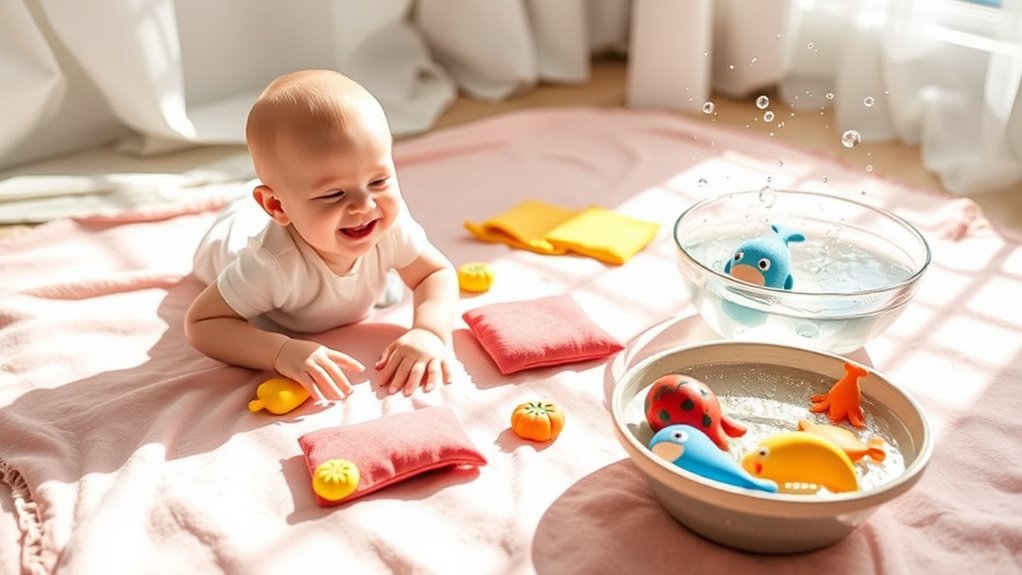
Creating a safe and engaging sensory play environment for your baby starts with choosing the right materials. Prioritizing sensory safety is essential. Here are four safe materials you can use:
Creating a sensory-rich play space for your baby begins with selecting safe materials that prioritize their exploration and safety.
- Sensory bins: Fill them with rice, beans, or oats; they’re safe for little hands to explore.
- Textured fabrics: Use soft, varied textures like cotton, silk, or fleece to stimulate touch.
- Non-toxic water beads: These are safe and provide a fascinating tactile experience.
- Edible play dough: Made from flour, water, and salt, it’s safe for curious mouths.
Incorporating Music and Sound Into Sensory Play
Incorporating music and sound into sensory play can transform your baby’s experience, enhancing their cognitive and emotional development. You can start by introducing simple musical instruments, like maracas or xylophones, which promote sound exploration. As your baby shakes, taps, or bangs these instruments, they’re not only having fun but also developing fine motor skills and auditory discrimination.
Play different genres of music and observe how your baby responds to various rhythms and melodies. This exposure helps them connect sounds with emotions, fostering social skills and creativity. You can also create a sound scavenger hunt, encouraging your little one to identify different noises around the house. Engaging them in music and sound will enrich their sensory journey and spark their curiosity.
Monitoring and Encouraging Your Baby’s Sensory Exploration
Although babies are naturally curious, actively monitoring and encouraging their sensory exploration can greatly enhance their development. By staying engaged, you can help foster their curiosity and cognitive growth. Here are some ways to do this:
- Observe their reactions: Pay attention to how they respond to different textures, sounds, and sights.
- Introduce new experiences: Regularly provide varied sensory play opportunities to stimulate their senses.
- Encourage open-ended exploration: Allow them to explore freely, within safe boundaries, to nurture their independence.
- Join the fun: Participate in their sensory activities to strengthen your bond while modeling curiosity.