

Insect bites can feel like unexpected raindrops on a sunny day, disrupting your peace as new parents. You want to protect your little one from these nuisances, but knowing where to start can be overwhelming. Understanding what to expect, how to prevent bites, and how to soothe discomfort can make a significant difference. Discovering effective strategies can help you navigate this challenge with confidence and ease.
Understanding Common Insect Bites

Insect bites can feel like a rite of passage for new parents, often coming as a surprise during outdoor adventures with your little ones. Understanding common bites, like mosquito and tick bites, is essential for peaceful outings. Mosquito bites usually result in red, itchy welts, indicating your child’s body is reacting to saliva. While generally harmless, they can transmit diseases, so keep an eye out for any unusual symptoms. Tick bites, on the other hand, can be more concerning. Ticks attach and may transmit Lyme disease or other infections. If you notice a tick, remove it carefully with tweezers. Being informed about these bites empowers you to respond appropriately, ensuring your family enjoys the freedom of outdoor exploration with confidence.
Preventative Measures to Keep Your Baby Safe
While outdoor adventures can be a wonderful bonding experience for you and your baby, taking proactive steps to prevent insect bites is essential for ensuring their safety. Start by dressing your little one in safe clothing, like lightweight, long-sleeved shirts and pants, to minimize skin exposure. Opt for light colors, as they’re less attractive to insects. Additionally, consider using natural repellents that are safe for infants, like essential oils diluted with a carrier oil. Always perform a patch test to check for any reactions. Create a bug-free zone by choosing locations with minimal vegetation and standing water. With these simple measures, you can enjoy the great outdoors while keeping your baby safe from pesky insect bites.
Recognizing Symptoms of Insect Bites
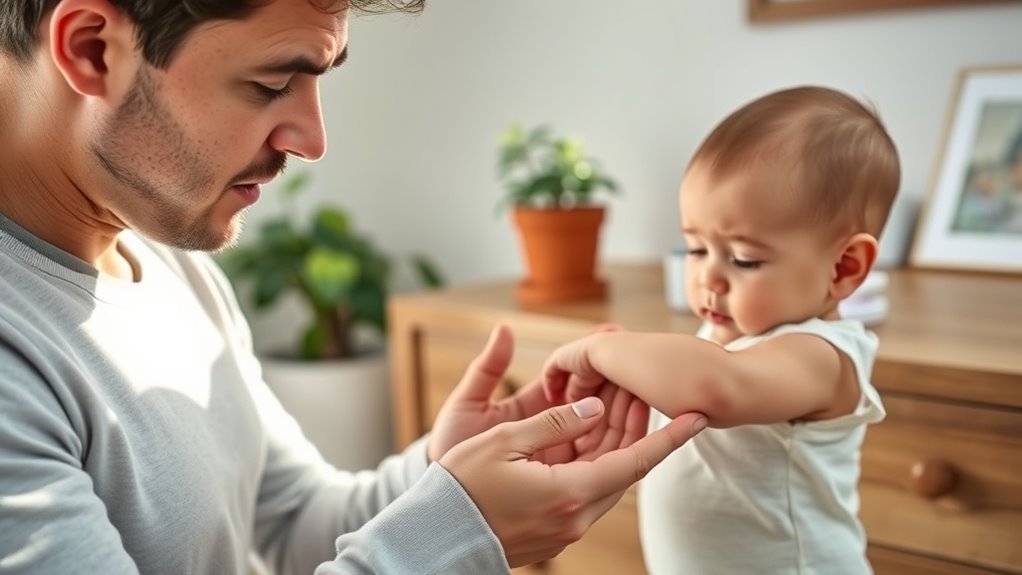
As you spend time outdoors with your baby, it’s important to be aware of the signs of insect bites, since early recognition can help you respond effectively. Start by identifying reactions such as redness, swelling, or warmth around the bite area. Your baby may also exhibit increased fussiness or scratching at the site. Differentiating bites can be essential; for example, mosquito bites often appear as small, raised welts, while bee stings may present with a puncture mark and more significant swelling. Keep an eye out for any unusual symptoms, like hives or difficulty breathing, which could indicate an allergic reaction. By staying vigilant, you can guarantee your baby remains comfortable and safe during your outdoor adventures.
Soothing Remedies for Your Baby
When your baby experiences discomfort from insect bites, knowing how to soothe their irritation can make all the difference. Start with gentle, natural treatments like applying cool compresses to the affected area. This can help reduce swelling and provide immediate relief. You might also try home remedies such as a dab of aloe vera gel, which is known for its calming properties. Oatmeal baths can be another soothing option, easing itchiness while providing comfort. Additionally, keep your baby’s nails trimmed to prevent scratching, which can worsen irritation. Always check that any remedies are safe for your baby’s age, and remember, your calm and nurturing approach will help ease their discomfort and create a sense of security.
When to Seek Medical Attention

How can you tell if your baby’s insect bite requires medical attention? It’s crucial to be vigilant for emergency signs. If you notice swelling that spreads beyond the bite area, difficulty breathing, or hives, these could indicate an allergic reaction. Other red flags include excessive crying, lethargy, or if your baby develops a fever. Trust your instincts—if something feels off, don’t hesitate to seek help. Remember, sometimes bites can lead to infections, so keep an eye out for increased redness or pus. As new parents, it’s natural to feel anxious, but prioritizing your baby’s well-being is imperative. Always consult a healthcare professional if you’re uncertain about your baby’s symptoms or need reassurance. Your peace of mind matters!