

Eczema in infants can be both distressing for your little one and challenging for you as a caregiver. Understanding its causes and symptoms is essential for effective management. With the right approach, you can soothe your baby’s discomfort and improve their skin condition. From gentle skincare routines to topical treatments and natural remedies, there are numerous strategies to explore. Let’s examine how you can help your infant find relief from this common skin issue.
Understanding Eczema in Infants

Understanding eczema in infants is vital for parents seeking effective management strategies. Eczema, or atopic dermatitis, often manifests on sensitive infant skin, leading to discomfort and distress. The causes of eczema are multifactorial, including genetic predisposition, environmental factors, and immune system responses. Your baby’s skin may react to irritants like soaps, fabrics, or even allergens such as pollen and pet dander. It’s essential to recognize that each infant may react differently, and what triggers eczema flares in one may not affect another. By understanding these causes, you can better navigate the complexities of managing your child’s condition. Prioritizing gentle skincare routines and keeping your infant’s skin hydrated can markedly improve their comfort and well-being.
Identifying Triggers and Symptoms
How can you effectively identify the triggers and symptoms of eczema in your infant? Understanding these factors is essential for managing their condition. Begin by observing your infant closely; certain patterns may emerge. Here are three steps to help you:
Identifying eczema triggers and symptoms in your infant is crucial for effective management; observe closely for emerging patterns.
- Monitor Skin Reactions: Take note of any redness, dryness, or itchiness on their skin, especially after exposure to potential irritants.
- Keep a Diary: Document foods, fabrics, and environmental changes to identify possible eczema triggers, like allergens or harsh soaps.
- Consult a Pediatrician: They can assist in symptom identification and recommend appropriate strategies for your infant’s care.
Gentle Skincare Routines for Infants
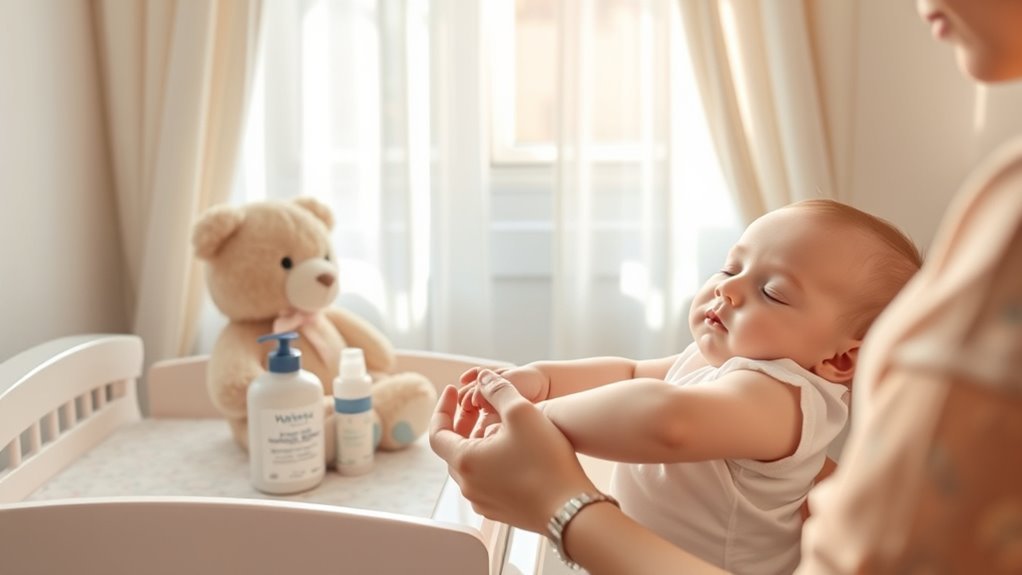
Establishing a gentle skincare routine for your infant is vital in managing eczema. Daily bathing practices, combined with effective moisturizing techniques, can help soothe and protect your baby’s delicate skin. Let’s explore these essential steps to keep your little one comfortable and reduce flare-ups.
Daily Bathing Practices
Creating a soothing bathing routine can greatly benefit infants with eczema. By establishing a gentle bath time ritual, you can help soothe their skin and promote overall comfort. Here are some key practices to follow:
- Optimal Water Temperature: Verify the water is lukewarm, around 98.6°F (37°C), to prevent irritation and discomfort.
- Short Baths: Limit bath time to 10-15 minutes to avoid drying out the skin.
- Mild Cleanser: Use a fragrance-free, gentle cleanser that won’t irritate their delicate skin.
These bath time benefits not only provide relief but also create a calming environment for your infant. Remember, consistency in these practices can enhance their skin’s resilience against eczema flare-ups.
Moisturizing Techniques Explained
After a soothing bath, the next step in managing your infant’s eczema involves effective moisturizing techniques. Choosing the right moisturizer types is essential; opt for thick creams or ointments that provide a protective barrier. These products trap moisture and alleviate dryness. When applying, use gentle application techniques—spread the moisturizer with your fingertips in a thin layer over your baby’s skin. Focus on areas prone to flare-ups, ensuring even coverage. It’s best to moisturize immediately after bathing, while the skin is still damp, to lock in hydration. Reapply throughout the day as needed, especially after diaper changes or exposure to irritants. Consistent moisturizing can greatly improve your infant’s skin health and comfort, helping them feel more at ease.
Topical Treatments for Eczema Relief
When it comes to soothing your infant’s eczema, topical treatments play an essential role in managing symptoms and providing relief. Here are three effective options to take into account:
- Topical Steroids: These medications reduce inflammation and itching. Always use them under a doctor’s guidance to guarantee safety and effectiveness.
- Over the Counter Creams: Look for hydrocortisone or other gentle formulations designed for infants. These can help soothe irritated skin without prescription strength.
- Moisturizing Ointments: Thick, emollient-based ointments can lock in moisture and create a protective barrier on your baby’s skin, helping to alleviate dryness.
Natural Remedies to Soothe Eczema

While managing your infant’s eczema can feel overwhelming, natural remedies offer gentle alternatives that may help soothe their skin. Herbal infusions, like chamomile or calendula, can provide anti-inflammatory benefits when incorporated into bathwater or applied topically. Additionally, soothing compresses made from cool, damp cloths can relieve irritation and reduce itching.
Here’s a quick overview of some effective natural remedies:
| Remedy | Description |
|---|---|
| Herbal Infusions | Add chamomile or calendula to baths. |
| Soothing Compresses | Use cool, damp cloths on affected areas. |
| Oatmeal Baths | Ground oats can calm irritated skin. |
| Coconut Oil | Moisturizes and has antibacterial properties. |
| Aloe Vera | Provides cooling relief and promotes healing. |
Exploring these remedies can empower you in your efforts to manage your infant’s eczema.
When to Seek Professional Help
How can you tell if your infant’s eczema requires professional intervention? It’s essential to recognize the signs of concern that indicate when to consult a healthcare provider. Here are three key indicators:
- Persistent Symptoms: If your infant’s eczema doesn’t improve despite at-home treatments or worsens over time.
- Infection Signs: Watch for fever, increased redness, or oozing patches, which may suggest a skin infection.
- Severe Discomfort: If your child seems excessively itchy, irritable, or has trouble sleeping due to their eczema.
Acting promptly can help manage your infant’s condition effectively, ensuring they remain comfortable and healthy. Don’t hesitate to reach out to a professional if you notice any of these concerning signs.