

When it comes to baby acne, understanding its implications on your child’s development is essential. While it’s often temporary, the impact it can have on your child’s emotional well-being shouldn’t be overlooked. Implementing a thoughtful management plan can foster both physical health and self-esteem. Consider how daily routines and natural remedies might play a role. Exploring these aspects can lead to a more thorough approach, ensuring your child feels supported throughout this journey.
Understanding Baby Acne: Causes and Symptoms

Baby acne, often a source of concern for new parents, typically appears as small red or white bumps on your infant’s face. This condition usually develops within the first few weeks of life and can last for several months. It’s important to understand that baby acne is common and not harmful. The exact cause isn’t fully understood, but it’s believed to be linked to maternal hormones passed during pregnancy, which can stimulate oil production in your baby’s skin. Acne triggers may include heat, humidity, and certain skincare products. Recognizing these factors can help you manage your baby’s skin effectively. Remember, patience is key, as baby acne generally resolves on its own without the need for extensive treatment.
When to Seek Medical Advice
While baby acne is usually harmless and self-limiting, there are instances when it’s wise to consult a healthcare provider. You should be mindful of specific signs of urgency that might indicate a more serious condition. If the acne spreads beyond the face, causes your baby discomfort, or is accompanied by fever, you may want to seek medical advice. Additionally, if the lesions appear to be inflamed, oozing, or bleeding, that’s when to worry. Trust your instincts—if you feel uncertain, reaching out to a healthcare professional can provide peace of mind. Remember, early intervention can be essential in managing your baby’s health, so don’t hesitate to ask questions or express concerns. Your child’s well-being is paramount.
Daily Skin Care Routine for Newborns
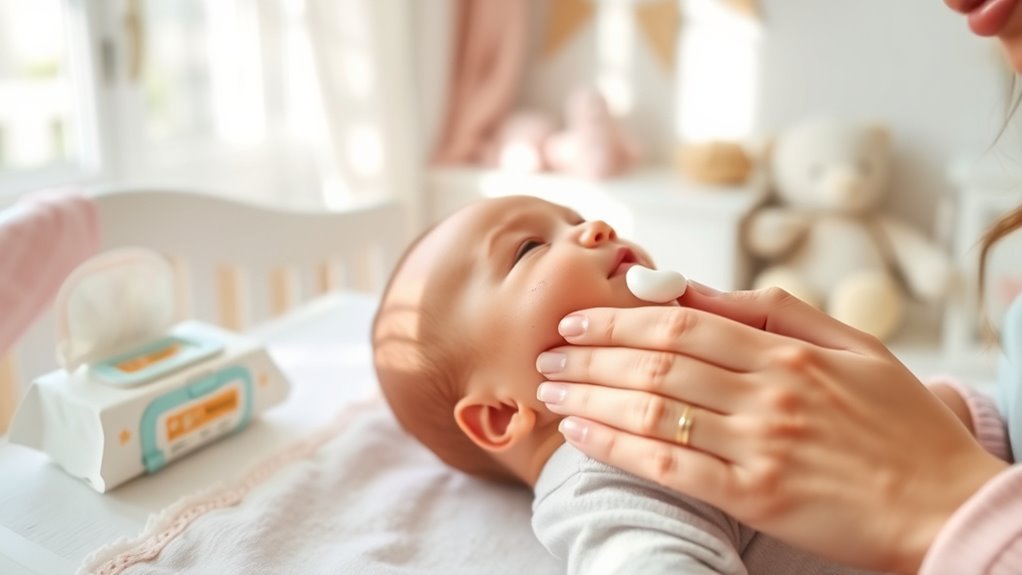
Establishing a daily skin care routine for your newborn is essential for maintaining their delicate skin health. Start by gently cleansing their face with a soft, damp cloth to remove any dirt or milk residue. This gentle exfoliation helps prevent clogged pores and promotes healthy skin. After cleansing, apply a baby moisturizer to keep their skin hydrated and protected. Look for products specifically formulated for infants, ensuring they’re free from harsh chemicals and fragrances. Remember, the frequency of baths should be minimal—two to three times a week is sufficient. Always monitor your baby’s skin for any signs of irritation or rash. With consistent care, you can help your newborn maintain their skin’s natural balance and comfort.
Natural Remedies for Baby Acne
When managing baby acne, gentle cleansing methods can help keep your baby’s skin clear without irritation. You might also consider soothing herbal solutions and moisturizing natural oils to provide additional relief. These natural remedies can support your baby’s skin health while ensuring a comforting experience.
Gentle Cleansing Methods
Gentle cleansing methods can greatly aid in managing baby acne, as they help to soothe the skin without causing irritation. Opt for gentle products designed specifically for infants, as these are less likely to disrupt your baby’s delicate skin barrier. Soft, damp cloths can be effective for cleansing; simply use a gentle touch to wipe away any excess oil or impurities. When applying cleansing techniques, avoid scrubbing or harsh rubbing, as this can exacerbate the condition. Instead, pat the skin dry with a soft towel after cleansing. Regular, gentle cleansing can help maintain skin health and prevent further breakouts, allowing your little one’s skin to heal naturally. With patience and care, you can support your baby’s skin journey effectively.
Soothing Herbal Solutions
Several soothing herbal solutions can be effective in managing baby acne, providing natural remedies that may help alleviate discomfort and promote healing. You might consider using herbal infusions, such as chamomile or calendula, known for their anti-inflammatory properties. These gentle infusions can be applied to the affected areas with a soft cloth, offering a calming effect on your baby’s skin. Additionally, calming balms made from natural ingredients like aloe vera and witch hazel can provide moisture and reduce redness. Always remember to patch-test any remedy first to verify your baby doesn’t have an adverse reaction. By incorporating these soothing herbal solutions, you can support your baby’s skin health while embracing a more natural approach to care.
Moisturizing Natural Oils
To effectively manage baby acne, incorporating moisturizing natural oils can be a beneficial approach. Natural oil benefits include their ability to hydrate the skin, reduce inflammation, and support healing. Oils like coconut, jojoba, and sweet almond are gentle yet effective options. When applying these oils, use clean hands or a cotton pad to gently massage a small amount onto your baby’s affected areas. This oil application technique not only soothes the skin but also encourages absorption. Remember to do a patch test first to verify your baby doesn’t react adversely. Consistent and careful use of natural oils can provide a nurturing way to address baby acne, promoting overall skin health while respecting your baby’s delicate nature.
Common Myths About Baby Acne
Although baby acne can be concerning for new parents, many myths surrounding this condition can lead to unnecessary worry. One common misconception is that baby acne results from poor hygiene, which isn’t true; it’s a natural response to hormonal changes. Another baby acne myth is that it’s caused by allergies or food sensitivities, but research shows this isn’t the case either. Many parents fear that using products will worsen the situation, but gentle cleansing is often sufficient. Finally, it’s essential to understand that infant skin misconceptions can perpetuate anxiety, as baby acne typically resolves on its own within weeks. Remember, your baby’s skin is resilient, and providing reassurance can help you navigate this common phase with confidence.
The Role of Diet in Skin Health

Understanding the factors that contribute to skin health can help parents support their baby’s well-being. Dietary influences play a vital role in maintaining healthy skin. Incorporating essential skin nutrients, like vitamins A, C, and E, along with omega-3 fatty acids, can promote a vibrant complexion. These nutrients can be found in foods such as leafy greens, fruits, and fatty fish. Breastfeeding mothers should also consider their own diets, as what they consume can affect their baby’s skin. While it’s tempting to focus solely on topical treatments, a balanced diet is fundamental. By prioritizing nutrition, you can empower your baby’s skin health, fostering a long-term approach to managing conditions like baby acne. Embrace the freedom to nourish your child from within.
Monitoring Skin Changes Over Time
As you monitor your baby’s skin, it’s important to recognize patterns in their acne and how it responds to different treatments. Keeping a record of any changes can help you identify what works best for your little one. This proactive approach guarantees you can make informed decisions about their skincare.
Recognizing Acne Patterns
When you observe changes in your baby’s skin, it’s essential to monitor the patterns of acne development over time. Recognizing these skin patterns can help you identify potential acne triggers and manage the condition effectively. Here are some key considerations:
- Timing of outbreaks: Note if acne appears after certain activities, like feeding or exposure to specific products.
- Location of lesions: Different areas may indicate different causes; for example, acne on the cheeks might relate to maternal hormones.
- Severity fluctuations: Keep track of when breakouts worsen or improve, which can provide insight into possible triggers.
Tracking Treatment Effectiveness
After recognizing acne patterns, the next step involves tracking the effectiveness of any treatments you implement. Monitoring skin changes over time is essential for ensuring your baby’s comfort and well-being. Use specific treatment metrics, such as the frequency of breakouts and the severity of lesions, to evaluate progress. Establish clear evaluation criteria, like measuring the duration and intensity of flare-ups, to help you determine which approaches work best. Regularly document observations, noting any improvements or regressions, as this will empower you to make informed decisions about ongoing management. By staying proactive and attentive, you foster a supportive environment that promotes your baby’s skin health, offering them the freedom to thrive without discomfort.
Long-Term Skin Care Practices for Children
While nurturing a child’s skin, establishing long-term skin care practices is essential for promoting healthy development and preventing future issues. By implementing effective preventive measures, you can enjoy long-term benefits that support your child’s skin health. Here are some key practices to take into account:
- Gentle Cleansing: Use mild, fragrance-free cleansers to maintain skin’s natural barrier.
- Moisturization: Apply a suitable moisturizer daily to keep the skin hydrated and resilient.
- Sun Protection: Introduce sunscreen at an early age to safeguard against UV damage.
These practices not only help in managing baby acne but also lay the foundation for a lifetime of healthy skin. Remember, consistency is key in nurturing your child’s skin effectively.
Emotional Impact of Skin Conditions on Child Development
Skin conditions, such as baby acne, can considerably affect a child’s emotional well-being and development. These conditions may challenge their self-esteem and hinder the development of emotional resilience. It’s important to recognize the emotional toll they can take.
| Emotional Impact | Strategies for Support |
|---|---|
| Low Self-Esteem | Encourage positive self-talk |
| Social Isolation | Foster inclusive friendships |
| Anxiety about Appearance | Teach skin care routines |