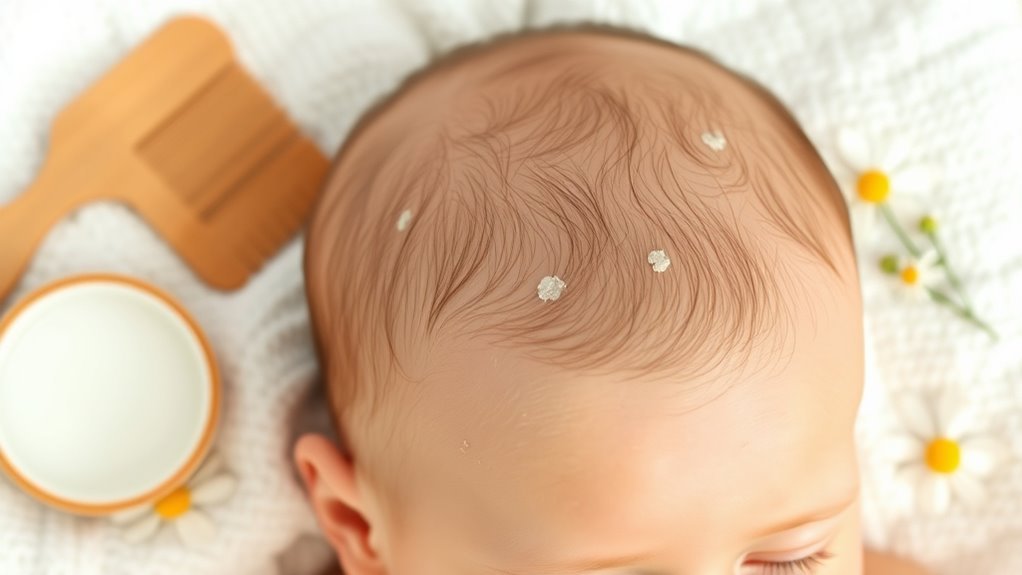

Cradle cap is like an unwelcome guest that often appears in the early months of your baby’s life. It’s common, yet understanding how to manage it effectively is essential. With a variety of remedies available, you might wonder which ones are truly beneficial. From gentle shampoos to natural oils, the options can be overwhelming. Let’s explore effective solutions that can help soothe your baby’s scalp and improve their comfort.
Understanding Cradle Cap: What It Is and Why It Occurs

Cradle cap, medically known as seborrheic dermatitis, is a common skin condition that affects many infants. It typically appears as yellowish, greasy patches on the scalp, often accompanied by flaking or crusting. The causes explained include overactive sebaceous glands producing excess oil, which can lead to the buildup of skin cells. This condition isn’t caused by poor hygiene or allergies, so there’s no need to worry about that. Symptoms identified range from mild flaking to more severe crusting, though it’s generally harmless and self-limiting. Understanding cradle cap helps you recognize that it’s a natural occurrence in infants and usually resolves on its own, allowing you to focus on your baby’s overall well-being without unnecessary concern.
Gentle Baby Shampoo: Choosing the Right One
When addressing cradle cap, selecting a gentle baby shampoo can play a significant role in managing the condition. A gentle formula helps to cleanse the baby scalp without causing irritation or stripping essential oils. Look for shampoos that are hypoallergenic, free from harsh chemicals, and specifically designed for infants.
| Brand Name | Key Ingredients | Features |
|---|---|---|
| Brand A | Aloe Vera, Chamomile | Soothes and hydrates |
| Brand B | Coconut Oil | Nourishing and moisturizing |
| Brand C | Tea Tree Oil | Antifungal properties |
| Brand D | Natural Extracts | Gentle cleansing |
| Brand E | Oat Extract | Calming and anti-inflammatory |
Choosing the right shampoo is essential in promoting a healthy baby scalp and alleviating cradle cap symptoms.
Natural Oils: Soothing Remedies for Scalp Care

Natural oils can be effective in soothing and managing your baby’s cradle cap, especially when used as part of a regular scalp care routine. Coconut oil is particularly beneficial due to its moisturizing properties and antibacterial effects, which can help reduce inflammation and promote healing. Simply apply a small amount to your baby’s scalp, allowing it to absorb for about 30 minutes before washing it out. Olive oil is another excellent choice; its rich fatty acids nourish the skin and can loosen crusty patches. Like coconut oil, apply a small amount to the scalp, letting it sit before rinsing. Consistent use of these natural oils can enhance your baby’s scalp health, offering a gentle, effective remedy for cradle cap.
Brushing Techniques: How to Remove Flakes Safely
To effectively tackle flakes caused by cradle cap, using the right brushing techniques is essential. Start with a soft-bristled brush, as this minimizes irritation on your baby’s delicate skin. A natural bristle type is often recommended, as it’s gentle yet effective in loosening flakes.
Brush your baby’s scalp gently, focusing on areas with the most buildup. It’s important to maintain an appropriate brushing frequency; doing this a few times a week can help prevent excessive accumulation without causing discomfort. Always brush when the scalp is slightly moisturized, perhaps after applying a natural oil. This technique helps to lift the flakes while keeping your baby’s skin healthy and soothed. Remember, patience is key in this process.
Over-the-Counter Treatments: Options to Consider

When managing cradle cap, over-the-counter treatments can be effective options. You might consider topical medicated shampoos, which are formulated to address flaking and irritation. Additionally, natural oil treatments and gentle exfoliating products can help soothe the scalp while promoting healthy skin.
Topical Medicated Shampoos
Although cradle cap is often mild and self-limiting, using topical medicated shampoos can effectively manage the condition and promote healing. Over-the-counter options typically contain active ingredients like ketoconazole, selenium sulfide, or salicylic acid. These medicated options work by targeting the underlying causes, such as excess oil production and fungal growth. When selecting a shampoo, look for those specifically formulated for infants with cradle cap, as they’re gentler on delicate skin. Apply the shampoo according to the package instructions, usually a few times a week, to maintain effectiveness. Regular use of these topical treatments can help clear up the condition, making your baby’s scalp healthier and more comfortable. Always consult your pediatrician before starting any new treatment.
Natural Oil Treatments
Natural oil treatments can be an effective option for managing cradle cap, especially since many parents prefer gentle, non-medicated approaches. Coconut oil and olive oil are two popular choices that can help alleviate symptoms. Both oils possess natural moisturizing properties, which can soften the scales associated with cradle cap, making them easier to remove. To use, simply apply a small amount of the oil to your baby’s scalp, gently massaging it in. Allow it to sit for about 30 minutes before washing your baby’s hair with a mild shampoo. This process can be repeated a few times a week until you notice improvement. Always verify you’re using high-quality oils and consult your pediatrician if you have concerns.
Gentle Exfoliating Products
If you’re looking for an effective way to manage your baby’s cradle cap, gentle exfoliating products can be a valuable addition to your treatment plan. These products help remove the flaky skin that often accompanies cradle cap, providing significant exfoliation benefits. Look for mild exfoliants specifically formulated for infants, such as those containing natural ingredients like aloe vera or oatmeal. Brands like Mustela and Babyganics offer gentle options that are safe for delicate skin. When using these products, always follow the instructions carefully to avoid irritation. Incorporating gentle exfoliation into your routine can enhance your baby’s comfort and promote healthier skin, making it a recommended step in addressing cradle cap effectively.
When to Consult a Pediatrician: Signs of Concern
If your baby’s cradle cap persists despite treatment, it’s important to consult a pediatrician. Additionally, watch for signs of infection, such as redness, swelling, or discharge. Addressing these concerns promptly can help guarantee your baby’s health and well-being.
Persistent Cradle Cap
Although cradle cap is typically harmless and often resolves on its own, there are certain signs that should prompt you to consult a pediatrician. If you notice that the cradle cap persists beyond a few months, it may indicate an underlying issue that requires further assessment. Additionally, if the affected area becomes inflamed, red, or spreads to other parts of the body, it’s crucial to seek medical advice. You should also consider consulting a pediatrician if the treatment options you’ve tried, such as gentle washing or applying oils, haven’t improved the condition. Understanding the causes cradle cap can help you determine the best approach and guarantee your baby’s skin health remains a priority.
Signs of Infection
Persistent cradle cap can sometimes lead to complications, including signs of infection. It’s essential to monitor your baby’s scalp for specific infection symptoms. Look for increased redness, swelling, or warmth in the affected area. Pus or fluid oozing from the lesions is another alarming sign that requires immediate attention. If your baby develops a fever or seems unusually irritable, these could indicate a more serious issue. Symptom identification is important; if you notice any of these concerns, don’t hesitate to consult your pediatrician. Early intervention can prevent more severe complications and guarantee your baby’s comfort and health. Remember, it’s better to be cautious when it comes to your child’s well-being.
Preventive Measures: Keeping Cradle Cap at Bay
To help keep cradle cap at bay, maintaining a consistent hair care routine for your baby is essential. Implementing preventive care within your daily routine can greatly reduce the risk of developing this condition. Here are four effective measures to take into account:
- Gentle Cleansing: Use a mild baby shampoo to wash your baby’s scalp regularly, removing excess oil and flakes.
- Moisturizing: Apply a light, baby-safe oil or moisturizer to the scalp to prevent dryness.
- Brushing: Gently brush your baby’s hair and scalp with a soft-bristle brush to stimulate circulation and loosen any flakes.
- Regular Monitoring: Check your baby’s scalp regularly for signs of cradle cap, allowing for early intervention when necessary.
Additional Tips for Soothing Your Baby’s Skin
When caring for your baby’s sensitive skin, it’s important to contemplate a variety of soothing techniques that can alleviate discomfort associated with conditions like cradle cap. Implementing a consistent moisturizing routine is essential; using gentle, hypoallergenic moisturizers can help keep your baby’s skin hydrated and reduce irritation. Additionally, consider giving your baby soothing baths using lukewarm water and mild, fragrance-free cleansers. This can help soften any scales and promote healing. After bathing, always apply a moisturizer to lock in moisture and protect the skin. Remember to avoid harsh soaps or overly hot water, as these can exacerbate sensitivity. By incorporating these strategies, you can effectively soothe your baby’s skin and support their overall comfort.