

Biting in child development can be likened to a storm cloud, often signaling deeper emotional currents beneath the surface. It’s a behavior that many parents encounter, leaving them feeling confused and concerned. Understanding the reasons behind this reaction is vital, as it can lead to healthier emotional expressions. By exploring effective strategies and expert insights, you can turn this challenging phase into an opportunity for growth and learning. What steps can you take to navigate this complex issue?
Understanding the Reasons Behind Biting

Understanding why children bite can be essential for addressing the behavior effectively. Biting often stems from various emotional responses, such as frustration, anxiety, or even excitement. In the area of bite psychology, it’s vital to recognize that children, especially toddlers, lack the verbal skills to express these feelings appropriately. When they’re overwhelmed or unable to communicate, biting may seem like a quick solution to release pent-up emotions. By observing the context in which biting occurs, you can identify triggers and address underlying issues. This understanding fosters empathy for their struggles while guiding you in teaching alternative ways to express feelings. Empowering children to manage their emotions can lead to healthier interactions and a more harmonious environment for everyone involved.
Age-Related Factors Influencing Biting Behavior
As your child grows, you’ll notice that their biting behavior can be influenced by various developmental milestones. Different age groups may face unique triggers and responses that contribute to this behavior, making it essential to understand what’s happening at each stage. By recognizing these age-related factors, you can better support your child in maneuvering their emotions and interactions.
Developmental Milestones Impacting Biting
While many parents may feel alarmed when their child bites, it’s essential to recognize that this behavior often aligns with specific developmental milestones. Milestone awareness can help you understand the natural biting progression in young children. Here are some key ages when biting may occur:
- Around 1 year: Exploring the world through their mouths.
- 18 months: Increased frustration due to limited communication skills.
- 2 years: Assertion of independence and testing boundaries.
- 3 years: Social play begins, leading to conflicts and misunderstandings.
Age-Specific Triggers and Responses
Biting behavior in young children can often be triggered by specific age-related factors, which may vary considerably from one developmental stage to another. During the biting age, toddlers frequently experience frustration as they navigate their emotions and social interactions. These age reactions can manifest in biting when they’re overwhelmed or unable to communicate effectively. As children grow, their understanding of boundaries and empathy develops, leading to a natural decline in biting behavior. It is crucial to respond to these triggers with patience and guidance, helping your child learn appropriate ways to express their feelings. By recognizing the specific age reactions influencing biting, you can better support your child’s emotional development and foster a more peaceful environment.
The Role of Environment in Biting Incidents

The environment plays an essential role in the biting incidents you may encounter with young children. Factors like stressors in their surroundings, the availability of safe spaces for play, and the dynamics of social interactions can all influence this behavior. Understanding these triggers can help you create a more supportive atmosphere that encourages positive interactions.
Environmental Triggers for Biting
When children find themselves in overwhelming environments, it can trigger biting incidents as a way to express frustration or seek attention. Factors such as sensory overload and peer pressure can intensify their reactions. To help minimize these biting incidents, consider these environmental triggers:
- Crowded Spaces: Large groups can create anxiety and overwhelm.
- Loud Noises: Sudden or constant sounds may lead to sensory overload.
- Unfamiliar Situations: New settings can increase stress and discomfort.
- Peer Dynamics: Intense interactions with peers can pressure children, causing them to lash out.
Safe Spaces for Play
Creating safe spaces for play is essential for reducing biting incidents among children. When you provide an environment that encourages sensory exploration and imaginative play, it fosters positive interactions and emotional well-being. Make sure that play areas are enriched with various textures, colors, and materials, allowing children to engage their senses freely. This not only captures their interest but also diverts their attention from potential frustrations that may lead to biting. By promoting imaginative play, you help children navigate their feelings and social situations more effectively. Remember, a thoughtfully designed play space can greatly reduce stress for both you and your child, creating a nurturing atmosphere where they can thrive without resorting to biting as a means of expression.
Social Interaction Impact
While children naturally explore their surroundings, the dynamics of social interaction in their environment can greatly influence biting behavior. Understanding these social dynamics and peer influence is essential in addressing biting incidents. Here are some factors to take into account:
- Group Size: Larger groups can overwhelm a child, leading to frustration and biting.
- Modeling Behavior: Kids often imitate peers; if they see biting, they may think it’s acceptable.
- Emotional Climate: A tense or chaotic environment can heighten anxiety, triggering biting as a response.
- Conflict Resolution: Inadequate guidance on handling disagreements can lead to aggressive behaviors, including biting.
Strategies for Prevention and Intervention
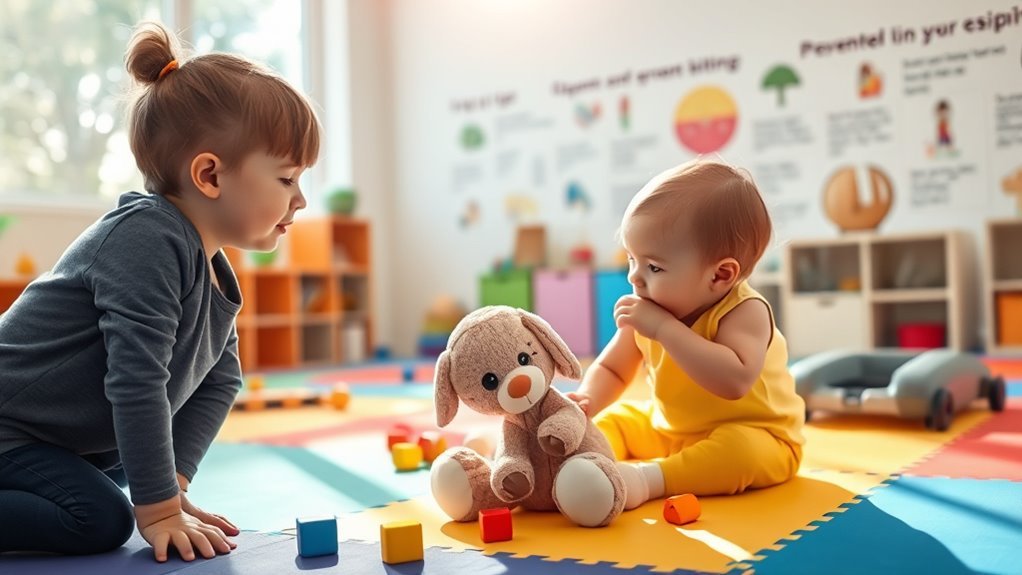
Although biting can be a common behavior among young children, it’s essential to implement effective strategies for prevention and intervention to address this challenging issue. Start by employing positive reinforcement; praise your child when they express emotions without resorting to biting. This encourages them to choose healthier responses. Role modeling is equally important—demonstrate gentle interactions during playtime to illustrate appropriate behavior. Create a consistent environment where expectations are clear, and provide alternatives for expressing frustration, like using words or calming techniques. Be patient and remember that change takes time. With understanding and dedicated effort, you can help your child navigate their emotions and reduce biting incidents, fostering a safer and more harmonious environment for everyone involved.
Effective Communication Techniques for Parents
Effective communication is essential for parents working to understand and address their child’s biting behavior. Utilizing effective techniques can foster a supportive environment. Here are some strategies to contemplate:
- Active Listening: Pay close attention to your child’s feelings and perspectives. This helps them feel validated.
- Stay Calm: Maintain a composed demeanor when discussing biting incidents. This models appropriate reactions for your child.
- Use Positive Reinforcement: Praise your child when they express emotions verbally instead of resorting to biting. This encourages better behavior.
- Set Clear Expectations: Clearly communicate what behavior is acceptable and what isn’t. Consistency is key in helping your child learn boundaries.
When to Seek Professional Help
When should you consider seeking professional help for your child’s biting behavior? If biting persists despite your efforts to manage it, or if it escalates in frequency or intensity, it’s time to consult a pediatrician or child psychologist. Look for signs of emotional distress in your child, such as anxiety or aggression, which may indicate underlying issues. Additionally, if your child’s biting leads to injury in themselves or others, professional resources can provide targeted strategies. Remember, seeking help is a proactive step. It’s not a sign of failure but rather an avenue to understand and support your child’s development in a healthier way. Trust your instincts; if you’re feeling overwhelmed, reaching out for guidance can be invaluable.
Building Healthy Social Skills in Young Children
Building healthy social skills in young children is essential for their emotional and cognitive development. Encouraging playful interactions is key, as it helps kids learn to express emotions and engage with peers. Here are some effective strategies to nurture these skills:
- Model Social Behavior: Demonstrate sharing, taking turns, and empathy in your daily interactions.
- Encourage Play: Provide opportunities for group play where children can practice communication and cooperation.
- Teach Emotional Expression: Help them label their feelings and express them in appropriate ways.
- Reinforce Positive Interactions: Praise and reward moments when your child successfully navigates social situations.