

It’s interesting how many parents find themselves facing bottle refusal just as they begin shifting their child from breastfeeding. This common challenge can feel overwhelming, but understanding the underlying causes and employing effective strategies can make a significant difference. By exploring techniques and natural remedies, you can create a smoother feeding experience for your child. What are some approaches you might consider to encourage acceptance of the bottle?
Understanding the Causes of Bottle Refusal

Understanding the causes of bottle refusal is essential for parents maneuvering this common challenge in early childhood. Various factors contribute to your child’s bottle preferences, such as taste, texture, or even the way the bottle feels in their mouth. It’s also possible that your little one associates the bottle with discomfort or a less favorable feeding experience. Caregiver anxiety can exacerbate this situation; when you feel stressed about feeding, your child may pick up on those emotions, making them less willing to try the bottle. To address bottle refusal effectively, it’s important to identify these underlying causes and adapt your approach. By recognizing your child’s needs and reducing your anxiety, you can create a more supportive environment that encourages acceptance of the bottle.
Timing the Transition: When to Introduce the Bottle
When it comes to introducing the bottle, timing is vital for your child’s success. The ideal age range typically falls between 4 to 6 months, but it’s important to watch for signs of readiness such as showing interest in feeding or being able to sit up with support. Recognizing these cues can help make the shift smoother and more enjoyable for both you and your baby.
Ideal Age Range
While many parents may wonder about the right time to introduce a bottle, research suggests that the ideal age range typically falls between 4 to 6 months. During this period, your baby reaches significant infant milestones and developmental stages that make the change smoother.
Consider these factors to help guide your decision:
- Ability to Sit Up: Your baby should be able to hold their head up steadily, which is essential for bottle feeding.
- Interest in Feeding: Look for signs that your baby is curious about different feeding methods.
- Breastfeeding Routine: If breastfeeding is well-established, introducing a bottle can be easier.
Signs of Readiness
Recognizing the signs of readiness in your baby can greatly ease the change to bottle feeding. Pay attention to developmental milestones, such as your baby showing interest in your food or mimicking chewing motions. These readiness signs typically emerge around 4 to 6 months, when your baby can sit up with support and has good head and neck control. If your baby can grasp objects, that’s another indication they may be ready to explore a bottle. It’s important to approach this shift with flexibility, allowing your child to lead the pace. Introducing the bottle during these key moments can foster a positive experience, ensuring that both you and your baby feel comfortable as you navigate this significant developmental change.
Choosing the Right Bottle and Nipple

When selecting a bottle and nipple for your child, it is important to take into account the nipple flow rate, as this can greatly influence their willingness to accept the bottle. The shape of the bottle also plays an important role in promoting a comfortable feeding experience. Additionally, material considerations can affect both safety and ease of cleaning, so choose wisely to support your child’s change.
Nipple Flow Rate
Choosing the right nipple flow rate can greatly impact your child’s feeding experience and overall development. Each baby has unique nipple sensitivity, and finding the right flow adjustment is essential. Here are three key considerations when selecting nipple flow rates:
- Age Appropriateness: Younger infants typically require a slower flow, while older babies may need a faster flow to match their feeding pace.
- Feeding Style: Observe your baby’s sucking patterns; if they’re frustrated, the flow might be too slow.
- Consistency: Make certain the nipple flow remains consistent to prevent confusion during shifts between breast and bottle.
Bottle Shape Matters
Selecting the right bottle shape can greatly enhance your baby’s feeding experience and acceptance of the bottle. The bottle design plays a vital role in how comfortable your baby feels during feeding. Opt for a bottle with a shape that mimics the natural breast, as this can provide a familiar experience for your infant. Additionally, consider the nipple shape; wider, more contoured nipples may help your baby latch better and reduce frustration. Experimenting with various combinations of bottle and nipple shapes can help you find the best fit for your little one. Remember, every baby’s preference is unique, so stay patient and responsive to their cues as you navigate this important change.
Material Considerations
Material selection for bottles and nipples can greatly impact your baby’s feeding experience. Choosing the right bottle materials is vital for both safety and comfort. Here are some considerations:
- Plastic: Lightweight and versatile, but verify it meets safety standards to avoid harmful chemicals.
- Glass: Durable and easy to clean, glass bottles can be a great option, though they’re heavier and may break if dropped.
- Silicone: Soft and flexible, silicone nipples can mimic the breastfeeding experience, making them a popular choice.
Always check that the materials used adhere to safety standards, safeguarding your baby’s well-being. By carefully selecting bottles and nipples, you can create a positive feeding environment that fosters independence and comfort for your little one.
Techniques to Encourage Bottle Acceptance
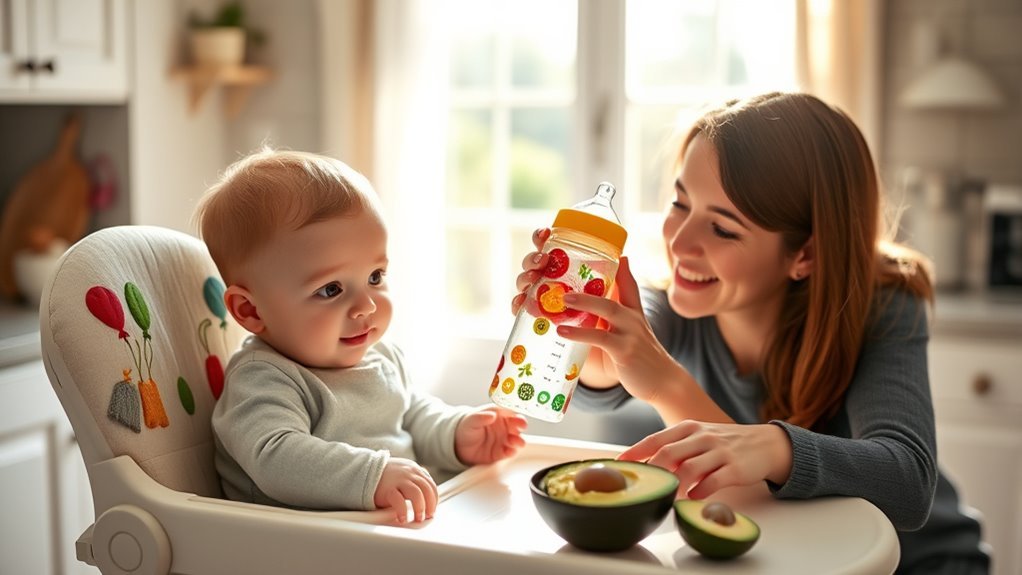
Although introducing a bottle can be challenging, there are several effective techniques you can use to encourage acceptance. Start by experimenting with different bottle feeding techniques, such as varying the nipple size and shape to find one your infant prefers. Try offering the bottle when your baby is calm and not overly hungry, which can reduce stress. You might also consider involving someone else in the feeding process, allowing your child to associate the bottle with comfort and security. Additionally, using infant feeding strategies like mimicking breastfeeding positions can create familiarity. Finally, be patient and consistent, remembering that every baby is unique and may take time to adapt. With these approaches, you can foster a smoother shift to bottle feeding.
Natural Remedies to Ease Bottle Refusal
When a baby refuses a bottle, exploring natural remedies can provide relief and ease the change. You might find that incorporating soothing techniques and herbal infusions can make a significant difference. Here are three effective remedies to take into account:
- Chamomile Infusion: A gentle chamomile tea can help calm your baby. Just make certain it’s diluted and cooled before offering it in a bottle.
- Warm Compress: Applying a warm compress to the bottle’s nipple can mimic the warmth of breastfeeding, making it more inviting.
- Gentle Rocking: Holding your baby while gently rocking can create a comforting atmosphere, aiding in the shift to bottle feeding.
These natural strategies can support your baby’s comfort and willingness to accept the bottle, fostering a smoother feeding experience.
Creating a Positive Feeding Environment
Creating a positive feeding environment is essential for encouraging your baby to accept the bottle. Start by ensuring a relaxed environment; this helps your baby feel secure and open to new experiences. Minimize distractions and choose a comfortable space where both you and your baby can focus on feeding. A positive atmosphere is vital—use gentle voices, smiles, and eye contact to promote trust. You might also try different feeding positions to see what your baby prefers, as comfort can influence acceptance. Introduce the bottle gradually, allowing your baby to explore it without pressure. Remember, patience is key; fostering a supportive environment can transform feeding time into a pleasant experience, ultimately easing bottle refusal.