

Grandparents can seem like the ultimate superheroes in a child’s life, swooping in to save the day with love and wisdom. However, their involvement can also lead to confusion and conflict if not managed carefully. It’s crucial for you to contemplate how to navigate this dynamic effectively. By making thoughtful lifestyle adjustments, you can foster a collaborative environment that benefits everyone involved, but what steps should you take first?
Understanding the Role of Grandparents in Child Development
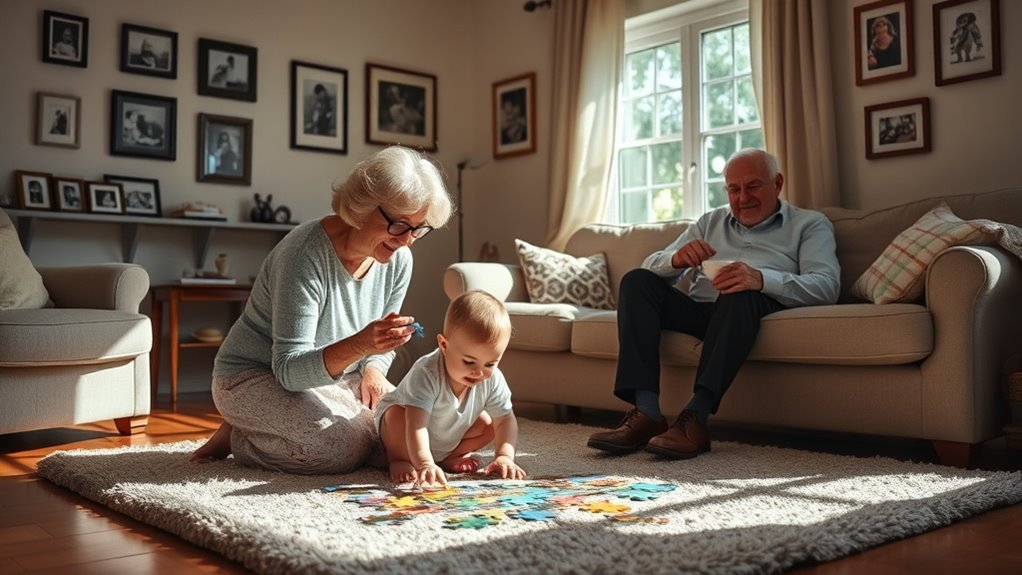
While you may often think of parents as the primary caregivers, grandparents play an equally essential role in child development. Their involvement can greatly impact a child’s emotional, social, and cognitive growth. Grandparents often provide a unique perspective, sharing wisdom and experiences that enrich a child’s understanding of the world. With time to devote, they can foster nurturing relationships, offering love and support that contributes to a child’s sense of security. Research shows that active grandparent roles can enhance resilience and adaptability in children, promoting better social skills and emotional well-being. By embracing this bond, you empower your children to thrive, creating a supportive environment that nurtures their individuality and freedom to explore life’s possibilities.
Communicating Expectations With Grandparents
When it comes to involving grandparents in your child’s life, clear communication about expectations is essential. By establishing boundaries and sharing your parenting practices, you can create a supportive environment that respects both your role as a parent and their role as a grandparent. This open dialogue fosters healthy relationships and guarantees everyone is on the same page regarding your child’s development.
Establishing Clear Boundaries
Establishing clear boundaries with grandparents is essential for fostering a healthy relationship that supports your child’s development. By balancing authority, you can guarantee that your parenting style remains consistent while still valuing your parents’ input. It’s important to set limits on areas like discipline, routines, and decision-making. Open communication helps clarify your expectations, making it easier for grandparents to understand their role without overstepping. Use empathetic language when discussing these boundaries, emphasizing that you appreciate their involvement, but need to maintain your parenting approach. This balance creates a supportive environment where grandparents feel included, yet respectful of your authority. Ultimately, setting these limits nurtures your child’s well-being and strengthens family ties.
Sharing Parenting Practices
Effective communication about parenting practices is essential for ensuring that grandparents understand your expectations and can support your family’s approach to child-rearing. You might find it helpful to discuss your specific parenting styles openly, emphasizing how cultural influences shape your decisions. This way, grandparents can appreciate the reasoning behind your choices and adapt their support accordingly. Encourage them to share their perspectives too, as their experiences can enrich your parenting journey. By fostering a dialogue, you create a mutual understanding that respects both your authority as a parent and their role as a grandparent. Ultimately, clear communication empowers everyone involved, creating a nurturing environment for your child that reflects your family’s values and beliefs.
Establishing Boundaries for Healthy Involvement

While grandparents often bring invaluable wisdom and love to a child’s life, managing the balance of involvement can be challenging. To guarantee healthy relationships, it’s vital to establish clear boundaries through effective boundary communication. Start by discussing involvement guidelines with your parents. Outline what roles and responsibilities you’d like them to take on, emphasizing the importance of your parenting decisions. It’s important to approach this conversation with empathy, acknowledging their desire to contribute while asserting your need for autonomy. By setting these boundaries, you empower yourself and create a more harmonious environment for your child. Remember, these guidelines aren’t barriers; they’re tools to foster a relationship that respects everyone’s roles and supports your child’s development.
Encouraging Collaborative Activities
When you encourage collaborative activities between your child and their grandparents, you’re not just fostering a bond; you’re also enhancing your child’s development. Engaging in creative play and joint projects stimulates cognitive skills and emotional intelligence. For instance, a simple art project can spark imagination, allowing your child to express themselves while learning to communicate ideas. These shared experiences offer valuable lessons in teamwork and patience. Additionally, grandparents can provide unique insights and skills, enriching your child’s learning journey. By facilitating these interactions, you’re creating an environment where your child feels supported and valued, reinforcing their sense of security. So, consider setting aside regular time for these activities—it’s a win-win for everyone involved.
Recognizing the Importance of Independence

Recognizing the importance of independence in a child’s development is essential, as it lays the foundation for self-confidence and decision-making skills. Fostering independence skills enables your child to navigate challenges and build resilience. Encourage them to make choices, whether it’s picking their clothes or deciding on snacks. These small decisions cultivate self-reliance habits that become vital as they grow. Allowing your child to face age-appropriate challenges can boost their confidence and sense of autonomy. Understand that it’s okay to step back and let them try new things, even if they stumble. This process not only nurtures independence but also strengthens your relationship, as your child learns they can trust their instincts and abilities. Embrace this journey together!
Addressing Conflicts and Misunderstandings
Conflicts and misunderstandings can arise naturally in intergenerational relationships, especially between grandparents and their grandchildren. To address these issues, open communication is key. Start by encouraging both sides to express their feelings and perspectives. Misunderstanding clarification can help bridge gaps and foster empathy. It’s essential to listen actively and validate each other’s emotions, creating a safe space for dialogue.
Implementing conflict resolution strategies, like setting aside specific times to discuss concerns, can lead to better understanding. It’s about finding common ground and respecting each other’s viewpoints. By addressing conflicts as they arise, you promote healthier interactions that benefit everyone involved, fostering a supportive environment for your child’s development while maintaining the crucial connections between generations.
Celebrating the Unique Bond Between Grandparents and Grandchildren
Grandparents and grandchildren share a unique bond that offers emotional support, enriching both their lives. Through shared experiences, grandparents can impart wisdom and skills, fostering learning in a relaxed environment. These interactions create lasting memories that not only strengthen their relationship but also contribute positively to a child’s development.
Emotional Support Benefits
While it’s often said that the bond between grandparents and grandchildren is unlike any other, the emotional support they offer can profoundly influence a child’s development. Grandparents provide a unique source of comfort, fostering emotional resilience in young ones. Their life experiences and empathetic listening create supportive relationships that allow children to express their feelings freely. This encouragement helps kids navigate challenges, ultimately enhancing their social and emotional skills. When grandparents engage with grandchildren, they model healthy relationships, instilling a sense of security and belonging. This nurturing environment enables children to explore their identities and cope with life’s ups and downs. Embracing this connection can lead to lasting benefits, enriching both the child’s growth and the grandparent’s life.
Learning Through Shared Experiences
Many researchers highlight the profound impact of shared experiences between grandparents and grandchildren, emphasizing how these moments can greatly enhance learning and development. When grandparents engage in experiential learning with their grandchildren, it fosters curiosity and creativity. Think about those shared traditions, like baking family recipes or storytelling; these activities not only strengthen bonds but also provide valuable lessons. Children absorb knowledge in a hands-on way, making learning more memorable and enjoyable. This unique bonding time allows for a more relaxed atmosphere where questions flow freely, encouraging a love for exploration. By embracing these shared experiences, you’re not just creating cherished memories but also enriching your child’s growth and understanding of the world around them.
Creating Lasting Memories
When you think about the bond between grandparents and grandchildren, it’s clear that creating lasting memories plays an essential role in child development. Engaging in memory making activities like cooking favorite family recipes or crafting together fosters connection and provides a sense of belonging. These experiences not only strengthen relationships but also enhance emotional well-being. Storytelling traditions, whether it’s sharing tales from the past or inventing new adventures, enrich children’s imaginations and help them understand their family history. Encourage grandparents to be active participants, as this involvement can help instill values and life lessons. By prioritizing these moments, you’re not just creating memories; you’re nurturing resilient, confident children who appreciate their roots and carry these bonds forward.