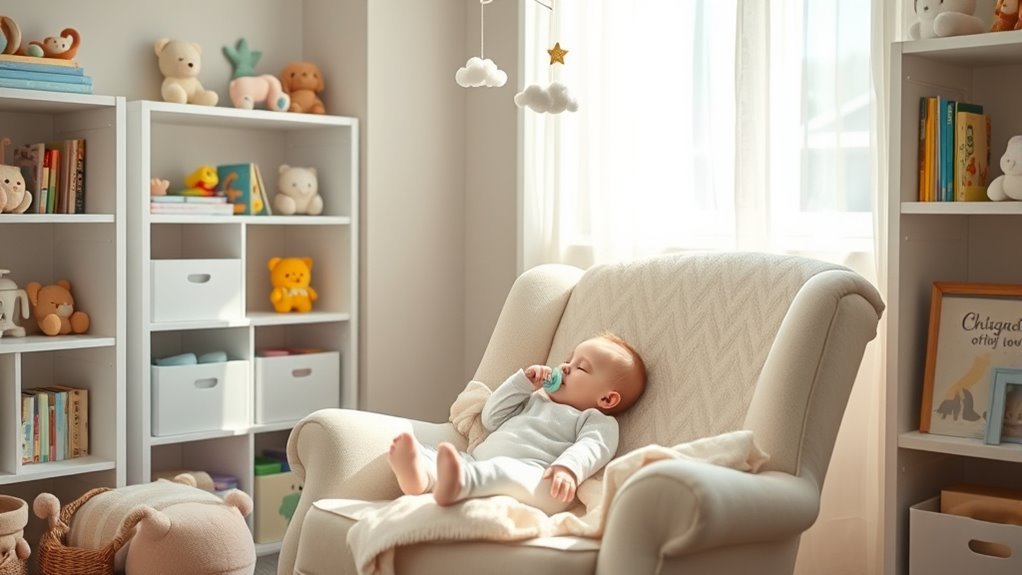

Like the soothing lullaby of a mother’s voice, a pacifier can bring comfort to your baby, but it’s important to navigate its use thoughtfully. Knowing when to introduce a pacifier and understanding its effects on breastfeeding can make a significant difference. You’ll want to evaluate the benefits, drawbacks, and safe practices to guarantee your child’s well-being. Let’s explore how to strike the right balance for your family.
When to Introduce a Pacifier

When you’re considering introducing a pacifier to your baby, it’s important to wait until breastfeeding is well established, typically around three to four weeks after birth. This waiting period allows your baby to reach essential developmental milestones, ensuring they can latch effectively without confusion. Different pacifier types, such as orthodontic or traditional designs, cater to various needs, so choose one that promotes healthy oral development. Once your baby is comfortable with breastfeeding, you can explore pacifier options to soothe them. Be mindful of your baby’s cues and preferences, as some may take to a pacifier more readily than others. By timing the introduction correctly, you’re giving your baby the best chance for a positive experience with both breastfeeding and pacifier use.
Benefits and Drawbacks of Pacifier Use
While pacifiers can provide soothing benefits for babies, it’s essential to contemplate both their advantages and potential drawbacks. One significant benefit is that pacifiers can help reduce the risk of Sudden Infant Death Syndrome (SIDS) during sleep. Different pacifier types, such as orthodontic or traditional, can also support oral health if used appropriately. However, excessive pacifier use may lead to dental issues, such as misalignment of teeth, or affect speech development in older infants. It’s vital to establish a balance, ensuring your baby’s comfort without compromising their long-term oral health. Ultimately, understanding these benefits and drawbacks can guide you in making informed decisions regarding pacifier use, allowing you to support your baby’s needs effectively.
Impact on Breastfeeding and Feeding Techniques

Pacifiers can play a significant role in influencing breastfeeding and feeding techniques, especially in the early months of a baby’s life. While they can soothe a baby, they may also lead to nipple confusion, making breastfeeding more challenging. This confusion can disrupt your baby’s natural feeding patterns, potentially affecting milk supply and bonding.
Here’s a quick overview of how pacifier use can impact breastfeeding:
| Impact on Breastfeeding | Description |
|---|---|
| Nipple Confusion | Baby may prefer pacifier over breast |
| Feeding Patterns | Can alter baby’s hunger cues |
| Milk Supply | Less frequent feeding may reduce supply |
| Bonding | Reduced skin-to-skin contact |
| Adaptation | May complicate switching to bottle |
Understanding these factors helps guarantee a smoother breastfeeding experience.
Guidelines for Safe Pacifier Use
Establishing guidelines for safe pacifier use can help guarantee your baby’s well-being and promote healthy habits. First, always choose a one-piece pacifier made from safe materials, ensuring it meets safety standards. Regularly inspect for wear and tear, discarding any damaged ones. To maintain pacifier hygiene, wash it in warm, soapy water and sterilize it frequently, especially during the first year. Avoid dipping the pacifier in sweet substances, as this may lead to cavities and unhealthy associations with feeding. Limit pacifier use to sleep times or moments of distress to encourage healthy attachment. By following these safety precautions, you can provide comfort to your baby while supporting their overall development and health.
Strategies for Weaning Off a Pacifier
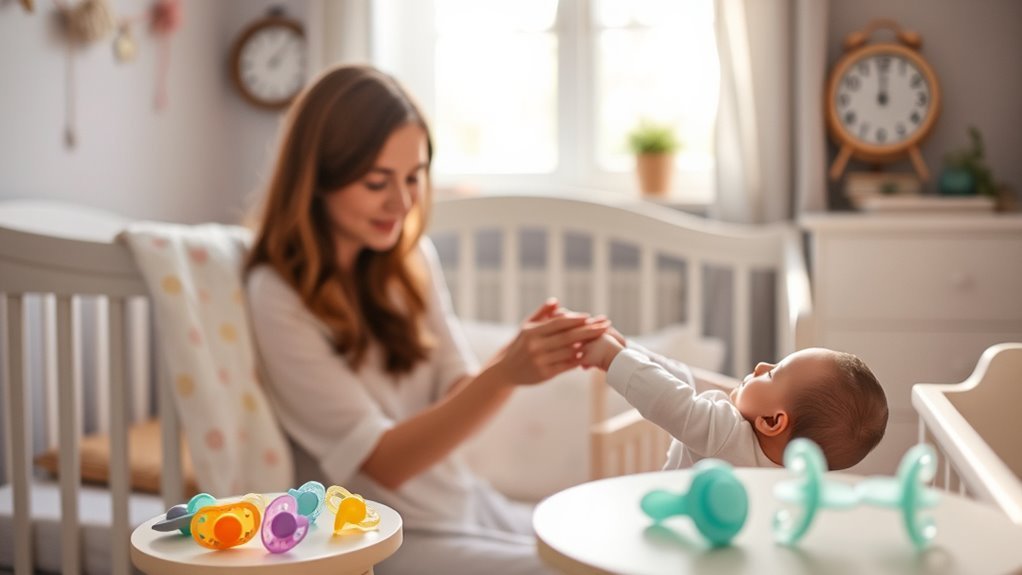
As you consider weaning your baby off the pacifier, it’s important to approach the process with patience and sensitivity. Start with a gradual reduction; limit pacifier use to specific times, like bedtime or naps. This helps your baby adjust without feeling deprived. Introduce pacifier alternatives, such as soft toys or blankets, to provide comfort during this change. You might also offer extra cuddling or soothing techniques to fill the emotional gap. Engage your child in the process by explaining that they’re becoming a “big kid” and can do without it. Celebrate small victories to encourage your baby. Remember, consistency is key; stick to your plan while being flexible to your baby’s emotional needs.