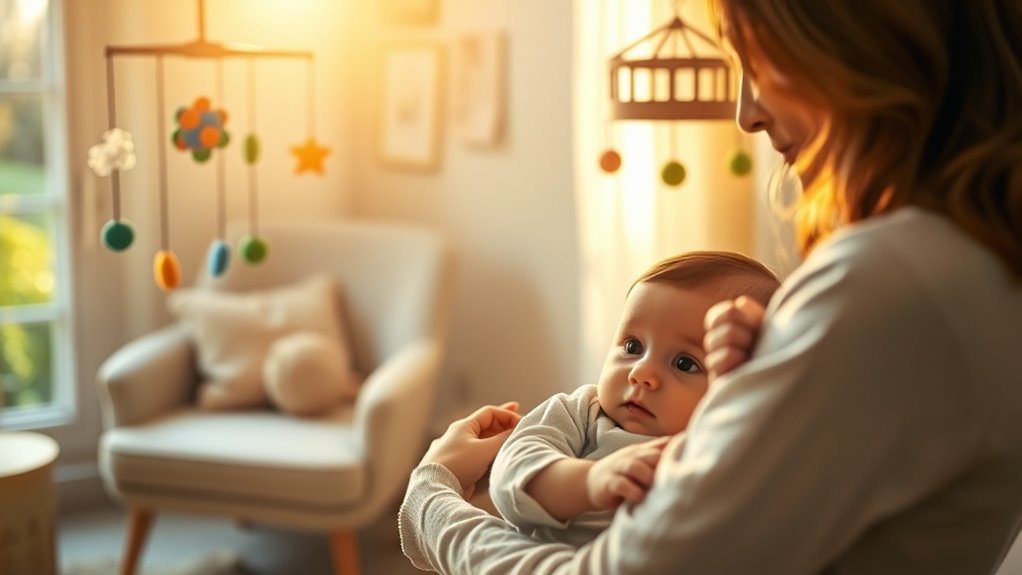

Dealing with stranger anxiety in your baby can be challenging, but understanding its roots is essential. You might notice signs of distress when they encounter unfamiliar faces, and it’s important to approach this with empathy. By creating a nurturing environment and gradually introducing new people, you can help your baby feel more secure. But what specific strategies can you implement for long-term success? Let’s explore some effective management plans that can make a difference.
Understanding the Roots of Stranger Anxiety
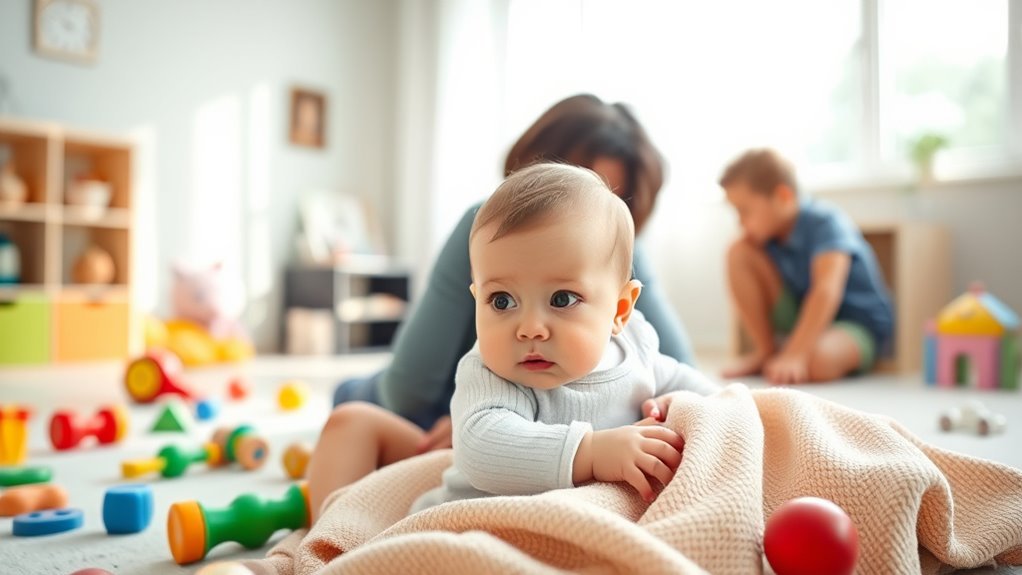
As your baby grows and starts to recognize familiar faces, it’s natural for them to feel uneasy around strangers. This reaction ties closely to their attachment styles, which are shaped by early interactions with caregivers. At around 6 to 12 months, your baby reaches vital developmental milestones, including the formation of social bonds. Research shows that children who experience consistent, nurturing care are more likely to develop secure attachment styles, making them more adaptable in new situations. Conversely, those with inconsistent care may exhibit heightened anxiety. Understanding these roots can help you navigate your baby’s feelings. Supporting their emotional development with patience and reassurance can foster confidence, allowing them to explore the world while feeling secure in your presence.
Recognizing Signs of Stranger Anxiety in Your Baby
Recognizing the signs of stranger anxiety in your baby can be essential for supporting their emotional development. Understanding baby behavior during these moments helps you respond effectively. Here are three common emotional cues to look out for:
Recognizing stranger anxiety in your baby is vital for their emotional growth and helps you respond appropriately.
- Crying or Whining: If your baby suddenly becomes upset when meeting someone new, this is a clear sign of discomfort.
- Clinginess: When your baby clings to you or seeks your comfort, it indicates they’re feeling insecure.
- Avoidance: If your baby turns their head or looks away from a stranger, it reflects their desire to retreat from unfamiliarity.
Creating a Safe and Comfortable Environment

Creating a safe and comfortable environment for your baby can greatly ease their feelings of anxiety around strangers. Establishing safe spaces at home helps your baby feel secure, allowing them to explore their surroundings without fear. Incorporate familiar objects, like their favorite blanket or stuffed animal, to create a sense of continuity and comfort. These items can act as anchors, reassuring your baby when faced with unfamiliar faces. Keep the atmosphere calm, minimizing loud noises and chaotic activities that may heighten their anxiety. Remember, your emotional state also influences your baby’s feelings; staying relaxed and confident can foster a sense of safety. By nurturing a comforting environment, you’re empowering your baby to navigate social interactions with greater ease and resilience.
Gradual Exposure to New People and Situations
Even in a safe and comfortable environment, babies can still feel anxious around new people and situations. To help your little one overcome this anxiety, consider these playdate strategies for gradual introductions:
- Familiar Faces First: Start by inviting a friend your baby knows and trusts. This can create a buffer for new interactions.
- Short Visits: Keep initial visits brief. Gradually increase the duration as your baby becomes more comfortable.
- Interactive Play: Engage in activities that require minimal direct interaction with strangers. This allows your baby to observe and adjust at their own pace.
Establishing a Consistent Routine
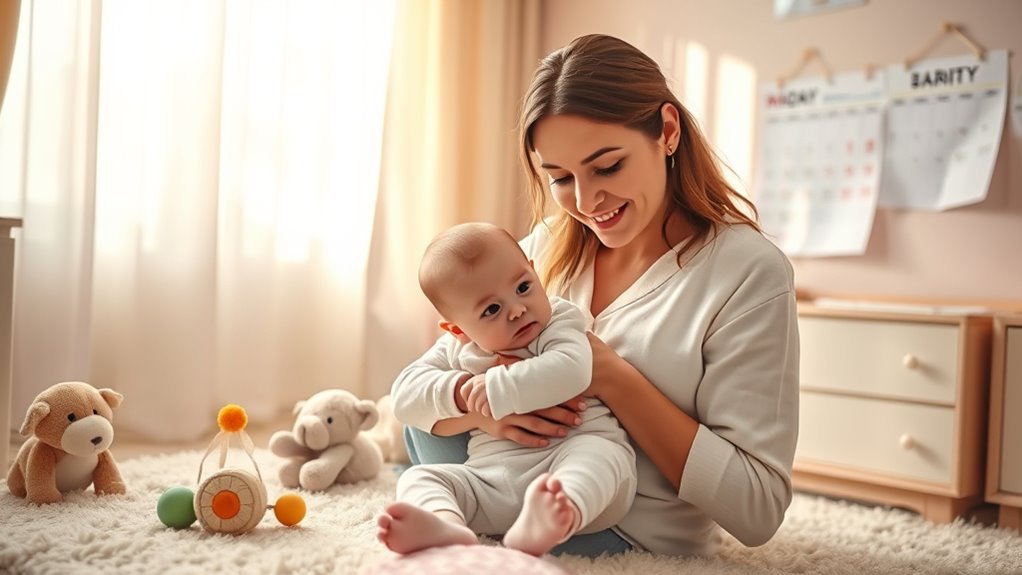
As your baby navigates the world of new faces, establishing a consistent routine can be a comforting anchor for them. Consistent schedules help your little one feel secure, as predictability fosters a sense of safety. Research shows that babies thrive when they can anticipate daily activities, reducing anxiety around unfamiliar situations. While it’s important to maintain a routine, be open to routine adjustments as your baby grows and their needs change. Flexibility can ease changes, allowing your child to adapt without overwhelming them. By creating a balance between consistency and adaptability, you empower your baby to face new experiences with confidence. This structured approach not only aids in managing stranger anxiety but also nurtures a sense of freedom as they explore.
Encouraging Social Interactions Through Play
One effective way to help your baby overcome stranger anxiety is through play, which not only fosters social skills but also builds confidence in new environments. By encouraging playful interactions, you’re setting the stage for positive experiences with others. Here are some ideas to contemplate:
- Organize group playdates: Invite familiar friends and their kids to create a comfortable atmosphere for your baby.
- Engage in cooperative games: Simple activities like building blocks together can promote teamwork and reduce anxiety around strangers.
- Encourage role-play: Use dolls or puppets to explore social scenarios, helping your baby understand different social cues.
These strategies can ease your baby’s anxiety and promote healthy socialization, making each new interaction less intimidating.
Seeking Professional Help When Necessary
If you notice signs of severe anxiety in your baby, it’s important to contemplate seeking professional help. Finding the right specialist can make a significant difference, as they can offer tailored therapy options that address your child’s unique needs. Remember, reaching out for support is a proactive step in fostering your baby’s emotional well-being.
Signs of Severe Anxiety
When your baby’s anxiety escalates beyond typical stranger anxiety, it’s essential to recognize the signs that may indicate a need for professional help. Look out for these indicators:
- Persistent Separation Distress: If your baby shows extreme distress when you leave the room or is inconsolable for extended periods, it’s a red flag.
- Significant Behavioral Changes: Watch for sudden shifts in behavior, like withdrawal from social interactions or increased irritability.
- Physical Symptoms: Frequent complaints of tummy aches or headaches might signal anxiety manifesting physically.
Recognizing these signs early can help you address your baby’s needs effectively. Remember, seeking help isn’t a sign of failure; it’s a step toward nurturing your child’s emotional well-being.
Finding the Right Specialist
Recognizing the signs of severe anxiety in your baby can be overwhelming, and knowing where to turn for help is just as important. When you’re considering finding a specialist, look for qualifications that include experience in child psychology or pediatric behavioral health. A qualified specialist can effectively assess your baby’s anxiety and provide tailored strategies for management. To guarantee you’re making the right choice, seek referrals from trusted sources like your pediatrician or other parents who’ve faced similar challenges. These connections can guide you toward professionals who truly understand infant anxiety. Remember, it’s vital to feel confident in the help you’re seeking, as this journey is about fostering your baby’s emotional well-being and helping them thrive.
Therapy Options Available
As you navigate your baby’s anxiety, seeking professional help can feel challenging, but it’s a crucial step toward fostering their emotional health. Various therapy options are available that can make a significant difference in your child’s experience. Consider these approaches:
- Play Therapy: This method uses play as a means for your baby to express emotions and develop coping skills in a safe environment.
- Cognitive Therapy: While more common for older children, some principles can be adapted to help your baby understand their feelings and reactions.
- Parent-Child Interaction Therapy: This approach focuses on improving your relationship with your baby, promoting security and reducing anxiety.
Each option can guide you and your child toward a more confident and less anxious future.