

Picture a sturdy fortress protecting your little one as they sleep—this is what a safe crib should feel like. With the right choices and practices, you can create a secure environment for your newborn. Yet, many parents overlook important details that could impact their baby’s safety. Understanding how to navigate crib safety is fundamental, so let’s explore the key adjustments you need to make for peace of mind and a restful night for everyone involved.
Choosing the Right Crib for Your Newborn
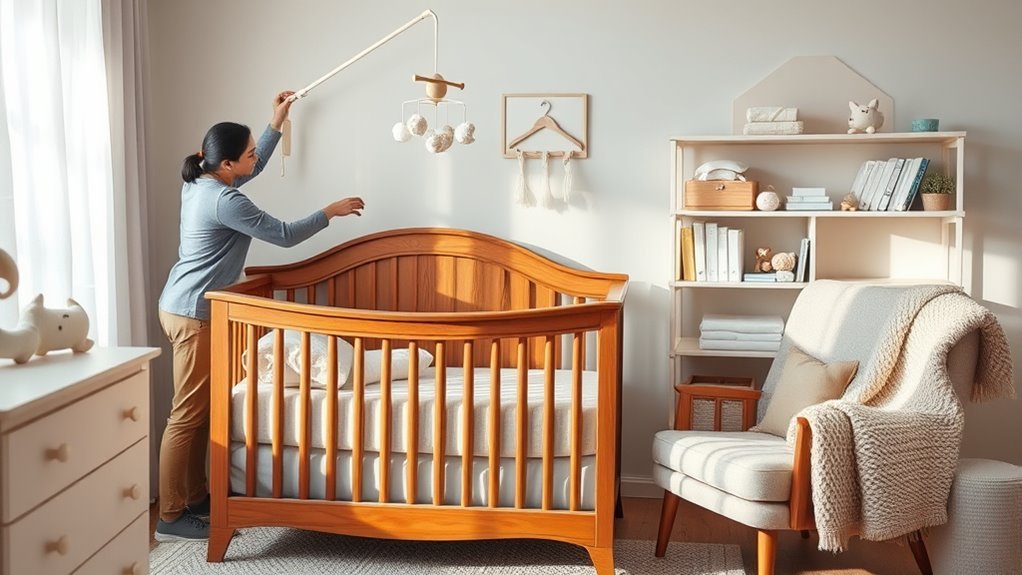
When choosing the right crib for your newborn, what should you prioritize? Start by considering crib materials; solid wood options tend to be durable and safe. Avoid cribs made from cheap particleboard, as they may contain harmful chemicals. Next, think about size considerations. You’ll want a crib that fits comfortably in your nursery while allowing space for movement. A standard crib size is about 28 inches wide and 52 inches long, but check your room dimensions first. Make sure the crib has adjustable mattress heights to accommodate your baby as they grow. Choosing the right crib isn’t just about aesthetics; it’s about creating a safe, nurturing environment that allows your little one to thrive. Your peace of mind matters, too.
Understanding Safe Sleep Practices
When it comes to your newborn’s sleep, understanding safe practices is essential for their well-being. You’ll want to familiarize yourself with recommended sleep positions and create a crib environment that promotes safety. By doing so, you can help guarantee peaceful and secure sleep for your little one.
Sleep Position Guidelines
Making sure your newborn sleeps safely is essential, especially since sleep position plays a significant role in reducing the risk of Sudden Infant Death Syndrome (SIDS). Always place your baby on their back for sleep; this is the safest position. Avoid placing them on their tummy or side while sleeping, as these positions can increase the risk of SIDS. However, during daytime play, incorporate tummy time to help strengthen their neck and shoulder muscles.
Here’s a quick reference table to remember safe sleeping positions:
| Sleep Position | Safe/Unsafe | Notes |
|---|---|---|
| Back | Safe | Recommended for sleep |
| Side | Unsafe | Increased SIDS risk |
| Tummy | Unsafe | Only for tummy time |
Keeping these guidelines in mind will help make certain your baby’s safety during sleep.
Crib Environment Essentials
Creating a safe crib environment is essential for your newborn’s well-being. Start with a firm crib mattress that fits snugly in the crib without any gaps. This helps prevent any risk of suffocation or entrapment. Choose bedding materials wisely; use a fitted sheet made of breathable cotton and avoid heavy blankets or soft toys in the crib. These can pose risks for your little one. Keep the crib free from bumpers, as they can contribute to dangerous situations. Maintain a comfortable room temperature to guarantee your baby doesn’t overheat. By setting up a safe crib environment, you create a peaceful space for rest, allowing both you and your newborn the freedom to thrive during those precious early months.
Maintaining a Safe Sleep Environment
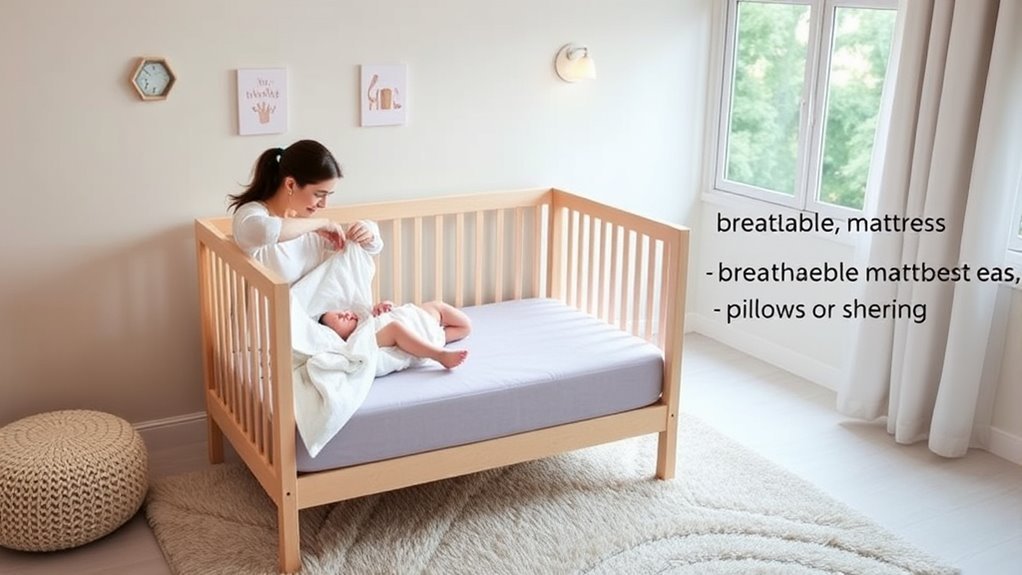
Although it may seem overwhelming, maintaining a safe sleep environment for your newborn is essential for their well-being. Start by ensuring the crib has proper ventilation; this helps regulate temperature and reduces the risk of overheating. Choose a firm sleep surface, as soft mattresses or bedding can pose suffocation hazards. Always lay your baby on their back to sleep, which is the safest position. Keep the crib free of toys, pillows, and blankets that could obstruct their breathing. Regularly check for any loose parts or wear on the crib itself. By creating a secure sleep environment, you’re not only promoting your baby’s safety but also giving yourself peace of mind, allowing you to enjoy this precious time together.
Properly Installing and Using Crib Accessories
When you’re setting up your newborn’s crib, it’s essential to properly install and use any accessories to enhance safety and functionality. This includes guaranteeing crib bedding fits snugly without gaps, as loose bedding can pose a suffocation risk. Always check that accessories like mobile hangers and bumper pads are securely attached to avoid accidental falls.
Here’s a quick reference table for crib accessories:
| Accessory | Safety Tip | Installation Check |
|---|---|---|
| Crib Bedding | Guarantee it fits tightly | No gaps or loose edges |
| Mobile | Hang it out of reach | Securely fastened |
| Bumper Pads | Avoid using if baby rolls over | Check for firmness |
Monitoring Your Baby’s Sleep Routine

How can you guarantee your newborn gets the restful sleep they need? Monitoring your baby’s sleep routine is essential. Here are some tips to help you:
- Use a baby monitor: Invest in a reliable monitor to keep tabs on your baby while they sleep.
- Implement sleep tracking apps: These can provide insights into your baby’s sleep patterns, helping you identify what works best.
- Establish a consistent bedtime routine: A calming sequence can signal to your baby that it’s time to sleep.
- Observe sleep cues: Look for signs of tiredness, like yawning or fussiness, to know when it’s time for sleep.
Educating Family and Caregivers on Crib Safety
It’s essential to educate family and caregivers on crib safety, as they play a key role in your baby’s environment. Understanding crib guidelines and safe sleep practices can greatly reduce risks and guarantee your little one sleeps soundly. By sharing this knowledge, you’ll help create a safer sleep space for your newborn.
Importance of Crib Guidelines
Understanding crib guidelines is vital for guaranteeing your newborn’s safety, especially since caregivers and family members often play a significant role in creating a secure sleeping environment. You want to protect your infant’s well-being, so here are key guidelines to share:
- Use a firm mattress: Make sure the mattress fits snugly in the crib to prevent gaps.
- Avoid soft bedding: Keep pillows, blankets, and stuffed animals out of the crib.
- Check for safety standards: Choose cribs that meet current safety regulations.
- Monitor for wear and tear: Regularly inspect the crib for loose screws or broken parts.
Safe Sleep Practices
While making certain your newborn sleeps safely, it’s essential to educate family members and caregivers about safe sleep practices. Start by emphasizing the importance of placing your baby on their back to sleep, which greatly reduces the risk of Sudden Infant Death Syndrome (SIDS). Discuss the benefits of breastfeeding, as it’s linked to lower SIDS rates. When it comes to swaddling techniques, make sure they’re done correctly—your baby should have room to move their hips. Encourage caregivers to keep the crib free of soft bedding, toys, and loose blankets. Sharing this knowledge fosters a supportive environment where everyone feels confident in caring for your little one. Remember, safety is a team effort, and informed caregivers make all the difference.