
Managing pacifier use for newborns involves understanding benefits, establishing habits, and setting limits. It’s vital to introduce the pacifier at the right time and in the right way to support your baby’s self-soothing. By recognizing when to wean off and addressing concerns, you can guarantee a balanced approach. As you navigate this journey, you’ll discover essential strategies that promote your baby’s well-being and independence. What steps can you take to create a harmonious pacifier routine?
Understanding the Benefits of Pacifiers
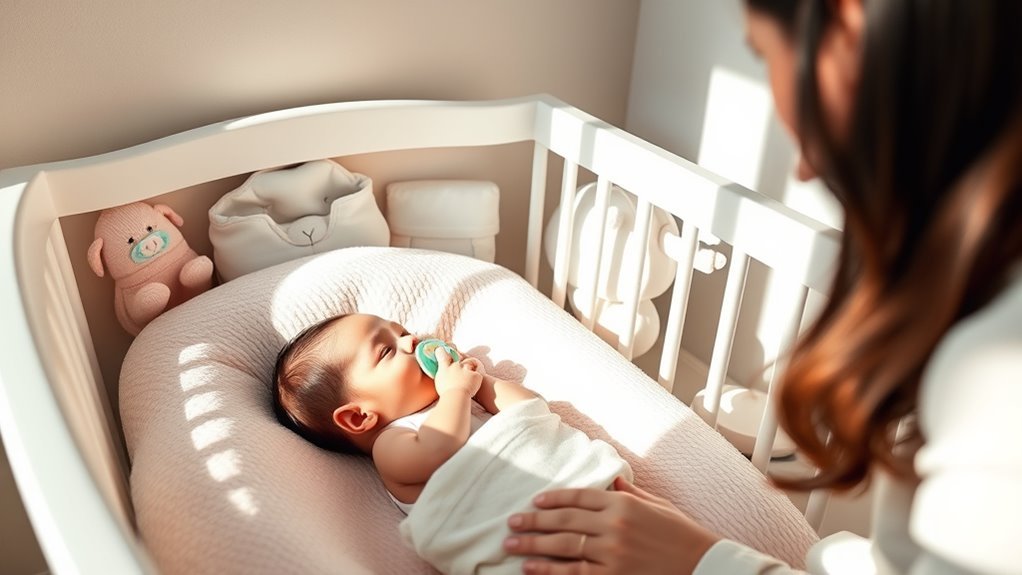
While you may have mixed feelings about using a pacifier for your newborn, it’s important to understand the benefits they can provide. A benefits overview reveals that pacifiers can be effective soothing techniques, helping to calm fussy infants and reduce their stress levels. This can be particularly valuable during challenging moments, such as teething or when adjusting to a new environment. Additionally, research suggests that pacifier use may lower the risk of sudden infant death syndrome (SIDS) during sleep. By offering your baby a pacifier, you’re not just providing comfort; you’re also giving yourself a moment to breathe. Ultimately, understanding these benefits can empower you to make informed choices about your child’s needs while fostering a sense of freedom in your parenting journey.
Choosing the Right Pacifier for Your Newborn
Choosing the right pacifier for your newborn can feel overwhelming, especially with the multitude of options available. First, consider pacifier materials; silicone and latex are common choices. Silicone is durable and easy to clean, while latex offers a softer feel. Next, think about pacifier shapes. Orthodontic pacifiers are designed to support healthy oral development, while traditional shapes may appeal to your baby’s natural sucking instincts. Look for a pacifier that fits comfortably in your newborn’s mouth and has a shield that’s large enough to prevent choking. Remember, it’s essential to prioritize safety and comfort when making your choice. By exploring these factors, you can find a pacifier that not only soothes your baby but also aligns with your parenting style.
Establishing Healthy Pacifier Habits
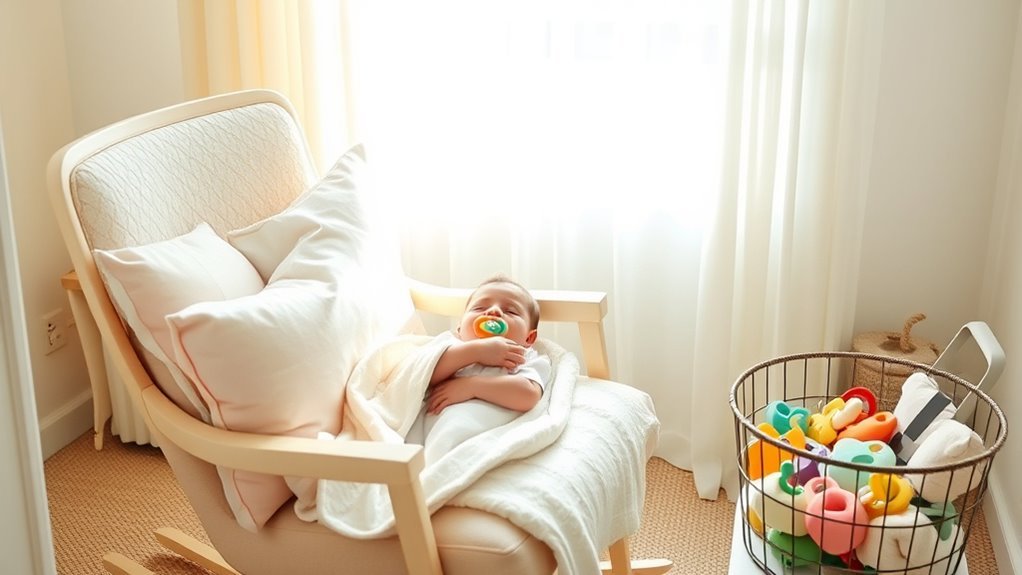
Establishing healthy pacifier habits is essential for your newborn’s development. You’ll want to take into account both the type of pacifier you choose and the appropriate timing and duration for its use. By setting clear guidelines, you can guarantee that your baby benefits from the pacifier while minimizing potential drawbacks.
Choosing the Right Pacifier
Finding the right pacifier for your newborn can greatly influence their comfort and development. It’s crucial to evaluate pacifier materials and shapes, as these factors can affect your baby’s acceptance and safety.
Here’s a quick guide to help you choose:
| Pacifier Shape | Material | Benefits |
|---|---|---|
| Orthodontic | Silicone | Supports healthy jaw development |
| Traditional | Latex | Soft and flexible for comfort |
| Cherry/Nipple | Medical-grade silicone | Mimics natural breastfeeding |
| Wide Base | BPA-free plastic | Reduces choking hazard |
Selecting a suitable pacifier means evaluating your newborn’s preferences and ensuring it meets safety standards. Remember, every baby is unique, so don’t hesitate to try different options until you find the perfect match.
Timing and Duration Guidelines
While it’s natural for parents to want to soothe their newborns, understanding the right timing and duration for pacifier use is essential for promoting healthy habits. Timing considerations should focus on offering the pacifier during fussy periods or before sleep, without introducing it too early—ideally, after breastfeeding is established. Duration limits are equally important; aim for short intervals, avoiding prolonged use that could interfere with feeding or oral development. Gradually wean your baby off the pacifier as they grow older, ideally by 6 months. This approach not only fosters independence but also supports healthy oral habits. Ultimately, balancing soothing needs with mindful limitations can lead to a positive pacifier experience for both you and your newborn.
Setting Limits on Pacifier Use
Setting limits on pacifier use is crucial for your newborn’s development and can help prevent potential issues later on. Establishing pacifier limits creates healthy boundaries that encourage your child to find other ways to self-soothe. Start by introducing the pacifier during specific times, such as naps or bedtime, gradually reducing its use during daytime. This approach fosters independence and allows your baby to explore alternative calming methods. As your child grows, consider moving away from the pacifier altogether, especially after the age of two. Remember, it’s important to be consistent yet flexible; adapt to your child’s needs while maintaining those healthy boundaries. By setting these limits, you’re empowering your little one to develop essential coping skills for the future.
Alternatives to Pacifiers for Soothing
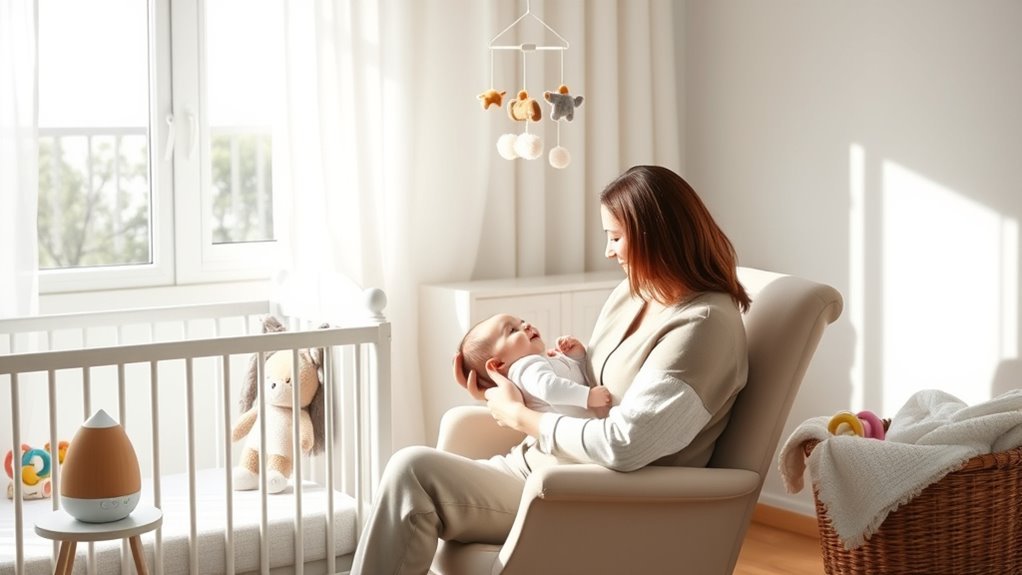
If you’re looking for alternatives to pacifiers for soothing your newborn, there are several effective methods to contemplate. Gentle rocking techniques, skin-to-skin contact, and white noise machines can provide comfort and promote relaxation. These options may help you respond to your baby’s needs while fostering a calming environment.
Gentle Rocking Techniques
When your newborn is fussy and in need of comfort, gentle rocking techniques can be a soothing alternative to pacifiers. Utilizing gentle swaying or rhythmic rocking can help create a calming environment, promoting relaxation for both you and your baby. You might find that cradling your newborn in your arms and slowly moving back and forth helps them feel secure and cherished. Alternatively, using a rocking chair can provide a consistent rhythm that many infants find comforting. Pay attention to your baby’s cues; adjusting the pace and intensity of your movements may enhance their response. By incorporating these gentle techniques into your routine, you’re fostering a nurturing bond while addressing your newborn’s needs effectively.
Skin-to-Skin Contact
Gentle rocking techniques can provide comfort, but another effective method for soothing your newborn is skin-to-skin contact. This intimate practice not only promotes bonding opportunities but also offers several skin benefits for both you and your baby. Engaging in skin-to-skin contact can help regulate your newborn’s temperature, heart rate, and stress levels.
Consider these advantages:
- Enhanced bonding: Strengthens your emotional connection with your newborn.
- Improved breastfeeding: Encourages natural feeding behaviors and may increase milk production.
- Calming effects: Reduces crying and promotes overall tranquility.
- Boosted immunity: Encourages healthy skin flora and boosts your baby’s immune system.
Embracing skin-to-skin contact can enrich your parenting journey and nurture a deeper connection with your little one.
White Noise Machines
While many parents turn to pacifiers for soothing their newborns, white noise machines offer an effective alternative that can create a calming environment. These devices produce consistent sounds that mimic the womb’s ambient noise, which can help your baby feel more secure and relaxed. The white noise benefits include promoting deeper sleep, reducing startle reflexes, and masking disruptive external sounds. By incorporating a white noise machine into your baby’s sleep routine, you provide a soothing environment that encourages longer, more restful sleep. Plus, it allows you the freedom to move about without worrying about waking your little one. Ultimately, this gentle auditory backdrop can be a valuable tool in your arsenal of soothing techniques.
Recognizing When to Wean Off the Pacifier
How can you tell if it’s time to wean your newborn off the pacifier? Recognizing developmental readiness is key. Look for these signs to guide your weaning strategies:
- Your baby shows interest in other calming methods.
- They’re able to self-soothe without the pacifier.
- You notice a decline in pacifier use during the day.
- They’re approaching toddlerhood, where dependency may hinder social skills.
Weaning off the pacifier doesn’t have to be stressful. By observing these cues, you can create a gradual shift that respects your child’s needs while promoting independence. Remember, every child is unique, so trust your instincts and be patient as you navigate this important milestone together.
Addressing Dental Concerns Related to Pacifier Use
As your newborn grows, it’s essential to contemplate the potential dental concerns associated with prolonged pacifier use. While pacifiers can soothe, understanding their effects on dental development is vital. Over time, extended use may lead to misalignment of teeth or bite issues.
| Pacifier Effects | Potential Dental Issues | Recommended Actions |
|---|---|---|
| Encourages sucking | Misaligned teeth | Limit use past age 2 |
| Provides comfort | Open bite | Monitor frequency of use |
| Can affect speech | Crossbite | Consult a pediatric dentist |
Communicating With Caregivers About Pacifier Guidelines
Have you considered the importance of clear communication with caregivers regarding pacifier guidelines? Establishing effective caregiver communication about pacifier policies can guarantee consistent practices that promote your newborn’s well-being. Here are some key points to discuss:
Clear communication with caregivers about pacifier guidelines is essential for ensuring your newborn’s well-being and consistency in care.
- Define your family’s pacifier policies: when to use it and when to wean off.
- Share your reasons for these guidelines and their benefits for the baby.
- Discuss any concerns about dental health or sleep habits related to pacifier use.
- Encourage caregivers to ask questions and express their thoughts on the guidelines.