

Imagine your toddler’s immune system as a tiny fortress, constantly under construction. As a parent, you play an essential role in fortifying this defense through everyday choices. By focusing on nutrition, sleep, and physical activity, you can help build a robust immune response. However, it’s not just about what they eat or how much they play; emotional well-being also plays an important part in this process. Discover how each element contributes to their health.
Understanding Toddler Immunity

Understanding toddler immunity is vital for parents who want to support their child’s health. Your toddler’s immune system is still developing, making it important to guarantee they receive proper toddler vaccinations. These vaccinations help prime their immune system, teaching it to recognize and fight off various infections. Research shows that timely vaccinations greatly reduce the risk of serious diseases, paving the way for a healthier childhood.
As a parent, you can foster this development by keeping up with vaccination schedules and discussing any concerns with your pediatrician. Empowering yourself with knowledge about how vaccines work can help you make informed decisions. Supporting your toddler’s immune system now lays the foundation for a vibrant, healthy future, allowing them the freedom to explore the world.
The Role of Nutrition in Immune Health
Nutrition plays an essential role in supporting your toddler’s immune health. Ensuring they get vital nutrients like vitamins A, C, D, and zinc can make a big difference in their ability to fend off infections. A balanced diet not only fuels their growth but also strengthens their immune system, helping them stay healthy and active.
Essential Nutrients for Immunity
A well-balanced diet is essential for boosting toddlers‘ immune systems and helping them fend off illnesses. Including specific nutrients can enhance their natural defenses. For example, vitamin C from fruits, zinc from meats, and probiotics from yogurt are key for immune health. Superfoods benefits, such as those from leafy greens and berries, provide additional support. Here’s a quick reference for essential nutrients:
| Nutrient | Food Sources | Benefits |
|---|---|---|
| Vitamin C | Oranges, strawberries | Boosts white blood cells |
| Zinc | Meat, beans | Supports immune cell function |
| Probiotics | Yogurt, kefir | Enhances gut health |
| Vitamin D | Fatty fish, eggs | Regulates immune responses |
| Omega-3 Fatty Acids | Walnuts, flaxseeds | Reduces inflammation |
Incorporating these foods can promote a healthy immune system for your toddler.
Balanced Diet Importance
Building a strong foundation for your toddler’s immune system starts with a balanced diet. Meal planning is essential, ensuring your little one gets a variety of foods rich in vitamins and minerals. Include fruits, vegetables, whole grains, and lean proteins in their meals to bolster their immune health. Each food group plays a unique role—vitamin C from oranges helps fight off infections, while zinc in meats supports immune function. By offering diverse options, you not only keep mealtime exciting but also maximize nutrient intake. Encourage your toddler to explore new flavors and textures; this variety can help them develop a more robust immune system. Remember, a well-rounded diet is a powerful tool in keeping your toddler healthy and thriving.
Key Vitamins and Minerals for Immune Support
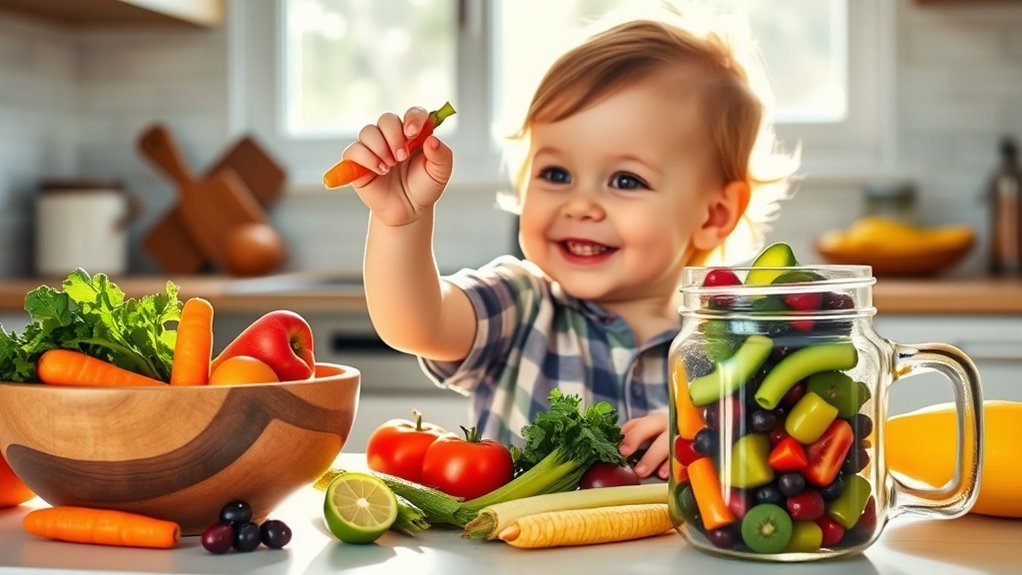
When it comes to supporting your toddler’s immune system, certain vitamins and minerals play essential roles in keeping them healthy and resilient. Vitamin C, found in citrus fruits and leafy greens, helps boost immune function, while vitamin D, sourced from fortified foods and sunlight, supports overall immunity. Zinc is crucial for immune response; include sources like meat, beans, and nuts in their diet. Iron, which enhances mineral absorption, can be found in red meat and spinach. Encourage a colorful plate for diverse vitamin sources, ensuring your toddler gets the nutrients they need. Remember, a balanced diet loaded with these key vitamins and minerals can help strengthen their natural defenses, paving the way for healthier days ahead.
Importance of Sleep for Toddler Immunity
Getting enough sleep is essential for your toddler’s immune system. Research shows that toddlers need between 11 to 14 hours of sleep each day for ideal health. By creating a calming sleep environment, you can help guarantee they get the rest they need to fight off illnesses effectively.
Sleep Duration Recommendations
Adequate sleep is essential for toddlers, with experts recommending that children aged 1 to 3 years get between 11 to 14 hours of sleep each day. This amount supports their natural immunity and overall development. To achieve this, consider nap strategies that align with your toddler’s natural sleep cycles. A consistent napping routine can help them recharge and reinforce immunity. Aim for one or two naps per day, ideally lasting 1 to 2 hours each. Pay attention to signs of tiredness, like fussiness or rubbing eyes, and create a calm pre-nap routine. By ensuring your toddler gets enough sleep, you’re promoting their health and giving them the freedom to thrive, explore, and play during their waking hours.
Sleep Environment Optimization
Creating an ideal sleep environment can greatly enhance your toddler’s immunity and overall well-being. A conducive sleep space helps them rest better, boosting their immune system. Here are three key aspects to reflect on:
- Sleep Position: Encourage your toddler to sleep on their back. This position promotes better airflow and reduces the risk of respiratory issues.
- Bedtime Routine: Establish a calming bedtime routine that includes reading or gentle music. Consistency signals to their body that it’s time to wind down.
- Room Conditions: Maintain a cool, dark, and quiet room. Use blackout curtains and white noise machines to minimize disturbances.
Encouraging Active Play and Physical Fitness

While toddlers naturally have a lot of energy, encouraging active play and physical fitness helps them develop essential motor skills and boosts their immune systems. Engaging your child in active games and physical activities isn’t just fun; it’s crucial for their growth. Try setting up obstacle courses in your living room or backyard, or play tag at the park. Even simple activities like dancing or jumping rope can keep them moving. Aim for at least 30 minutes of active play each day. You’ll not only enhance their coordination and balance but also instill a love for fitness. Remember, the more they move, the better their body learns to fight off illnesses, promoting a strong, resilient immune system.
The Benefits of Outdoor Time and Fresh Air
Spending time outdoors offers toddlers a wealth of benefits that go beyond just physical activity. Fresh air and natural light play vital roles in boosting their overall health. Here are three key benefits of outdoor time:
Spending time outdoors enriches toddlers’ health, promoting physical activity, fresh air, and natural light for overall well-being.
- Enhanced Immunity: Nature exposure helps strengthen your toddler’s immune system through diverse microbes and fresh air.
- Cognitive Development: Outdoor activities like nature exploration stimulate curiosity, enhancing problem-solving and creativity.
- Emotional Well-being: Playing outside reduces stress and anxiety, fostering a sense of freedom and happiness.
Hydration: Keeping Your Toddler Well-Watered
Water is essential for your toddler’s health, playing a crucial role in their growth and development. Keeping them well-hydrated can enhance their immune system and overall well-being. Here are some practical hydration strategies that consider toddler preferences:
| Hydration Strategy | Tips |
|---|---|
| Fun Water Bottles | Let them choose their favorite design. |
| Flavor Infusions | Add fruits like berries or citrus. |
| Routine Reminders | Offer water during meals and snacks. |
| Engage in Play | Use outdoor play to encourage drinking. |
Minimizing Sugar and Processed Foods
To support your toddler’s immune system, minimizing sugar and processed foods is essential. Here are some practical tips to guide you:
- Choose Natural Sweeteners: Opt for sugar alternatives like honey or pureed fruits when baking or sweetening foods.
- Focus on Whole Foods: Prioritize fresh fruits, vegetables, whole grains, and lean proteins to build a nutrient-dense diet.
- Encourage Mindful Eating: Teach your toddler to listen to their hunger cues and enjoy their meals without distractions.
Practicing Good Hygiene Habits
Practicing good hygiene habits is essential for keeping your toddler healthy and supporting their natural immunity. Teaching them proper handwashing techniques and regularly sanitizing common surfaces can greatly reduce the spread of germs. By making these practices fun and engaging, you’ll help instill lifelong habits that benefit their health.
Handwashing Techniques
While it’s easy to overlook the importance of handwashing, especially with toddlers who often seem more interested in play than hygiene, teaching them proper techniques can greatly reduce the spread of germs. Here are three key steps to guarantee effective handwashing:
- Wet Hands: Use clean, running water to wet their hands before applying soap.
- Lather and Scrub: Teach your toddler to lather soap and scrub all surfaces of their hands, including between fingers and under nails, for at least 20 seconds.
- Rinse Thoroughly: Rinse hands well under clean, running water and dry them with a clean towel.
Sanitizing Common Surfaces
After establishing good handwashing habits, it’s important to extend those hygiene practices to the surfaces your toddler frequently touches. Regularly sanitizing high touch areas—like doorknobs, light switches, and toys—can markedly reduce the spread of germs. Use effective surface sanitization techniques, such as antibacterial wipes or homemade solutions with vinegar and water. Just be sure to check that any products are safe for children’s use. Create a routine, like sanitizing surfaces every evening, to keep your home healthy. Involve your toddler by making it a fun activity—let them help wipe down surfaces! This not only promotes good hygiene but also instills lifelong habits in them. Remember, a clean environment supports their natural immunity.
Creating a Stress-Free Environment for Your Toddler
Creating a stress-free environment for your toddler is essential for their emotional and physical well-being, as it helps foster a sense of security and stability. Here are three practical tips to achieve this:
- Establish Routine: A consistent daily routine provides predictability, helping your toddler feel safe and secure.
- Encourage Play: Allowing unstructured playtime gives your child the freedom to explore and express themselves, which is vital for their development.
- Practice Mindful Parenting: Be present, listen actively, and use positive reinforcement to nurture their emotional needs.