

Handling separation anxiety in newborns can be challenging, but you’re not alone in this experience. It’s important to recognize the signs and understand that your baby’s feelings are valid. Implementing simple strategies can make a significant difference. By fostering a sense of security and trust, you can ease your little one’s anxiety while encouraging their independence. Ready to discover practical hacks that can help both you and your baby navigate this phase?
Understanding Separation Anxiety in Newborns

As your newborn begins to develop their understanding of the world, it’s common for them to experience separation anxiety, especially when you leave their sight. This emotional response is rooted in attachment theory, which emphasizes the importance of secure bonds between you and your child. Your little one relies on you for comfort and safety, and as they grow, their emotional development hinges on these connections. When you’re not around, they may feel vulnerable and anxious, signaling their need for reassurance. It’s essential to acknowledge these feelings without judgment. By fostering a secure attachment through consistent presence, gentle communication, and gradual separation experiences, you can help your newborn navigate this challenging phase while nurturing their sense of independence.
Recognizing the Signs of Separation Anxiety
While it’s natural for newborns to seek comfort from their caregivers, recognizing the specific signs of separation anxiety can help you better support your little one during this emotionally charged phase. Watch for baby cues like excessive crying when you leave the room, clinginess, or distress during brief separations. Your baby may also exhibit emotional signals such as fussiness or restlessness, indicating their discomfort. These behaviors are normal, reflecting their developing understanding of attachment. By being attuned to these signs, you can respond with empathy and reassurance, creating a sense of security for your baby. Remember, this phase is temporary, and with your support, your little one will learn that separations can be brief and safe.
Establishing a Comfortable Routine
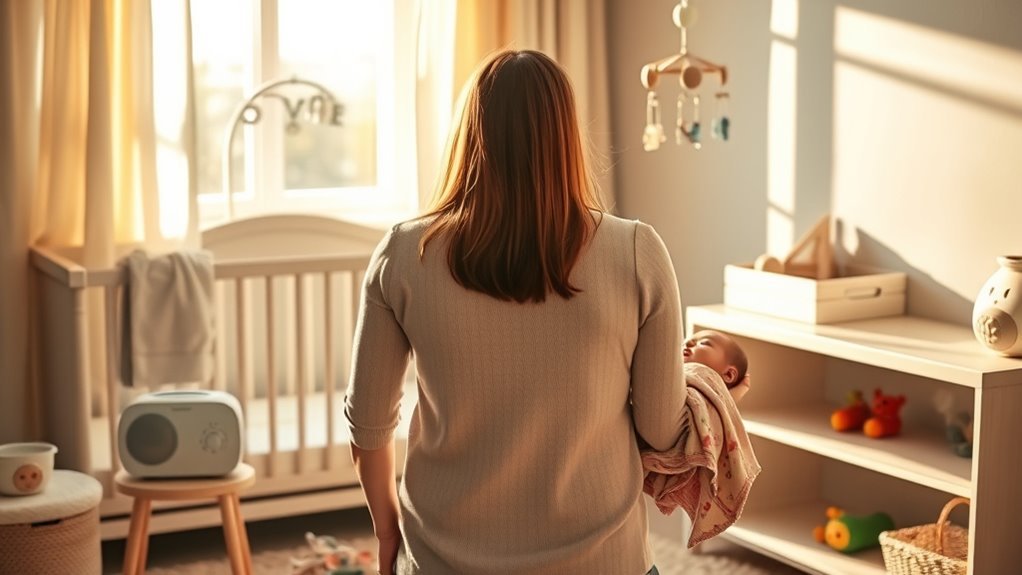
Creating a comfortable routine can greatly ease your newborn’s separation anxiety. By establishing a consistent sleep schedule, surrounding them with familiar items, and practicing gradual separation, you can help them feel more secure. This approach not only builds trust but also fosters a sense of safety in your little one.
Consistent Sleep Schedule
Establishing a consistent sleep schedule for your newborn can greatly ease their separation anxiety, especially during those early months when they’re still adjusting to the world around them. By creating predictable bedtime routines, you help your baby feel secure, knowing what to expect. Aim for a calming pre-sleep ritual, like gentle rocking or soft lullabies, to signal it’s time for rest.
Make sure their sleep environment is comfortable and soothing—dim the lights, reduce noise, and maintain a cozy temperature. Consistency is key; try to put your baby to bed at the same time each night. This routine not only fosters better sleep but also reinforces their sense of safety, giving both you and your newborn a little more freedom to breathe.
Familiar Surroundings and Items
Many parents find that surrounding their newborn with familiar items can greatly ease their anxiety. Creating a comforting environment helps your little one feel secure, so consider incorporating familiar toys that they’ve grown attached to. These toys can serve as a source of comfort when you’re not around. Additionally, using comforting scents—like a blanket or clothing that carries your scent—can further soothe your baby during moments of separation. Establishing a routine that includes these familiar items allows your newborn to associate their surroundings with safety and love. Over time, this sense of familiarity can help reduce anxiety, making it easier for both you and your baby to navigate those inevitable moments apart.
Gradual Separation Practice
Along with surrounding your newborn with familiar items, practicing gradual separation can help ease their anxiety. Start by creating a comfortable routine that encourages independence while maintaining your bond. Here are some tips to incorporate into your daily life:
- Engage in bonding activities like singing or reading together.
- Introduce sensory play with different textures while you’re nearby.
- Begin with short separations—leave the room for just a few minutes.
- Gradually increase the time apart as your baby becomes more comfortable.
Practicing Short Separations

Practicing short separations can help ease your newborn’s anxiety over time. By gradually increasing the length of your absences and returning consistently, you’ll teach your little one that separations are temporary and safe. This approach not only builds their confidence but also strengthens your bond as they learn to trust your return.
Gradual Departure Techniques
Although it can be tough to leave your newborn, gradually practicing short separations can help ease their separation anxiety over time. By implementing effective separation strategies, you’re fostering their emotional resilience while also enjoying a bit of freedom. Start small and build up from there:
- Leave the room for a few minutes while your baby is occupied.
- Increase the duration of your absences gradually.
- Engage your baby with a favorite toy or activity before stepping away.
- Always return with warmth and reassurance.
These techniques not only help your newborn adapt but also allow you to reclaim some independence. Remember, it’s about creating a gentle change, so be patient with both yourself and your little one as you navigate this journey together.
Consistent Return Timing
Consistency in your return timing can greatly help your newborn feel secure during short separations. By establishing a reliable pattern, you’re signaling to your little one that you’ll always come back. Start with brief absences, maybe just a few minutes, and gradually increase the time as they grow more comfortable. Use comforting strategies like a special goodbye ritual or a favorite toy to ease the shift. Research shows that predictable separation timing can reduce anxiety, fostering a sense of safety. As you practice these separations, you’ll not only empower your newborn but also reclaim some freedom for yourself. Remember, it’s natural to feel anxious, but with patience and consistency, both you and your baby can navigate these changes together.
Creating a Positive Goodbye Ritual
When you’re preparing to leave your newborn, establishing a positive goodbye ritual can make all the difference in easing their separation anxiety. This ritual can create a sense of security and predictability for your little one. Here are some simple ideas to reflect on:
- Goodbye song: Sing a short, cheerful tune to signal it’s time to part.
- Farewell hug: Embrace your baby warmly, making it a loving moment.
- Wave goodbye: Encourage them to wave as you leave, reinforcing connection.
- Consistent routine: Stick to the same steps each time to build familiarity.
Using these elements can help your newborn feel more secure, allowing you both to embrace your freedoms with a bit more ease.
Using Transitional Objects
Transformational objects can be a comforting solution for easing your newborn’s separation anxiety. These items, such as a soft blanket or a favorite stuffed animal, provide emotional security, helping your little one feel connected to you even when you’re apart. Research shows that transitional items can act as a bridge between dependence and independence, allowing your baby to explore their surroundings with confidence. When choosing a transitional item, pick something that carries your scent or has been a part of your interactions, creating a sense of familiarity. As your newborn learns to self-soothe with these items, they’ll gradually feel more secure during separations, giving you both a bit of freedom and peace of mind.
Staying Calm and Consistent
Staying calm and consistent is essential when helping your newborn cope with separation anxiety. Establishing a routine, using comforting objects, and practicing short departures can create a sense of security for your baby. These strategies not only ease their anxiety but also help build their confidence in exploring the world around them.
Establish a Routine
Although separation anxiety is a natural part of your newborn’s development, establishing a routine can greatly ease their distress. Consistency helps your baby feel secure and promotes better sleep, fostering stronger parental bonding. Here are some tips to create a calming routine:
- Set specific times for feedings and naps to encourage regular baby sleep patterns.
- Develop a calming pre-sleep ritual, like reading or gentle rocking, to signal it’s time to wind down.
- Include short periods of separation during the day to help your baby get used to being apart from you.
- Stay calm and confident during changes; your emotions can greatly influence your baby’s feelings.
Use Comfort Objects
Creating a routine can greatly ease your newborn’s separation anxiety, but introducing comfort objects can further enhance their sense of security. Comfort items, like a soft blanket or a stuffed animal, can provide emotional security during those tough moments when you’re not around. These familiar objects can serve as a tangible reminder of your presence, helping your baby feel more grounded. Research shows that having comfort items can reduce stress and anxiety in infants, allowing them to explore their surroundings with more confidence. When choosing a comfort object, make sure it’s safe and easy to carry. Consistently incorporating these items into your routine can encourage your newborn to develop a sense of independence while still feeling connected to you.
Practice Short Departures
Practicing short departures can be an effective way to help your newborn adjust to being apart from you. Start small and gradually increase the time you’re away. This builds trust and reduces anxiety for both of you. Here are some tips to make it smoother:
- Engage in bonding activities before leaving, like reading or singing.
- Use quick distractions, such as toys or music, to keep your baby occupied.
- Leave for just a few minutes at first, then return with a calm demeanor.
- Consistently reassure your baby with a friendly goodbye and a warm hello upon your return.
Encouraging Exploration and Independence
As your newborn starts to develop, it’s natural for them to want to explore their surroundings, even if it feels intimidating for both of you. Encouraging curiosity is essential; let them reach for toys or crawl around in a safe space. This exploration helps foster confidence, allowing them to understand their environment better. Offer a variety of textures, colors, and sounds to stimulate their senses, which can make exploration exciting. When they take small steps toward independence, celebrate their achievements, no matter how minor. Your support reassures them that it’s okay to venture out and discover. This balance of encouragement and security will help ease separation anxiety and promote a sense of freedom as they learn to navigate their world.
Communicating With Your Baby
How can you effectively communicate with your newborn, even when they can’t yet respond with words? Understanding baby signals is key to forming that emotional bond. Here are some tips to enhance your connection:
- Observe body language: Pay attention to their movements and facial expressions.
- Use soothing tones: Your voice is comforting; soft, melodic tones can ease anxiety.
- Engage in eye contact: This fosters trust and connection, letting your baby know you’re present.
- Respond to cries: Different cries indicate different needs; responding helps them feel secure.
Seeking Support and Resources
Building a strong bond with your newborn can sometimes be challenging, especially when separation anxiety arises. It’s essential to remember you’re not alone in this journey. Connecting with support groups can provide both emotional comfort and practical tips from other parents who understand your struggles. These communities often share invaluable experiences that can ease your worries and help you feel more empowered.
Additionally, don’t overlook the wealth of online resources available. Websites, forums, and parenting blogs can offer expert advice on managing separation anxiety effectively. Engaging with these resources can help you find strategies that work for you and your baby, allowing for a more fulfilling parenting experience. Seeking support is a proactive step towards fostering a secure attachment with your little one.