

Many parents underestimate the importance of early intervention when it comes to speech delays in toddlers. Recognizing the signs can be essential for timely support. By understanding how to foster communication skills effectively, you can make a significant difference in your child’s language development. You might be wondering what specific steps you can take to create a nurturing environment and encourage progress. Let’s explore a structured approach to help your toddler thrive.
Recognizing the Signs of Speech Delays

When you’re observing your toddler’s language development, it’s essential to recognize the signs of speech delays early on. Look for indicators like limited vocabulary, difficulty forming sentences, or reluctance to communicate. If your child isn’t babbling by 12 months or isn’t using simple words by 18 months, these could be signs of a delay. Early intervention is imperative; the sooner you address concerns, the better the outcomes. Keep in mind that every child develops at their own pace, but being proactive can lead to effective support and resources. Trust your instincts—if something feels off, don’t hesitate to consult a professional. You’re advocating for your child’s freedom to express themselves, and that’s a fundamental part of their overall development.
Creating a Language-Rich Environment
Creating a language-rich environment is essential for fostering your toddler’s communication skills, as it provides them with the necessary exposure to vocabulary and language patterns. You can start by incorporating language games into daily routines, making learning playful and engaging. Simple games like rhyming or word association can spark their interest and encourage verbal expression. Additionally, using storytelling techniques can greatly enhance their linguistic development. Share enthralling stories, using expressive voices and gestures to hold their attention. Encourage your toddler to participate by asking open-ended questions, allowing them to express their thoughts. Surrounding your child with a variety of books and conversations will empower them to explore language freely, laying the foundation for their future communication skills.
Engaging in Interactive Activities

Engaging in interactive activities is a powerful way to support your toddler’s speech development. Storytelling sessions can spark your child’s imagination while providing opportunities to practice language skills. As you narrate stories, encourage your toddler to participate by asking questions or prompting them to describe characters. This fosters communication and builds vocabulary.
Additionally, incorporate play-based learning into your daily routine. Simple games, like “Simon Says” or role-playing, can enhance your child’s ability to express themselves. These activities not only make learning enjoyable but also create a safe space for your toddler to explore language at their own pace. Remember, the more you interact, the more confident they’ll become in their speech abilities, paving the way for their future communication skills.
Seeking Professional Guidance
While interactive activities provide a solid foundation for speech development, some toddlers may still face challenges that require additional support. If you’re concerned about your child’s speech progress, seeking professional guidance is essential. An expert evaluation can identify specific speech delays and help tailor a plan to address them. Speech therapy can be incredibly beneficial, offering targeted strategies and exercises to enhance communication skills. Don’t hesitate to reach out to a qualified speech-language pathologist who understands your child’s unique needs. Remember, early intervention can make a significant difference in overcoming speech challenges. By taking this step, you’re empowering your child with the tools they need to express themselves confidently and freely. Your proactive approach can lead to meaningful progress in their speech development journey.
Encouraging Progress and Celebrating Milestones
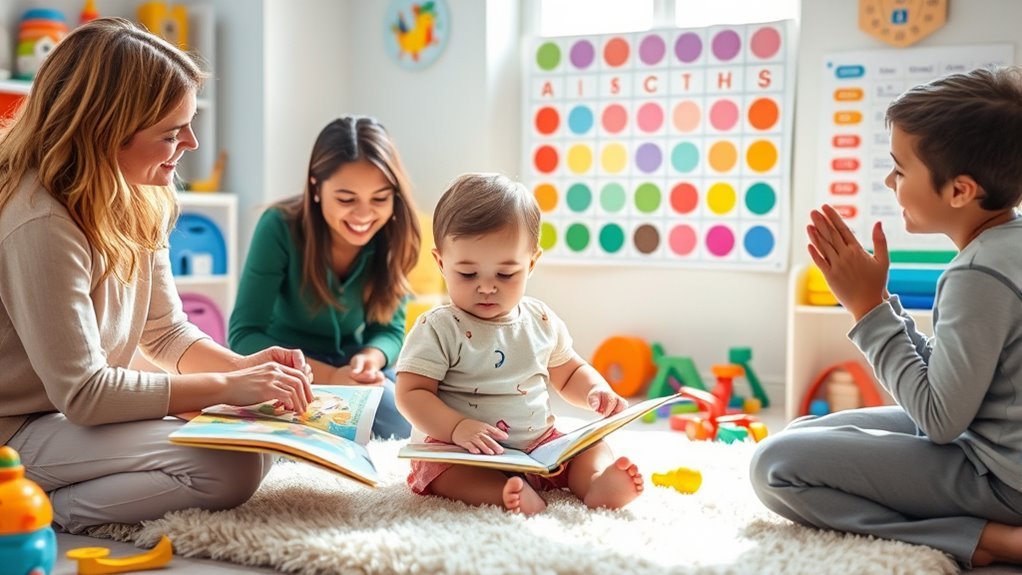
As you support your toddler’s speech development, it’s important to recognize and celebrate their progress, no matter how small. Milestone celebrations can greatly boost your child’s confidence and motivation. To effectively track progress, consider the following strategies:
- Document achievements: Keep a journal of new words and phrases your toddler uses.
- Create a visual chart: Use stickers or drawings to mark milestones reached.
- Host mini-celebrations: Celebrate when your child learns a new word with a small treat or fun activity.
- Encourage storytelling: Ask your toddler to share experiences, reinforcing their verbal skills.