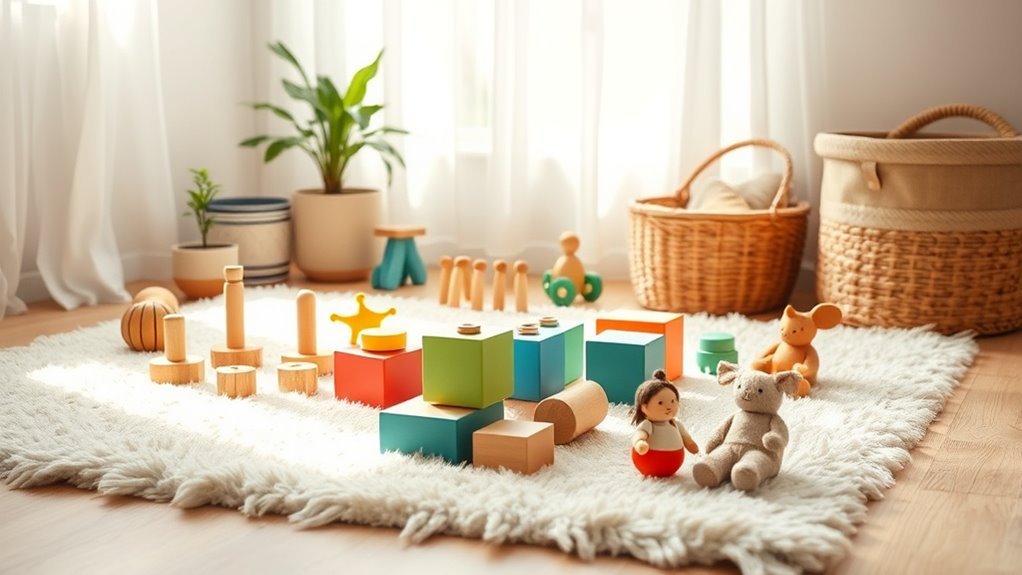

Steering through the world of toys can feel like walking through a minefield, where hidden dangers lurk behind bright colors and cheerful designs. It’s vital to prioritize safety in your child’s playtime, as it plays a significant role in their development. By understanding the right choices and practices, you can create a secure environment that fosters creativity and learning. What steps can you take to guarantee your child’s toys support their growth while keeping them safe?
Understanding Toy Safety Standards
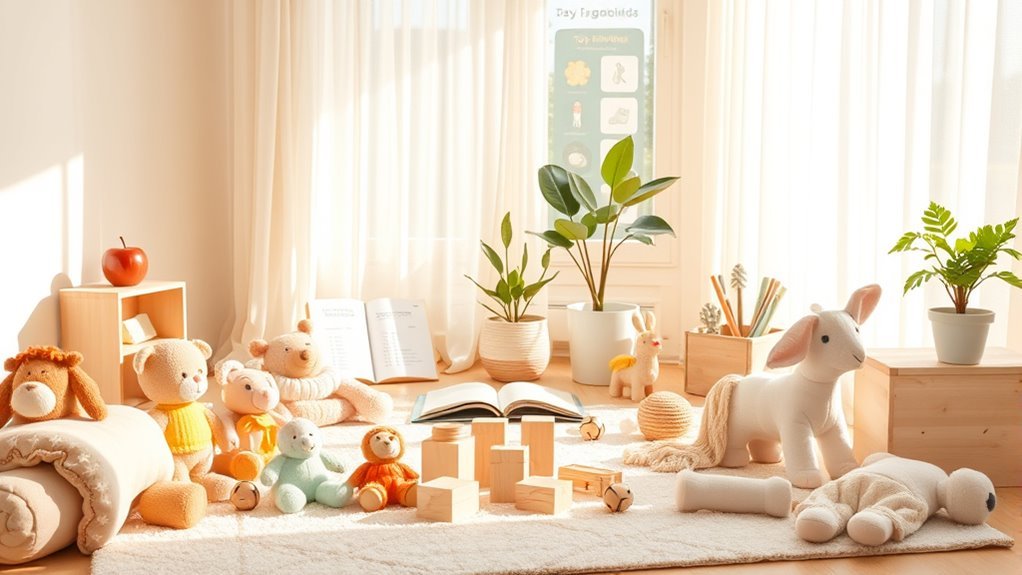
When it comes to choosing toys for children, understanding toy safety standards is essential for parents and caregivers. You want to guarantee that the toys your little ones play with meet toy regulation compliance. Familiarizing yourself with safety certification processes can help you make informed choices. Look for certifications from organizations like ASTM or EN71, which indicate that a toy has undergone rigorous testing for potential hazards. These certifications cover aspects such as choking hazards, toxic materials, and flammability. By prioritizing toys that adhere to these safety standards, you’re not just protecting your child; you’re also fostering an environment where they can explore and play freely. Remember, safety doesn’t have to limit fun—it enhances it.
Choosing Eco-Friendly Toys
In addition to ensuring toys meet safety standards, considering their environmental impact is becoming increasingly important for many parents. Choosing eco-friendly toys made from sustainable materials and ethically sourced components can help you support both your child’s development and the planet. Here’s a quick comparison of some popular eco-friendly toy materials:
| Material | Benefits |
|---|---|
| Wood | Durable, biodegradable |
| Organic Cotton | Soft, non-toxic |
| Recycled Plastics | Reduces waste, versatile |
| Bamboo | Fast-growing, sustainable |
| Natural Rubber | Safe, renewable |
The Role of Supervision in Playtime
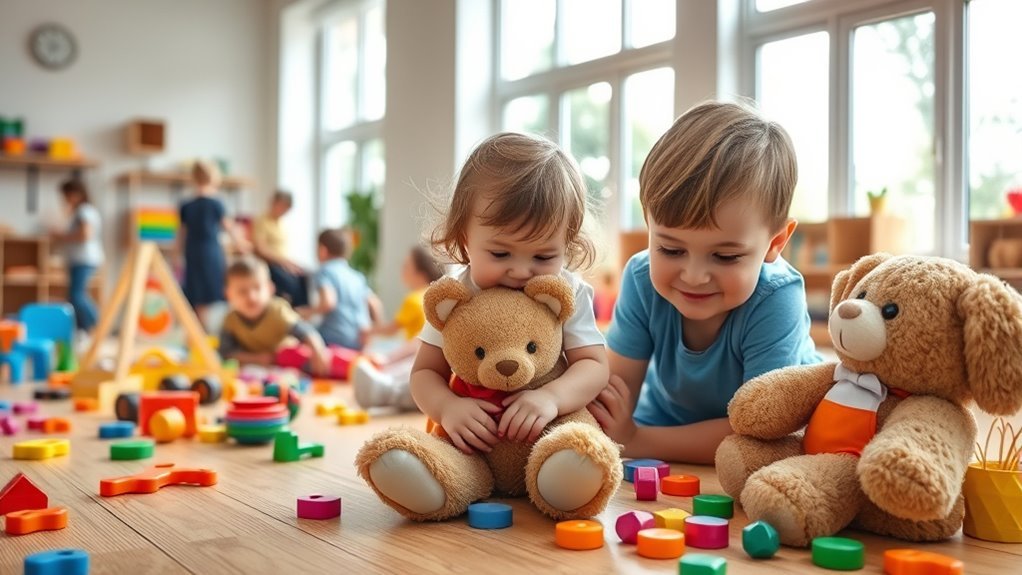
While playtime is essential for your child’s development, supervision plays a crucial role in ensuring their safety and maximizing the benefits of play. By employing effective supervision techniques, you can enhance your child’s playtime engagement, allowing them to explore freely while minimizing risks.
- Be Present: Stay nearby to observe and interact, which fosters a sense of security.
- Set Boundaries: Establish clear rules about safe play areas and acceptable activities.
- Encourage Exploration: Allow your child to take age-appropriate risks under your watchful eye, promoting confidence.
Identifying Toxic Materials in Toys
Supervision during playtime not only guarantees your child’s safety but also involves being vigilant about the toys they interact with. You should check for labels that indicate the absence of toxic chemicals and harmful substances. Look for certifications like ASTM or CPSIA, which signify safety standards. Pay attention to materials; plastics can sometimes contain phthalates or BPA, while paints may have lead. If a toy smells strongly of chemicals, it’s best to avoid it. Regularly inspect toys for wear and tear, as this can expose hidden dangers. By being proactive and informed, you can help create a safer play environment, allowing your child the freedom to explore and grow without unnecessary risks.
DIY Natural Cleaning Solutions for Toys
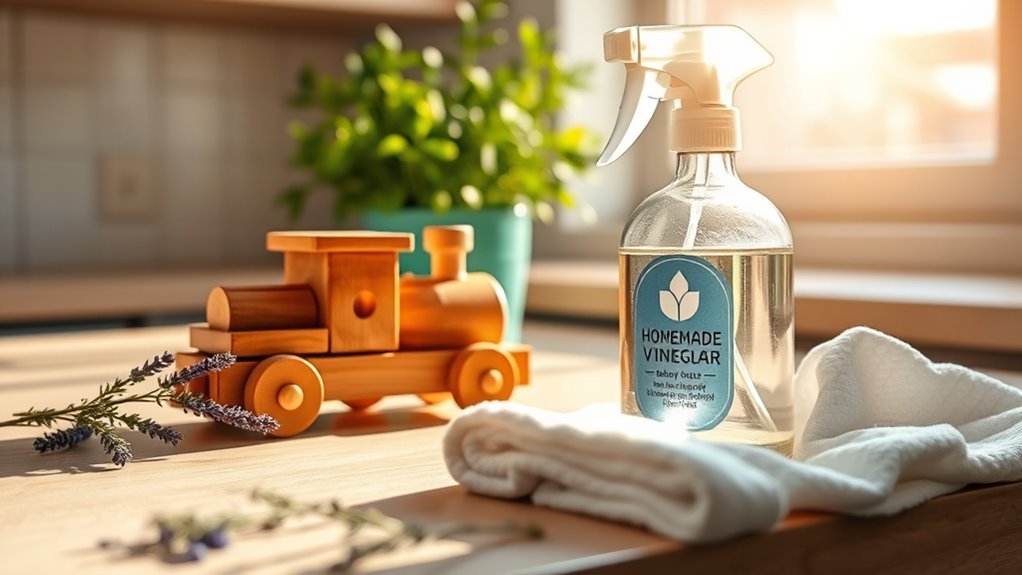
When it comes to keeping your child’s toys safe and clean, using DIY natural cleaning solutions can be both effective and gentle on the environment. You’ll want to know about essential ingredients that are safe for kids and how to apply simple step-by-step cleaning methods. Plus, we’ll cover important safety tips and precautions to guarantee a worry-free cleaning experience.
Essential Ingredients Overview
As you endeavor to create a safe play environment for your child, understanding the essential ingredients for DIY natural cleaning solutions can be incredibly helpful. Using natural materials not only guarantees your child’s safety but also supports their overall development. Here are three key ingredients to take into account:
- White Vinegar: A powerful disinfectant that can cut through grime without harmful chemicals.
- Baking Soda: Known for its gentle abrasiveness, it effectively cleans and deodorizes toys.
- Castile Soap: A plant-based soap that’s safe for cleaning a variety of surfaces and materials.
Step-by-Step Cleaning Methods
Cleaning your child’s toys doesn’t have to be complicated. Start with a mix of warm water and vinegar—just equal parts. This natural solution effectively eliminates germs without harsh chemicals. For toys made from sustainable materials, like wood or fabric, gently scrub with a soft cloth dipped in your vinegar solution. Rinse and air dry completely.
For plastic toys, you can also use biodegradable soap mixed with water; just make sure to rinse thoroughly. If you have old toys that your child no longer uses, consider toy recycling. It’s a great way to declutter while promoting sustainability. You’re not just cleaning; you’re fostering a healthier environment for your child. Happy cleaning!
Safety Tips and Precautions
After ensuring your child’s toys are clean, it’s important to contemplate safety tips and precautions when using DIY natural cleaning solutions. Remember, these solutions can be effective, but they require careful handling. Here are some safety measures to keep in mind:
- Use child-safe ingredients: Stick to items like vinegar and baking soda that are non-toxic.
- Test on a small area first: Before applying any solution broadly, test it on a small, hidden part of the toy.
- Store solutions safely: Keep cleaning products out of reach and clearly labeled to avoid any accidents.
With parental guidance, you can maintain a safe play environment while ensuring your child’s toys are clean and free from harmful chemicals. Your efforts promote both safety and health!
Safe Toy Storage and Organization
When it comes to keeping your child’s toys safe and accessible, proper storage solutions are key. Organizing toys by age can help guarantee that your little one engages with appropriate items while also making cleanup easier. Regular toy inspections not only maintain safety but also encourage a clutter-free environment, promoting healthy play habits.
Proper Storage Solutions
Although it may seem like an intimidating task, organizing and storing toys safely is essential for your child’s development and safety. Proper toy storage not only reduces clutter but also promotes a sense of responsibility in your little one. By implementing effective organization methods, you can create a safe play environment that encourages creativity and exploration.
- Use clear bins for easy visibility and access.
- Designate a specific area for each type of toy to streamline cleanup.
- Label storage containers to help your child learn organization skills.
When you take the time to establish these storage solutions, you not only protect your child from potential hazards but also foster their independence and imagination.
Organizing by Age
Organizing toys by age can greatly enhance your child’s play experience while ensuring their safety. When you arrange toys according to developmental milestones, you make it easier for your child to access age-appropriate toys that support their growth. For toddlers, focus on simple, safe items that encourage motor skills, while preschoolers benefit from toys that spark creativity and problem-solving.
Consider labeled bins or shelves that clearly indicate the age range for each toy category. This not only fosters independence but also helps maintain a clutter-free space, reducing the risk of accidents. By prioritizing safety and organization, you empower your child to explore and learn confidently, making playtime both enjoyable and enriching.
Regular Toy Inspections
Regularly inspecting your child’s toys is essential for ensuring their safety and longevity. By keeping an eye on toy wear, you can spot potential hazards before they become a problem. Establish a routine for toy inspections, ideally every month, to maintain a safe play environment. Here are some tips to help you:
- Check for broken parts or sharp edges that could cause injuries.
- Clean toys regularly to prevent the buildup of dirt and germs.
- Organize toys by type or frequency of use to simplify inspections.
Regular Toy Maintenance and Inspection
When it comes to ensuring a safe play environment, maintaining and inspecting toys regularly is essential for your child’s development. A well-kept toy can greatly extend its lifespan, providing countless hours of safe play. Start with a maintenance checklist that includes checking for loose parts, sharp edges, or worn-out materials. Regularly cleaning toys not only keeps them hygienic but also helps you spot potential hazards early. Don’t forget to keep an eye on any battery-operated toys for leaks or corrosion. By investing a little time in these simple maintenance tasks, you’re not just protecting your child but also fostering their creativity and imagination. Remember, safe toys lead to happier play experiences and healthier development.
Encouraging Creative Play With Safe Materials
Creative play is essential for a child’s development, and using safe materials can enhance this experience considerably. By providing your child with safe, non-toxic options, you’re opening the door to imaginative play that fosters creativity and learning.
Creative play nurtures a child’s development, and safe, non-toxic materials unlock their imagination and learning potential.
- Choose natural materials like wood, cotton, or bamboo.
- Incorporate everyday items such as cardboard boxes, which spark endless possibilities.
- Opt for art supplies that are free from harmful chemicals.
When kids engage with safe materials, they can explore their creativity without the worry of exposure to harmful substances. This not only boosts their imaginative play but also helps build problem-solving skills and social interactions. So, let your child’s creativity soar in a safe and nurturing environment!
Educating Children About Toy Safety
How can you make certain your child understands the importance of toy safety? Engaging in toy safety education is essential for fostering child awareness. Start by discussing potential hazards and safe practices in a fun, relatable way. Use playtime to demonstrate safe versus unsafe toys, making it interactive and memorable for them.
| Safe Toys | Unsafe Toys |
|---|---|
| Soft plush toys | Toys with small parts |
| Wooden blocks | Sharp-edged toys |
| Durable plastic toys | Choking hazards |
| Age-appropriate toys | Toxic materials |
| Non-toxic paints | Loud or noisy toys |
Encourage your child to always check toys before playtime, and instill a habit of reporting any damaged items. This proactive approach empowers them to prioritize toy safety.