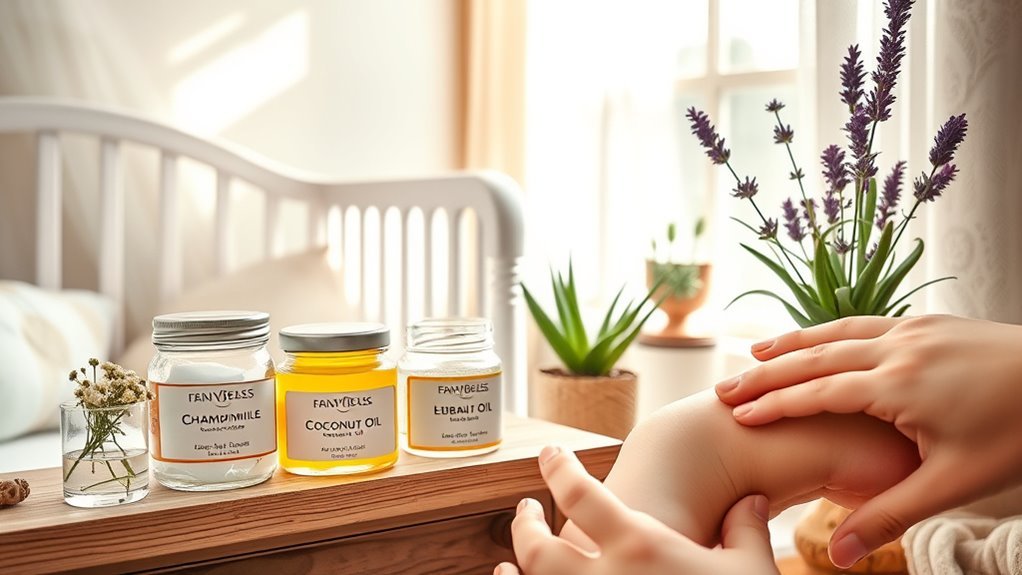

When your baby gets bitten by an insect, it can be distressing for both of you. Understanding how to soothe these bites and prevent future occurrences is crucial for keeping your little one comfortable. From natural remedies like chamomile tea to practical clothing choices, there are effective strategies you can employ. Let’s explore these methods further to guarantee your baby feels better and stays protected from pesky insects.
Understanding Insect Bites and Their Effects on Babies

When your baby gets bitten by an insect, it can be concerning, especially since their delicate skin is more sensitive than that of older children and adults. Understanding insect bite reactions is essential for effective baby skin care. Most bites may cause mild redness, swelling, or itching, but it’s important to monitor for more severe reactions like hives or difficulty breathing. If you notice any unusual symptoms, don’t hesitate to contact your pediatrician. To soothe your baby’s discomfort, keep the area clean and apply a cool compress. Avoid harsh chemicals; instead, consider natural remedies that are gentle on their skin. Remember, timely intervention and proper care can help your little one feel better quickly while safeguarding their sensitive skin.
Common Types of Insect Bites in Infants
When it comes to insect bites in infants, mosquito bites and those from ants and fleas are among the most common. You might notice red, itchy welts on your baby’s skin after exposure to these pests. Understanding these bites can help you respond appropriately and keep your little one comfortable.
Mosquito Bites in Infants
Mosquito bites are one of the most common insect bites infants experience, especially during warmer months. These pesky bites can cause discomfort, but there are effective ways to manage them. To help protect your little one, consider the following strategies:
- Use a baby-safe mosquito repellent to keep those insects at bay.
- Dress your infant in light, long-sleeved clothing to minimize exposed skin.
- Apply soothing lotions, like aloe vera or calamine, to alleviate itching and irritation.
- Keep windows and doors closed or use screens to create a barrier against mosquitoes.
Ant and Flea Bites
In addition to mosquito bites, infants are also susceptible to bites from ants and fleas, which can lead to discomfort and irritation. An ant bite typically results in localized redness and swelling, while flea bites often appear as small, itchy welts. If your baby experiences either type, you’ll want to act quickly to relieve their discomfort. Gently wash the area with soap and water and apply a cool compress to soothe the skin. You might consider natural remedies like aloe vera or calendula cream to ease irritation. To prevent future bites, keep your living space clean and use natural deterrents for fleas. By being proactive, you can help protect your little one from these bothersome bites.
Signs and Symptoms of Insect Bites
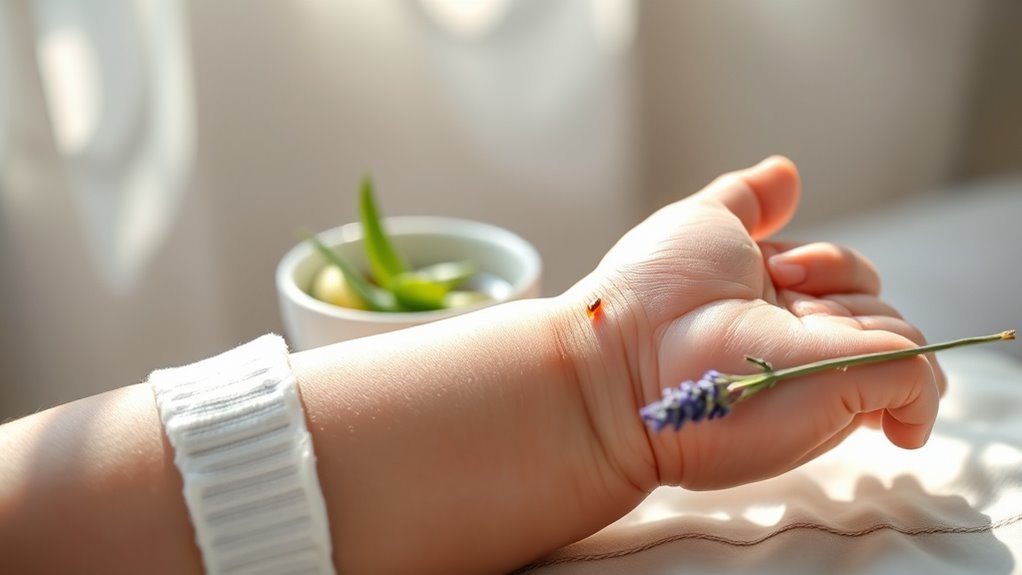
Although insect bites are often minor, they can still cause discomfort and distress for your baby. Recognizing the signs and symptoms is vital to guarantee your little one gets the care they need. Look out for:
- Redness and swelling around the insect bite
- Itching or scratching at the site
- Development of a rash or hives
- Signs of an allergic reaction, such as difficulty breathing or swelling beyond the bite area
While most insect bites are harmless, an allergic reaction can occur. If you notice any severe symptoms, it’s important to seek medical attention immediately. Keeping your baby comfortable and monitoring for these signs can help you manage their discomfort effectively.
Immediate First Aid for Insect Bites
When your baby gets an insect bite, it’s essential to act quickly to alleviate discomfort and prevent complications. Start by gently cleaning the area with soap and water to reduce the risk of infection. Next, apply a cold compress to the bite for about 10 minutes; this can help minimize swelling and soothe your baby’s skin. After that, consider using soothing ointments specifically designed for insect bites; they can provide relief from itching and irritation. Keep an eye on the bite for any signs of an allergic reaction, such as increased redness or swelling. By providing immediate first aid, you can help your baby feel more comfortable and prevent further issues. Your swift response makes all the difference!
Natural Remedies to Soothe Discomfort
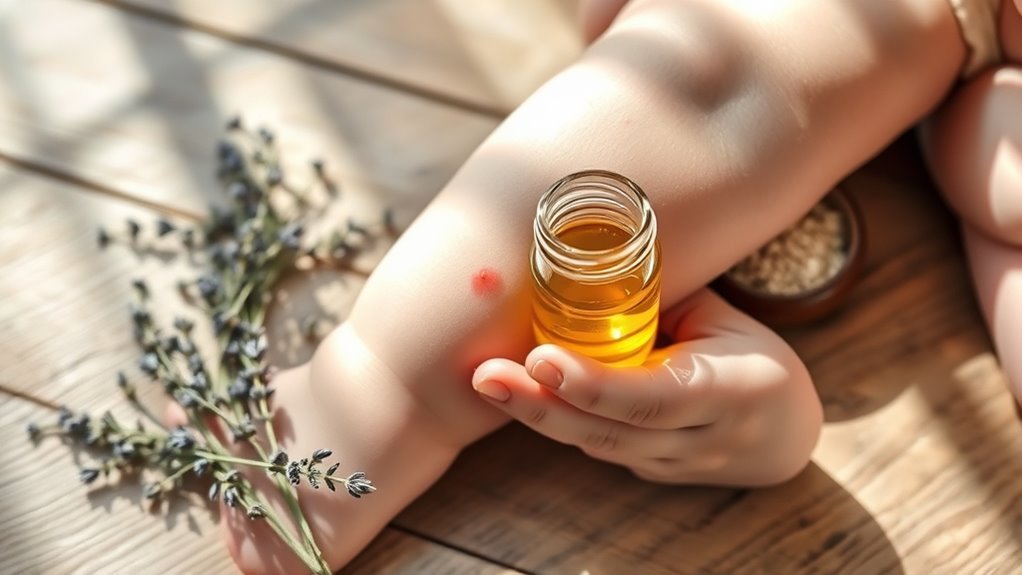
To help ease your baby’s discomfort from insect bites, consider turning to natural remedies that are gentle yet effective. These remedies can provide relief without harsh chemicals, ensuring your little one stays comfortable. Here are some options to try:
- Calming herbal infusions: Chamomile or lavender teas can be applied to the affected area for soothing relief.
- Soothing oatmeal baths: Adding colloidal oatmeal to a lukewarm bath can help reduce itchiness and inflammation.
- Aloe vera gel: This natural moisturizer can cool the skin and promote healing.
- Cold compress: A clean, cool cloth can alleviate swelling and soothe irritation.
These remedies offer a safe, nurturing way to manage your baby’s discomfort and help them feel better.
When to Seek Medical Attention
How can you tell if your baby’s insect bite requires medical attention? It’s essential to monitor for signs that indicate a more severe reaction. If you notice excessive swelling, redness that spreads, or if your baby develops a fever, it’s time to seek medical attention. Additionally, if your little one shows signs of difficulty breathing, excessive crying, or if the bite looks infected with pus or severe pain, don’t hesitate to reach out for help. Trust your instincts; you know your baby best. Remember, it’s always better to be safe than sorry. Being proactive guarantees your baby remains healthy and happy, allowing you both to enjoy life freely without the worry of complications from insect bites.
Preventive Measures to Keep Bugs Away
Taking proactive steps to keep bugs away can make a significant difference in your baby’s comfort and safety. Here are some effective strategies you can implement for outdoor safety:
- Use natural repellents like essential oils (lavender, eucalyptus) to deter insects without harsh chemicals.
- Keep your baby’s skin covered with lightweight fabrics during outdoor activities, especially at dusk when bugs are most active.
- Create a bug-free zone by choosing locations away from standing water or tall grass, where insects thrive.
- Regularly check your yard for pest nests and remove them safely to minimize potential encounters.
Clothing and Gear to Protect Your Baby
While keeping bugs at bay is important, selecting the right clothing and gear for your baby adds another layer of protection. Opt for lightweight, long-sleeved shirts and pants made from breathable fabrics, which can shield your little one’s skin without causing discomfort. Look for protective clothing specifically designed with insect-repellent properties to enhance their defense against bites. Additionally, consider using a natural insect repellent that’s safe for babies, applying it on exposed areas when you head outdoors. Don’t forget to choose hats with brims and tightly woven fabrics, as they can further deter pesky insects. With thoughtful choices in clothing and gear, you can enjoy outdoor adventures while keeping your baby safe and comfortable.
Creating a Bug-Free Outdoor Environment
Creating a bug-free outdoor environment is essential for ensuring your baby’s safety and comfort during outdoor activities. You want your little one to enjoy outdoor playtime without the worry of pesky insect bites. Here are some effective strategies to contemplate:
- Maintain your yard: Keep grass trimmed and remove any standing water to deter mosquitoes.
- Use natural repellents: Explore options like citronella candles or essential oil sprays to keep bugs at bay.
- Create barriers: Think about planting bug-repelling plants like lavender or marigolds around play areas.
- Set designated play zones: Choose areas away from dense vegetation and standing water for safer outdoor playtime.
Essential Oils and Their Safe Use Around Babies
How can you safely incorporate essential oils around your baby? First, it’s vital to prioritize essential oil safety. Always choose high-quality, organic oils and perform a patch test before applying anything to your baby’s skin. When using essential oils, you should always use a diluted application—mixing a few drops with a carrier oil like coconut or jojoba. This reduces the risk of irritation. Avoid applying oils directly to your baby’s skin, especially on sensitive areas. Instead, consider diffusing oils in the room to enjoy their benefits safely. Remember, less is more; a small amount goes a long way! Trust your instincts, and if you ever feel unsure, consult a pediatrician for guidance on essential oils and your little one’s health.