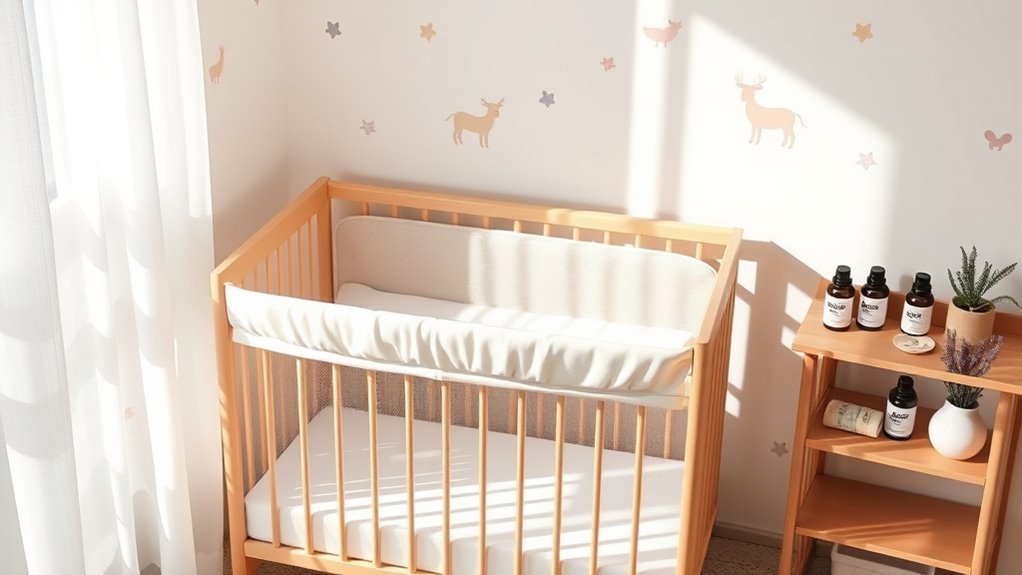

Is it really possible to guarantee your toddler’s crib is both safe and soothing? Many parents believe that a few simple adjustments can make a significant difference. By understanding safety standards and incorporating natural remedies, you can create a secure sleep environment. However, there are key considerations that often get overlooked. Let’s explore how you can effectively manage crib safety while promoting your child’s relaxation and comfort.
Understanding Crib Safety Standards
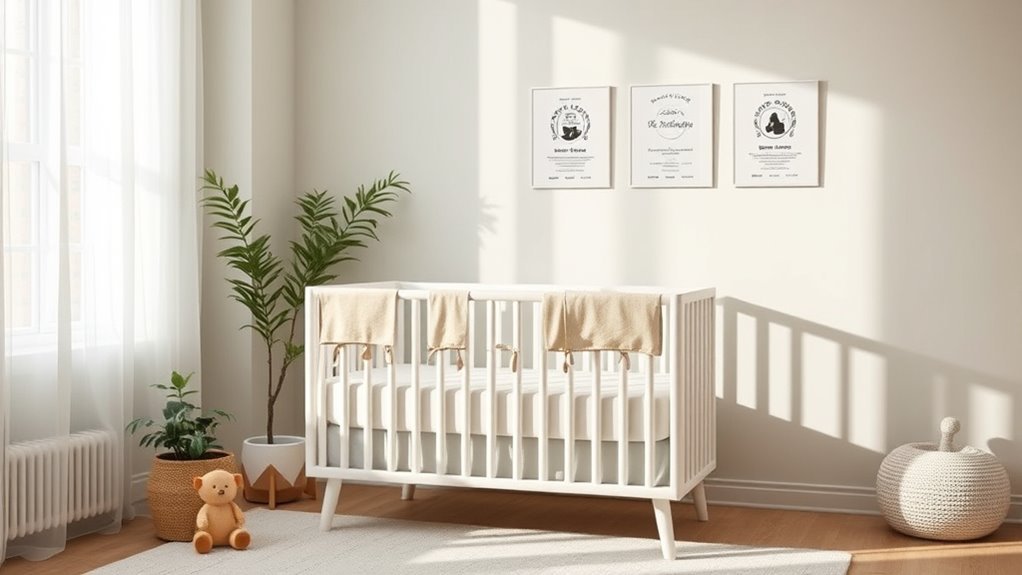
When it comes to ensuring your toddler’s safety, understanding crib safety standards is essential. Familiarize yourself with key crib design features, like adjustable mattress heights and slat spacing. The American Academy of Pediatrics recommends that slats should be no more than 2 3/8 inches apart to prevent your toddler from getting stuck. Always check for any sharp edges or protruding hardware that could pose a risk. Additionally, adhere to toddler safety guidelines by ensuring the crib meets current safety regulations and avoiding secondhand cribs that may not comply. Regularly inspect the crib for wear and tear, and remove any loose bedding or toys. Your child’s safety is paramount, and staying informed allows you to create a secure sleeping environment.
Choosing the Right Crib for Your Toddler
When choosing the right crib for your toddler, it’s crucial to verify it meets safety standards for your peace of mind. Consider the size of the crib to fit your child’s needs and your space effectively. Additionally, think about the materials and design that will complement your home while providing a safe sleeping environment.
Safety Standards Compliance
Choosing the right crib for your toddler is essential, especially since safety standards can vary markedly. To guarantee you’re making a safe choice, familiarize yourself with crib safety regulations set by organizations like the Consumer Product Safety Commission (CPSC). Always check for a compliance checklist that includes aspects such as slat spacing, mattress support, and non-toxic finishes. Look for cribs that meet or exceed these standards, as this provides peace of mind while giving your child the freedom to explore their environment safely. Additionally, avoid older models that may not comply with current regulations, as safety features evolve to better protect your little one. Prioritizing compliance will help keep your toddler safe and sound in their crib.
Crib Size Considerations
After verifying your crib meets safety standards, the next factor is size. Choosing the right crib dimensions is essential for your toddler’s safety and comfort. You want to make sure it fits well in your space and provides adequate room for your child to grow.
Here’s a quick reference table for crib sizes:
| Crib Type | Dimensions (L x W) |
|---|---|
| Standard Crib | 52” x 28” |
| Mini Crib | 38” x 24” |
| Portable Crib | Varies (typically 40”+) |
| Crib Height | Adjustable (varies by model) |
Make certain to take the crib height into account too, as it should allow for easy access while keeping your little one secure.
Material and Design Choices
While there are numerous options available, selecting the right material and design for your toddler’s crib is essential for both safety and functionality. Opt for cribs made from natural materials like solid wood or non-toxic finishes to reduce exposure to harmful chemicals. Look for design features such as adjustable mattress heights, which can adapt as your child grows, and slatted sides for ventilation. Guarantee that the crib meets safety standards and has no sharp edges or loose parts. Simplicity in design not only enhances safety but also makes it easier to clean. By prioritizing these elements, you’ll create a secure and comfortable sleep environment that allows your toddler the freedom to rest peacefully.
Essential Crib Accessories for Safety
When it comes to crib safety, choosing the right accessories is vital for your toddler’s well-being. A safe crib mattress and breathable bedding options can greatly reduce the risk of suffocation and guarantee a comfortable sleep environment. Let’s explore these essential items to keep your little one safe and sound.
Safe Crib Mattresses
Choosing a safe crib mattress is essential for your toddler’s sleep environment, as it directly impacts their comfort and safety. Look for organic mattress options that are free from harmful chemicals, ensuring a healthier space for your little one. These mattresses often use materials like natural latex or cotton, providing a soft yet firm surface for growing bodies. Additionally, consider hypoallergenic materials to reduce the risk of allergies and skin irritations. These options can help create a peaceful sleep environment, allowing your child to rest soundly. Remember, a quality crib mattress not only supports your toddler’s comfort but also promotes better overall health. Investing in a safe mattress is a simple yet crucial step in crib safety.
Breathable Bedding Options
To guarantee your toddler’s crib remains a safe and comfortable space, breathable bedding options are critical. Choosing the right materials can help regulate temperature and reduce suffocation risks. Look for breathable fabrics that promote airflow and keep your child cozy. Organic options are also a great choice, minimizing exposure to harmful chemicals.
Here’s a quick overview of suitable bedding options:
| Bedding Type | Features | Organic Options |
|---|---|---|
| Cotton | Soft, breathable | Organic cotton sheets |
| Bamboo | Moisture-wicking, hypoallergenic | Bamboo crib mattress |
| Linen | Durable, breathable | Organic linen covers |
| Muslin | Lightweight, airy | Organic muslin swaddles |
| Jersey | Stretchy, soft | Organic jersey sheets |
Choosing breathable bedding guarantees your child’s safety and comfort while they sleep.
Safe Sleep Practices for Toddlers
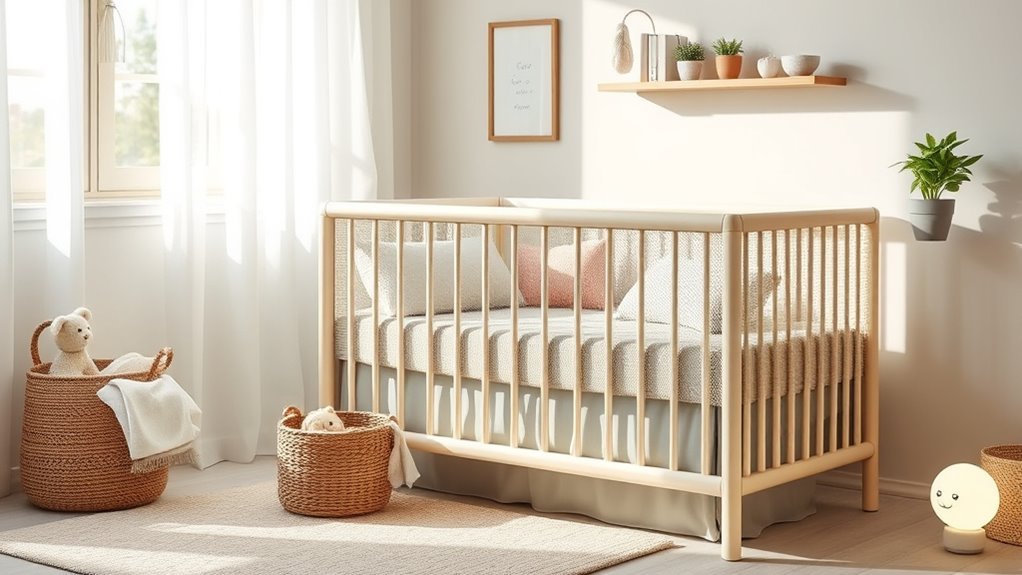
While ensuring your toddler sleeps safely might feel challenging, following established guidelines can help create a secure environment. Prioritizing safe sleep practices is essential for promoting peaceful toddler sleep and effective bedtime routines. Here are some tips to contemplate:
- Use a firm mattress in your toddler’s crib, ensuring it fits snugly to avoid gaps.
- Keep the crib free of toys and blankets that could pose a suffocation risk.
- Establish a consistent bedtime routine, helping your toddler feel secure and ready for sleep.
The Role of Mattress Selection in Crib Safety
When choosing a mattress for your toddler’s crib, firmness is essential for proper support and safety. You’ll also want to guarantee that the materials meet safety standards to minimize any health risks. Finally, make certain the mattress fits snugly in the crib to prevent gaps that could pose a hazard.
Firmness for Support
Choosing the right mattress for your toddler’s crib is essential for guaranteeing their safety and comfort. One critical factor to take into account is mattress firmness, which directly affects your child’s support levels. A properly firm mattress helps prevent suffocation and maintains spinal alignment as they sleep.
Here are some key points to guide your selection:
- Firmness Test: You should press down on the mattress; it should bounce back quickly without sinking too much.
- Age Appropriateness: Verify the firmness caters to your toddler’s age, as their needs change.
- Safety Standards: Look for mattresses that meet recommended guidelines for toddler beds.
Material Safety Standards
Selecting a mattress that meets material safety standards is essential for your toddler’s crib safety, as it directly impacts their health and well-being. Look for mattresses made from non-toxic materials, ensuring they’re free from harmful chemicals and flame retardants. Prioritize options with high material durability to withstand wear and tear, providing lasting support. Eco-friendly options, such as organic cotton or natural latex, are excellent choices since they’re safe for your child and the environment. Always check for certifications, like GREENGUARD Gold or CertiPUR-US, which indicate adherence to stringent safety standards. By choosing wisely, you’re not just enhancing your toddler’s comfort; you’re also contributing to a healthier sleeping environment, allowing you both to enjoy peace of mind.
Size Compatibility Considerations
Ensuring a proper fit between the crib and mattress is crucial for your toddler’s safety, as gaps can pose significant risks. When choosing a mattress, it’s essential to take into account crib dimensions and toddler heights to prevent accidents. Here are some key factors to keep in mind:
- Measure the crib: Make sure the mattress fits snugly within the crib without any gaps.
- Check mattress thickness: A thicker mattress might raise your toddler closer to the crib’s top rail, increasing the risk of climbing out.
- Look for adjustable options: Some cribs have adjustable mattress heights, allowing you to match the mattress to your toddler’s growth.
Natural Remedies for Soothing Sleep
When your toddler struggles to fall asleep, natural remedies can provide a gentle solution that promotes relaxation and restfulness. Herbal teas, like chamomile or valerian root, are great options when prepared for your little one, as they can help soothe nerves and encourage sleepiness. Always check with a pediatrician before introducing new teas. Additionally, incorporating calming scents can create a serene bedtime atmosphere. Essential oils like lavender or sandalwood, used in a diffuser or lightly applied to the pillow, can enhance relaxation. Remember to keep the environment cozy and inviting, allowing your toddler to feel secure. These simple strategies can help ease the shift to sleep, making bedtime a more peaceful experience for both of you.
Monitoring Room Temperature and Air Quality
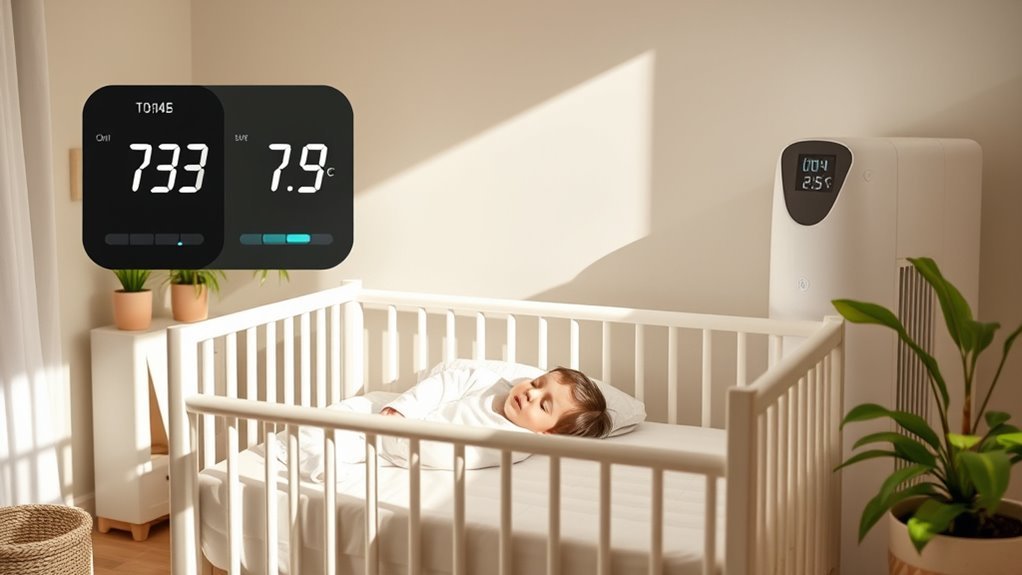
Creating a comfortable sleep environment for your toddler involves careful attention to room temperature and air quality. Proper temperature control helps guarantee your child sleeps soundly while maintaining good air quality protects their health. Here are a few tips to keep in mind:
- Maintain a temperature range: Aim for 68°F to 72°F (20°C to 22°C) for ideal comfort.
- Use a humidifier: This can help prevent dry air, which may irritate your toddler’s throat and nasal passages.
- Ventilate the room: Open windows when safe to do so, or use an air purifier to eliminate allergens and improve air circulation.
Creating a Safe Sleep Environment
A comfortable sleep environment goes beyond just temperature and air quality; it also involves safety measures to protect your toddler while they rest. To create a safe sleep space, verify the crib meets current safety standards and has a firm mattress with a fitted sheet. Position the crib away from windows, blinds, or cords that could pose hazards. Keep the sleep environment clutter-free, removing toys or items that could suffocate or distract your toddler. Consider using a nightlight for gentle illumination without being too bright. Finally, check that the room is quiet and calm to promote toddler comfort, allowing them to drift off peacefully while you enjoy the freedom of knowing they’re safe.
Identifying and Avoiding Common Hazards
While guaranteeing your toddler’s crib is a safe haven, it’s essential to identify and avoid common hazards that can lead to accidents. By practicing hazard awareness and implementing safety education, you can greatly reduce risks. Here are some key areas to focus on:
- Crib placement: Make sure the crib is away from windows, cords, and heavy furniture that could tip over.
- Bedding choices: Use a firm mattress with a fitted sheet, avoiding pillows, toys, or blankets that pose suffocation risks.
- Crib condition: Regularly check for loose screws, broken slats, or peeling paint that could harm your child.
Tips for Transitioning to a Toddler Bed
Once your toddler has outgrown the crib, moving to a toddler bed can be an exciting milestone. To make the toddler bed change smoother, start by involving your child in the process. Let them pick out bedding or a special stuffed animal to bring along. Establish a consistent bedtime routine that includes calming activities like reading or gentle music to signal that it’s time for sleep. Make sure the room is safe by removing hazards and using bed rails if needed. Be patient—some kids may take longer to adjust. If they get up during the night, gently guide them back to bed without fuss. This change is about fostering independence while making certain your toddler feels secure in their new sleeping space.