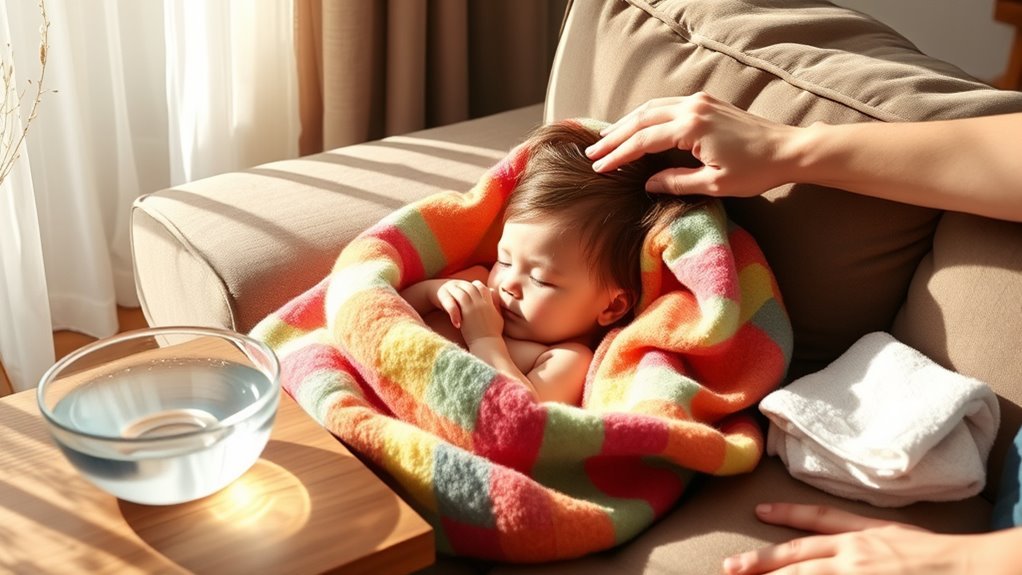

Managing a toddler’s fever can feel overwhelming, but understanding the right approach can make a significant difference. It’s not just about the numbers on the thermometer; your child’s overall comfort and behavior matter too. By exploring practical hacks for quick relief, you can help ease their discomfort and keep them hydrated. Discover the best ways to support your little one during these challenging moments and guarantee their well-being.
Understanding Fever: What You Need to Know

When your toddler has a fever, it can be alarming, especially if you’re unsure about what it means for their health. It’s important to understand that fever is often a sign of your child’s immune response to infection. Many fever myths suggest that a high temperature always indicates a severe illness, but that’s not necessarily true. In fact, a fever can be beneficial, helping your child’s body fight off germs. Instead of panicking, focus on monitoring their behavior and comfort. Keep in mind that fever alone isn’t an illness; it’s a symptom. Trust your instincts, and consult a healthcare professional if you have concerns, allowing you the freedom to navigate your toddler’s health with confidence.
Home Remedies for Immediate Comfort
When your toddler has a fever, finding ways to provide immediate comfort is essential. Cooling baths can help lower their body temperature, while ensuring they stay hydrated is vital for their recovery. Let’s explore these home remedies that can bring your little one some relief.
Cooling Baths Benefits
Although managing a toddler’s fever can be stressful, using cooling baths can provide immediate comfort and relief. These baths are effective cooling techniques that help lower your child’s body temperature and soothe discomfort. Aim for a lukewarm bath temperature—around 98.6°F (37°C)—to prevent shock from cold water, which can be counterproductive.
As your toddler plays in the water, it not only distracts them but also helps to regulate their temperature safely. You can add gentle splashes or toys to make it more enjoyable. Just remember to monitor them closely and keep the bath time brief. This simple remedy can be a comforting way to ease their fever while fostering a sense of security during a challenging time.
Hydration Importance
Maintaining proper hydration is essential for your toddler’s recovery during a fever, as fluids help regulate body temperature and prevent dehydration. Offer a variety of hydration sources to keep your little one interested. Water is great, but you can also provide diluted fruit juices, clear broths, or electrolyte solutions specifically designed for kids. Pay attention to their fluid preferences; some toddlers may prefer sipping from a fun straw or using a special cup. Encourage small, frequent sips instead of large amounts at once, which can be overwhelming. You can also incorporate popsicles or ice chips for added comfort. Remember, staying hydrated not only aids in recovery but also helps soothe discomfort, making your toddler feel a little better during this challenging time.
Hydration: Keeping Your Toddler Well-Watered
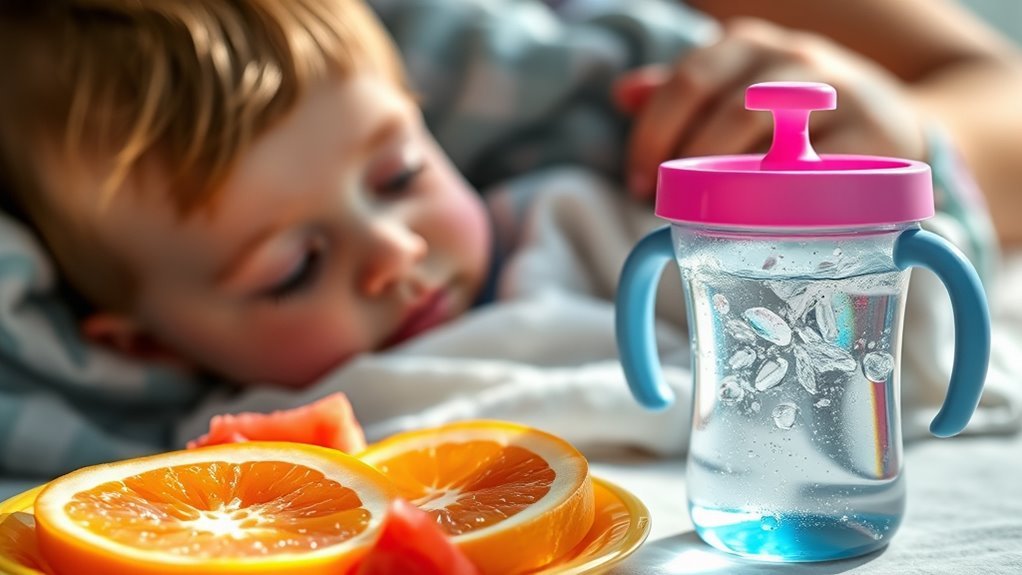
When your toddler has a fever, keeping them well-hydrated is essential for their recovery. Fluids help regulate body temperature and prevent dehydration, which can worsen their condition. Let’s explore some effective hydration tips and tricks to guarantee your little one stays properly watered during this time.
Importance of Fluids
Keeping your toddler well-hydrated is vital, especially during a fever. Proper fluid intake helps regulate body temperature and supports their immune system. When your child is sick, they may not feel like drinking, but establishing good hydration habits is important. Here are three effective ways to encourage fluid intake:
- Offer a variety of fluids: Water, diluted juice, or electrolyte solutions can keep things interesting for your toddler.
- Use fun cups or straws: Making drinking more enjoyable can motivate your child to hydrate more frequently.
- Set reminders or routines: Incorporate fluid breaks into daily activities, like after playtime or meals, to make certain they’re getting enough hydration.
Hydration Tips and Tricks
Fever can make it challenging for toddlers to stay hydrated, but there are effective strategies to guarantee they’re getting enough fluids. Start by offering a variety of fluid sources like water, clear broths, or electrolyte solutions, which can be more appealing. You might consider using a fun cup or straw to encourage drinking. Small, frequent sips can be less intimidating than larger amounts, so keep fluids accessible throughout the day. Incorporating hydrating foods like watermelon or popsicles can also help increase their intake. If your toddler resists drinking, try flavoring water with a splash of fruit juice. Remember, monitoring their output and energy levels can help confirm they’re getting the hydration they need during this time.
Temperature Management: When to Use Medication
While a toddler’s body often fights infections through elevated temperatures, knowing when to use medication for fever management is essential for their comfort and safety. Here are some guidelines to help you make informed decisions:
- High Fever: If your toddler’s temperature exceeds 102°F (39°C), consider fever medication to ease discomfort.
- Behavioral Signs: If your child appears unusually lethargic, irritable, or in pain, it’s a good time to administer medication.
- Dosage Guidelines: Always follow the recommended dosage guidelines on the medication packaging, ensuring you use the appropriate formulation for their age and weight.
Being proactive can help your little one feel better faster, but remember to consult your pediatrician if you have any concerns about their fever or health.
Creative Distractions to Alleviate Discomfort

How can you help your toddler feel more comfortable during a fever? Creative distractions can work wonders. Consider cozy storytime sessions filled with their favorite tales or engaging in imaginative games that spark their creativity. Playful activities like puppet shows can also light up their spirits. You might enjoy soothing music together to create a calm atmosphere. Arts and crafts can provide a therapeutic outlet, while gentle exercise or nature walks can help them feel a bit more like themselves. Don’t underestimate the power of cuddle time—it’s comforting for both of you. Finally, sensory play can captivate their attention, making the fever feel a little less overwhelming. Embrace these moments to nurture both their body and spirit.
When to Seek Medical Attention
When should you evaluate reaching out to a healthcare professional regarding your toddler’s fever? It’s essential to prioritize your child’s well-being, so understanding when to seek help is vital. Here are three key scenarios to evaluate:
- Fever Duration: If your toddler’s fever lasts more than three days, it’s time to consult a healthcare provider.
- Symptom Assessment: If they exhibit severe symptoms, such as difficulty breathing, persistent vomiting, or signs of dehydration, don’t hesitate to get medical advice.
- Age Considerations: If your child is under three months old with a fever, contact a healthcare professional immediately, as this could indicate a serious infection.
Trust your instincts; you know your child best. If something feels off, seeking help is always a wise choice.
Tips for Monitoring Your Child’s Condition
What’s the best way to keep an eye on your toddler’s condition during a fever? Start with consistent symptom tracking. Keep a close watch on any changes in behavior, appetite, or energy levels. Document these observations alongside temperature logs, noting when you take their temperature and what the readings show. This information can be invaluable when discussing your child’s health with a healthcare professional. Remember to check their temperature at regular intervals, ideally every few hours, to gauge any fluctuations. If their fever persists or worsens, refer to your logs for patterns that might indicate a need for medical attention. Staying organized and informed will empower you to make the best decisions for your little one’s care.