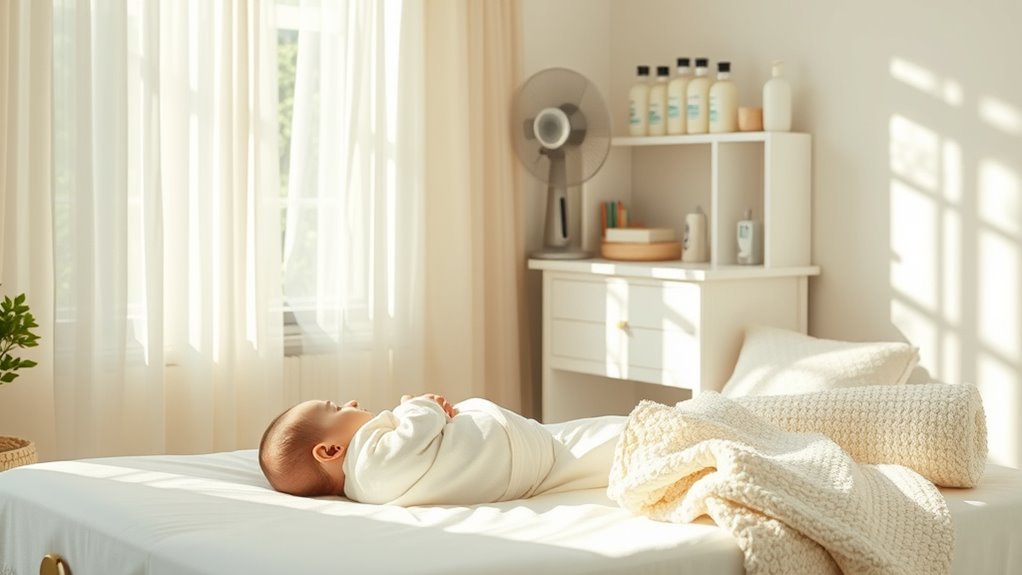

Imagine your baby fidgeting and crying due to uncomfortable heat rash on a sweltering summer day. It’s a common issue, but there are effective ways to prevent it. By understanding the causes and making simple adjustments, you can keep your little one comfortable and rash-free. Let’s explore expert tips and practical advice that can help you safeguard your baby’s skin during the hotter months.
Understanding Heat Rash and Its Causes
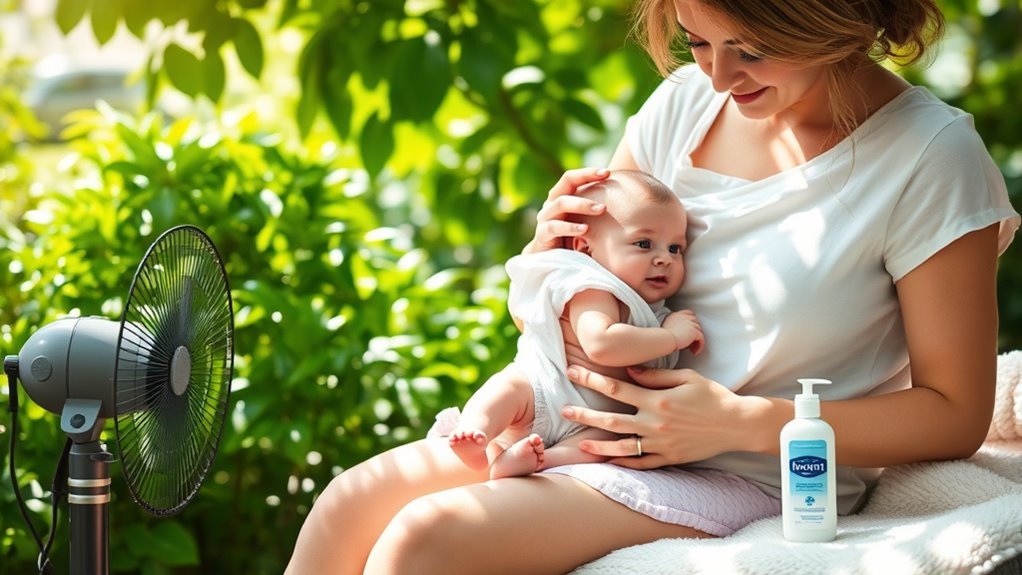
Heat rash, also known as miliaria, occurs when sweat gets trapped in the skin’s pores, leading to small, itchy bumps. The primary causes of this condition are excessive sweating and high humidity, often exacerbated by tight clothing or limited airflow. Your baby’s skin is especially sensitive, making them more vulnerable to these symptoms. You might notice redness, discomfort, and tiny blisters that can appear on areas where sweat accumulates, such as the neck, back, and folds of the skin. To prevent heat rash, it is crucial to keep your baby’s skin cool and dry. By understanding the factors that contribute to heat rash, you can take proactive measures to guarantee their comfort during hot weather, allowing them the freedom to play and explore.
Choosing the Right Clothing for Hot Weather
When dressing your baby for hot weather, fabric breathability is essential. Choose lightweight, natural materials like cotton that allow air to circulate while keeping your baby comfortable. Additionally, opting for loose-fitting clothing can help prevent overheating and reduce the risk of heat rash.
Fabric Breathability Matters
Choosing the right clothing for hot weather can greatly reduce the risk of heat rash in babies, as fabric breathability plays an essential role in keeping their sensitive skin cool and dry. When selecting baby clothing, consider these key fabric types that promote air circulation:
- Cotton: This natural fiber is soft, lightweight, and highly breathable, making it perfect for warm days.
- Linen: Known for its excellent moisture-wicking properties, linen allows for maximum airflow and keeps your baby’s skin dry.
- Bamboo: This eco-friendly option is not only breathable but also has antibacterial properties, ensuring a comfortable wear for your little one.
Opt for Loose Fitting
Selecting breathable fabrics is only part of the equation for keeping your baby comfortable in hot weather. You’ll also want to opt for loose-fitting clothing. Loose garments allow air to circulate freely around your baby’s body, reducing the risk of heat rash and keeping them cool. Lightweight layers are ideal, as they can be easily added or removed depending on temperature changes. Look for styles that don’t cling to your baby’s skin, and avoid tight waistbands or elastic cuffs that can trap heat and moisture. By combining breathable fabrics with loose-fitting designs, you create a comfortable environment that promotes your baby’s well-being during those sweltering summer days. Prioritize their comfort, and you’ll help prevent unnecessary discomfort.
Keeping Your Baby Hydrated
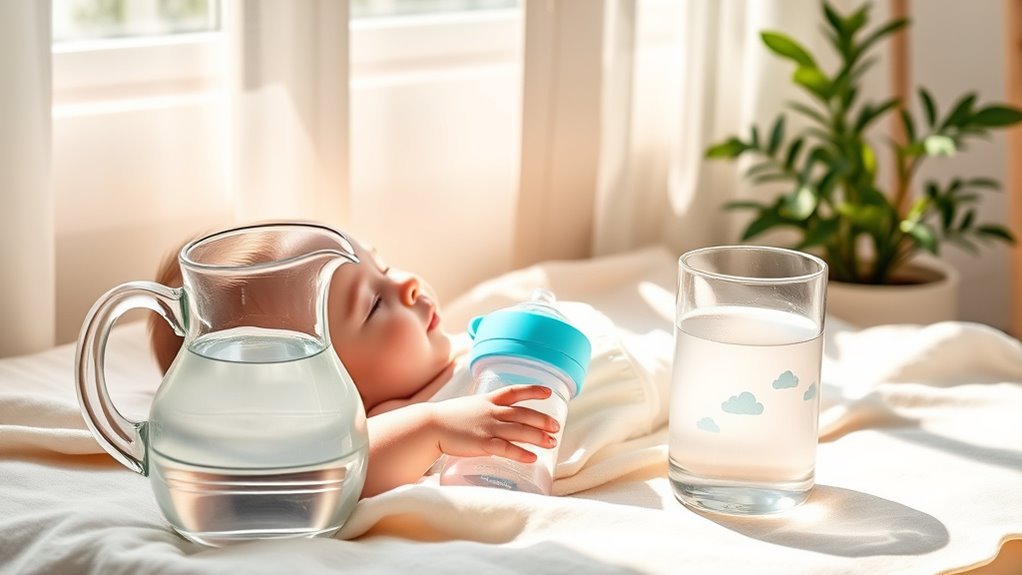
How can you guarantee your baby stays hydrated during hot weather? Ensuring proper fluid intake is essential for their comfort and health. Here are some effective hydration tips:
- Offer breast milk or formula frequently: Babies under six months should rely on breast milk or formula for hydration. Offer it regularly to keep them hydrated.
- Introduce water to older infants: If your baby is over six months, start offering small sips of water alongside meals, especially during warm days.
- Watch for signs of dehydration: Keep an eye out for dry lips, fewer wet diapers, or unusual fussiness. These can indicate your baby needs more fluids.
Creating a Comfortable Home Environment
Maintaining proper hydration is just one part of keeping your baby comfortable during hot weather. Creating a suitable home environment is equally important. Make certain adequate air circulation in your baby’s room by using fans or opening windows if it’s safe. This not only promotes comfort but also aids in temperature regulation. Keep the room temperature between 68-72°F (20-22°C) to prevent overheating. Opt for lightweight, breathable fabrics for your baby’s clothing and bedding to enhance airflow and wick away moisture. Avoid placing cribs or play areas in direct sunlight, as this can raise temperatures quickly. Regularly check your baby’s skin for any signs of discomfort, making sure your home remains a safe, cool haven for them during the heat.
Recognizing the Signs of Heat Rash
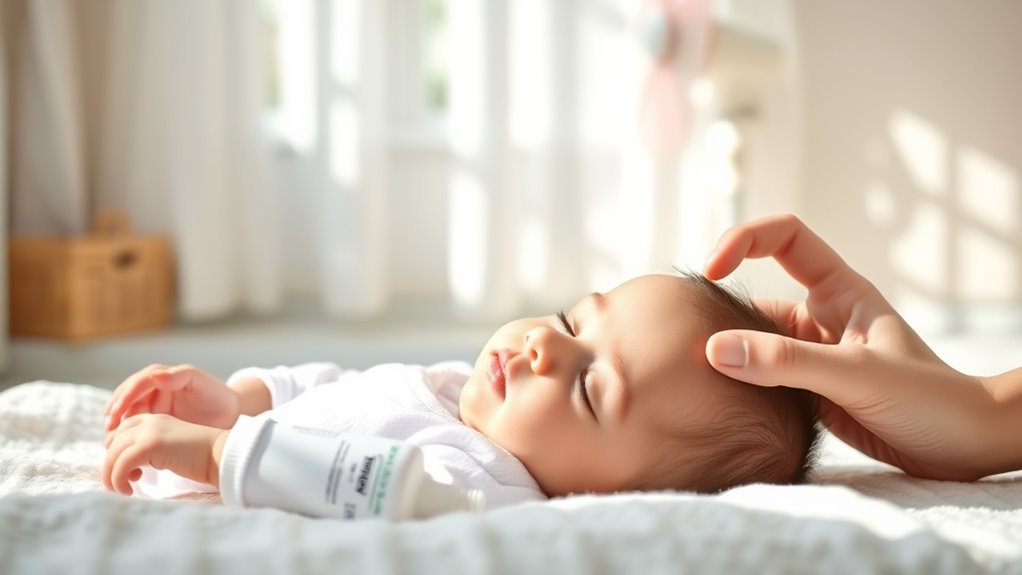
While enjoying warm weather, it’s important to recognize the signs of heat rash in your baby. Effective symptom identification can help you differentiate between heat rash and other skin irritations. Look for the following signs:
- Red Bumps or Blisters: These typically appear on areas covered by clothing or where sweat accumulates, like the neck, armpits, and diaper area.
- Itching or Discomfort: Your baby might be fussy or seem uncomfortable, indicating irritation from the rash.
- Heat Sensation: Affected areas may feel warm to the touch, signaling that your baby is experiencing heat-related skin irritation.
When to Seek Medical Attention
Knowing when to seek medical attention for your baby’s heat rash can be vital for their comfort and health. If your baby experiences severe symptoms or the rash worsens, it’s important to contemplate a doctor consultation. Pay attention to signs like fever, excessive discomfort, or if the rash persists beyond a few days.
Here’s a quick symptom evaluation guide:
| Symptom | Action |
|---|---|
| Fever above 100°F | Seek immediate medical help |
| Persistent rash | Schedule a doctor visit |
| Blistering or oozing | Consult a pediatrician |
| Increased irritability | Contact your doctor |
| Rash not improving | Get a professional opinion |
Being proactive guarantees your baby’s well-being during heat rash episodes.